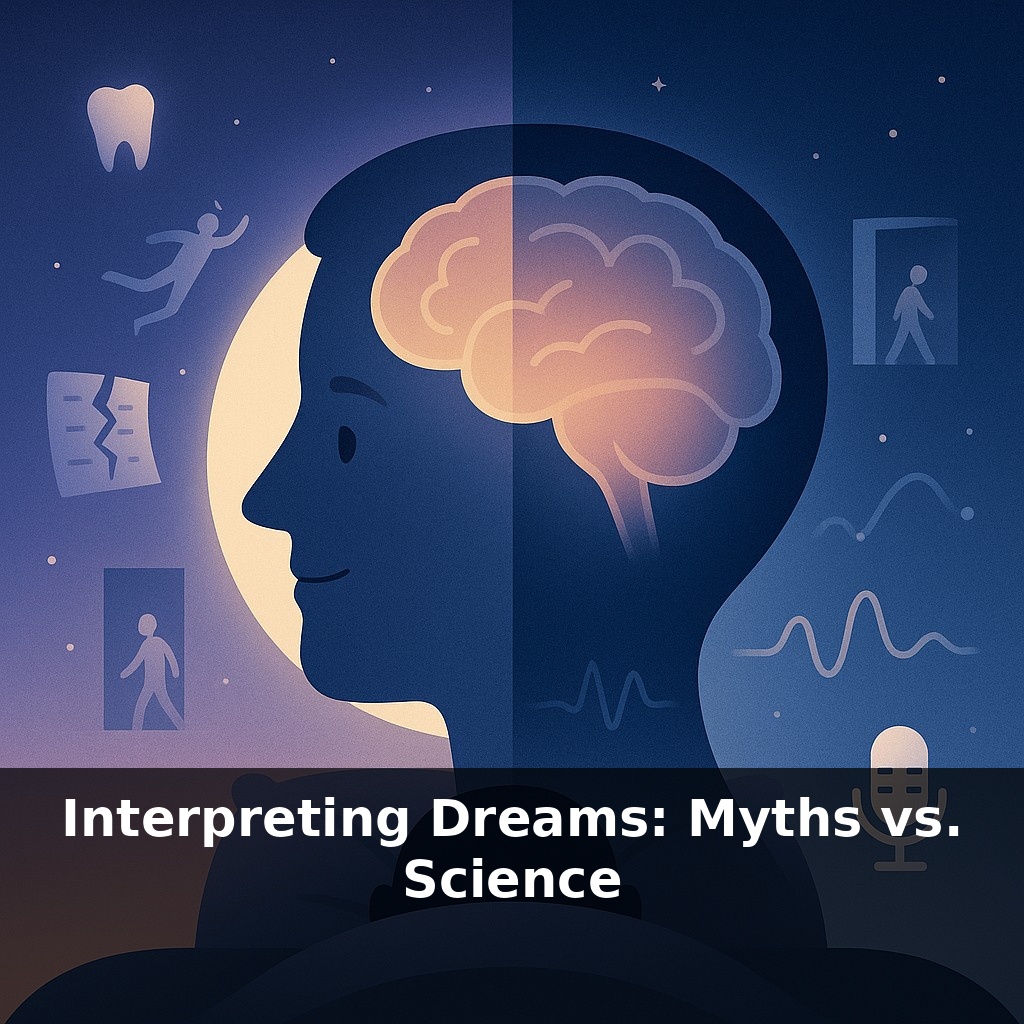
You dream several times every night—and within minutes, almost all of it vanishes. Yet a single strange image can haunt you all day: a missing tooth, a sudden fall, a lost exam. Are these secret messages from your inner self, or just your brain’s late-night improvisation?
Somewhere in the middle of the night, you bolt upright, heart racing: your partner just left you in a dream. By breakfast, the panic has faded—but a quick search online insists this “means” betrayal, abandonment, or secret desires. Here’s the tension: your brain did create that intense story, but that doesn’t mean the internet’s dream dictionary knows why.
Modern research points in a different direction. Instead of decoding fixed symbols, scientists look at patterns: how often dreams echo yesterday’s arguments, tomorrow’s deadlines, or old emotional wounds that still sting. That breakup dream might say less about your relationship’s fate and more about how your mind rehearses loss, conflict, or vulnerability while you sleep, testing out different reactions in a low‑risk setting.
In this episode, we’ll untangle cultural myths, classic psychology, and what current evidence actually supports—for your dreams, not anyone else’s.
For most of history, people didn’t just *interpret* dreams—they built decisions around them. Generals delayed battles after a bad omen; parents named children after a vision; entire rituals emerged to “invite” the right kind of dream. Today, scrolling through dream forums isn’t so different: we still crave rules that turn last night’s chaos into clear guidance. But science keeps running into a messier reality. Two people can dream of the same tidal wave—one feels awe, the other terror—and their waking lives, stresses, and histories give that image completely different weights. The symbol stays, but the story shifts with the dreamer.
Walk into almost any bookstore and you’ll find thick manuals promising to “decode” your dreams: teeth always mean insecurity, flying always means freedom, water always means emotions. The appeal is obvious—clear symbols, clear answers. But when researchers actually catalog thousands of reports, the pattern that emerges isn’t a secret codebook; it’s something far more personal and messier.
Across studies, what shows up most reliably are traces of *your* life: people you saw yesterday, places you frequent, worries that have been simmering quietly in the background. That office corridor where you keep getting lost at night? In lab data, similar themes often cluster around feeling blocked, evaluated, or out of control at work or school—but the link only holds when *you* feel that way while awake. Someone else with the same dream who loves their job shows a different emotional thread.
This is where classic theories from Freud and Jung clash with current evidence. They were right that dreams connect to hidden conflicts and long‑standing themes, but wrong in assuming that a single image reliably points to the same buried issue for everyone. A snake might recall sexuality for one person, medical trauma for another, or a childhood pet for a third. Without the dreamer’s history, the image is almost empty.
Neuroscience strengthens this person‑specific view. When scientists wake people during certain sleep phases and ask for reports, they see how strongly dreams lean on recent experiences—especially those that were unfinished, tense, or emotionally loaded. It’s less “symbol X means issue Y” and more “your mind keeps circling what still feels unresolved.” That’s also why recurring dreams so often line up with recurring situations: a long‑term conflict, a chronic fear, a role you feel stuck in.
So rather than hunting for universal meanings, a more evidence‑based question is: *What did this dream pull from my recent days, and what emotion does it spotlight?* The story may be bizarre, but the emotional “temperature” is usually familiar—distress, relief, shame, desire, curiosity. Notice which of those keeps reappearing, and in what kinds of scenarios. Over time, that pattern tells you much more than any symbol list ever could.
A classic example: two people dream about missing a train. One just turned down a promotion; the other is trying to conceive. When researchers interview them, the first links the dream to career doubts, the second to fears about time and biology. Same storyline, different “emotional headline.” Studies that track people over weeks find this kind of match more often than not: the most useful clue isn’t the train, but what each person currently feels they’re “too late” for.
Another pattern shows up in recurring dreams. Someone repeatedly finds extra rooms in their house right after starting a new hobby or relationship; another keeps discovering locked doors during a prolonged illness. Longitudinal research suggests these serial themes often flare up when roles shift—changing jobs, caring for a parent, redefining identity—then fade as life stabilizes.
Dreaming is like a chef making a late‑night stew from the day’s leftovers: similar ingredients appear, but the flavor depends on who’s cooking and what they’re hungry for.
Some researchers now treat large collections of reports like a social seismograph, picking up “emotional tremors” before surveys do—during pandemics, for instance, fears surfaced in sleep narratives weeks before policy debates caught up. If brain‑computer links eventually replay these private films, who owns that content? Like financial data, your nocturnal stories could become something others want to mine, forcing us to decide how much of our inner life should ever be legible to outsiders.
Treat your sleep stories less like verdicts and more like rough drafts. Instead of asking, “What does this *mean*?” try, “What is this *showing me* about how I’m living?” Use recurring scenes as subtle feedback on boundaries, stress, or unmet needs—more like app notifications than prophecies, nudging you to update habits while you’re fully awake.
Start with this tiny habit: When you first touch your phone in the morning, whisper one sentence about the weirdest image or moment you remember from your last dream (like “I was on a purple train with my 3rd grade teacher”). Then, while you’re brushing your teeth, simply ask yourself out loud: “Was that more random brain cleanup or did it echo something from yesterday?” If you’re lying in bed unable to fall asleep, just pick one recent dream and label it with a single word—“anxiety,” “wish,” “nonsense,” or “practice run”—to gently remind yourself that dreams are your brain testing, not predicting, your life.