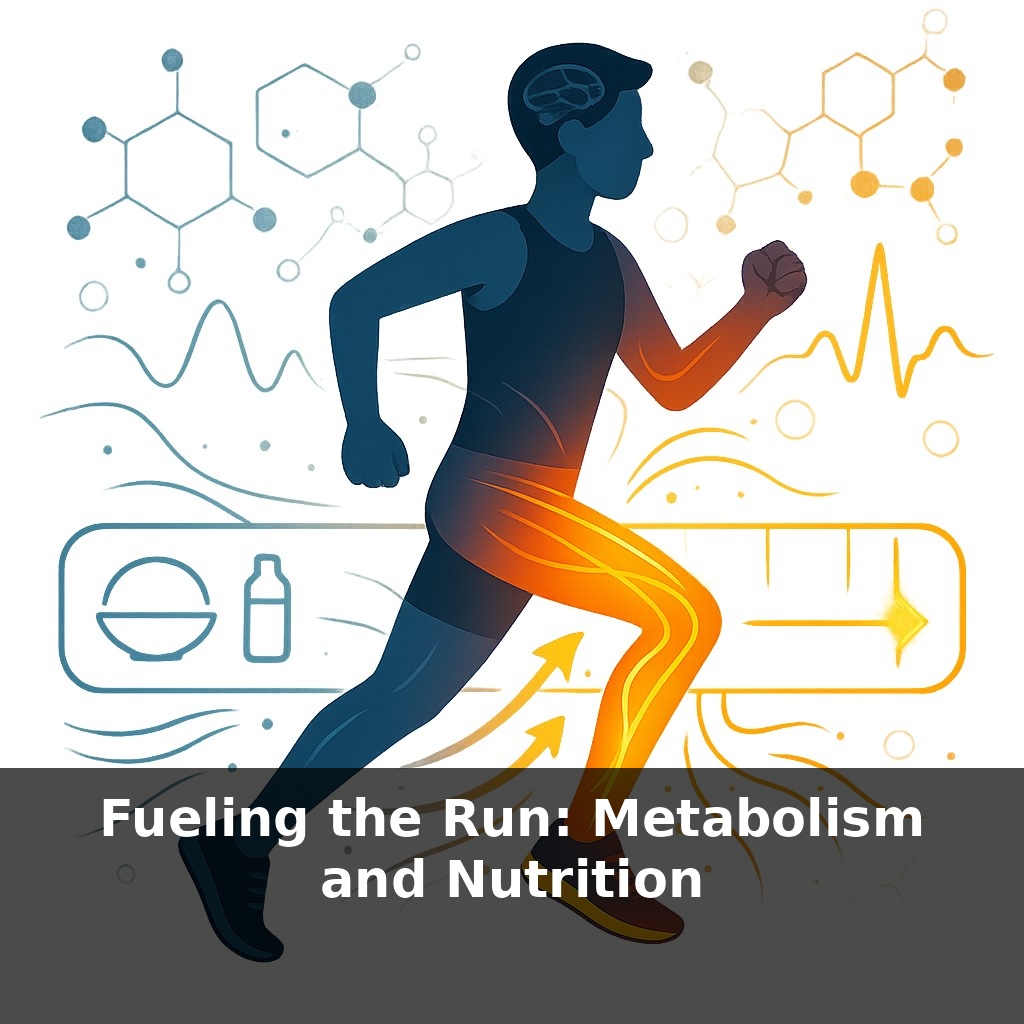
You burn through your body’s stored fuel so quickly in a hard race that, near the end, your legs can slow down even when your mind is screaming “go.” On one run, you feel unstoppable; on another, you fade early. What secretly changed? The way you fueled—hours before you laced up.
Elite marathoners can burn through most of their muscle glycogen in about two hours—yet many of them finish with a kick. The difference isn’t “better legs”; it’s smarter chemistry. In earlier episodes we followed how muscles contract, how the heart pushes oxygen-rich blood, how the lungs load that oxygen. Now we zoom in on *what* actually powers all that work: the tiny ATP “payments” your cells spend every stride—and how your food choices decide whether the account runs dry. Three main energy systems trade off and overlap as your pace changes, and each one prefers different fuel and timing. Miss that match, and the same workout suddenly feels impossible. Nail it, and your easy runs feel lighter, your hard intervals bite less, and your long runs stop falling apart in the final miles—not because you “toughed it out,” but because the chemistry finally lined up in your favor.
On today’s run, the same pace can “cost” your body very different amounts, depending on what you ate, drank, and even sipped mid‑workout. This isn’t just about race day gels; it starts with how you arrive at the start line on a random Tuesday. Your muscles respond to the previous 24–48 hours of choices: that late‑night snack, the skipped lunch, the strong coffee, the extra glass of water—or lack of it. Think of each run as a small experiment where your body quietly reports back: *That breakfast? Great. That long‑run fueling plan? Not enough.* The trick is learning to read those signals.
Think of today’s episode as zooming in on *what* actually fills your “fuel tank” day to day: carbs, fats, and protein—and how your body decides which one to lean on at each pace.
At sprint speed, your system behaves like a trader in a market panic: it grabs the fastest‑available asset first. Short surges draw heavily on the ATP‑PC pathway, then rapidly shift toward carbohydrate use as intensity stays high. That’s why sharp intervals feel so different from a relaxed hour‑long run—your metabolism is switching portfolios behind the scenes.
Settle into tempo or race pace and carbs dominate. Well‑trained runners can burn close to a gram of glycogen per minute here; carry that effort long enough, and the numbers alone explain why “hitting the wall” shows up right on schedule when fueling is off. Training doesn’t just make you tougher; it reshapes enzymes and transporters so you can both burn and *replenish* carbohydrate more efficiently between sessions.
Slow it down and your muscles quietly shift toward a higher fat contribution. Endurance training increases the density of mitochondria and the network of capillaries around your muscle fibers, so fat becomes a more practical fuel at moderate speeds. This is part of why easy runs are powerful: you’re teaching your body to spare limited carb stores when you don’t actually need top gear.
Protein doesn’t step in as a major fuel under normal conditions, but long, under‑fueled sessions or repeated fasted runs can push your body to oxidize more amino acids to keep moving. That might sound productive—“burning more” during the run—but it can blunt adaptation by stealing building blocks needed to repair the very fibers you’re trying to strengthen.
Nutrition timing ties directly into this. Carbs taken in the hours *before* a key workout bias your body toward using carbohydrate comfortably at higher speeds. Carbs and some protein soon *after* help restore what you spent and rebuild stressed tissue. Daily protein spread across meals keeps your recovery machinery stocked, especially on back‑to‑back hard days.
Layer caffeine and hydration on top of that, and you’re not just “eating better”—you’re nudging which metabolic dial your body turns up at each pace, and how quickly you can come back and do it again tomorrow.
Think of your daily nutrition choices like planning a multi‑day hiking trip. The snack you throw in your pocket right before you head out matters, but so does what you packed in the days before, and whether you’ve mapped out refill points along the trail. For running, “refill points” show up as three key windows: the last solid meal 2–4 hours pre‑run, a small top‑up 30–60 minutes before, and the first hour after you stop. Varying what you put in each window changes how hard a given route will feel. For example, a pre‑run meal that’s mostly fat and fiber might sit heavily and delay how quickly you can run comfortably, while one centered on easy‑to‑digest carbohydrates with some protein supports earlier, sharper pacing. In the post‑run window, pairing carbohydrates with ~20–30 g protein doesn’t just restore what you spent; it also supports remodeling of tendons and connective tissue that quietly absorb impact every step—an often overlooked injury buffer for higher‑mileage weeks.
Future fueling might feel less like following a generic meal plan and more like adjusting a soundboard in real time. Continuous glucose and HRV data could nudge you to shift today’s carb or caffeine dose based on how you actually slept and trained, not an average runner. As plant‑based and lab‑grown proteins improve, high‑mileage diets may carry a lighter environmental tab. Meanwhile, ketone esters and microbiome‑targeted foods sit on the frontier—promising, but still more lab note than race‑day rule.
The real art is noticing how small tweaks ripple through your training week: a slightly saltier drink on humid days, a touch more protein when your legs feel “dead,” backing off caffeine when sleep is frayed. Your challenge this week: adjust *one* variable per key run, jot how it feels, and let your own data quietly redraw your fueling map.