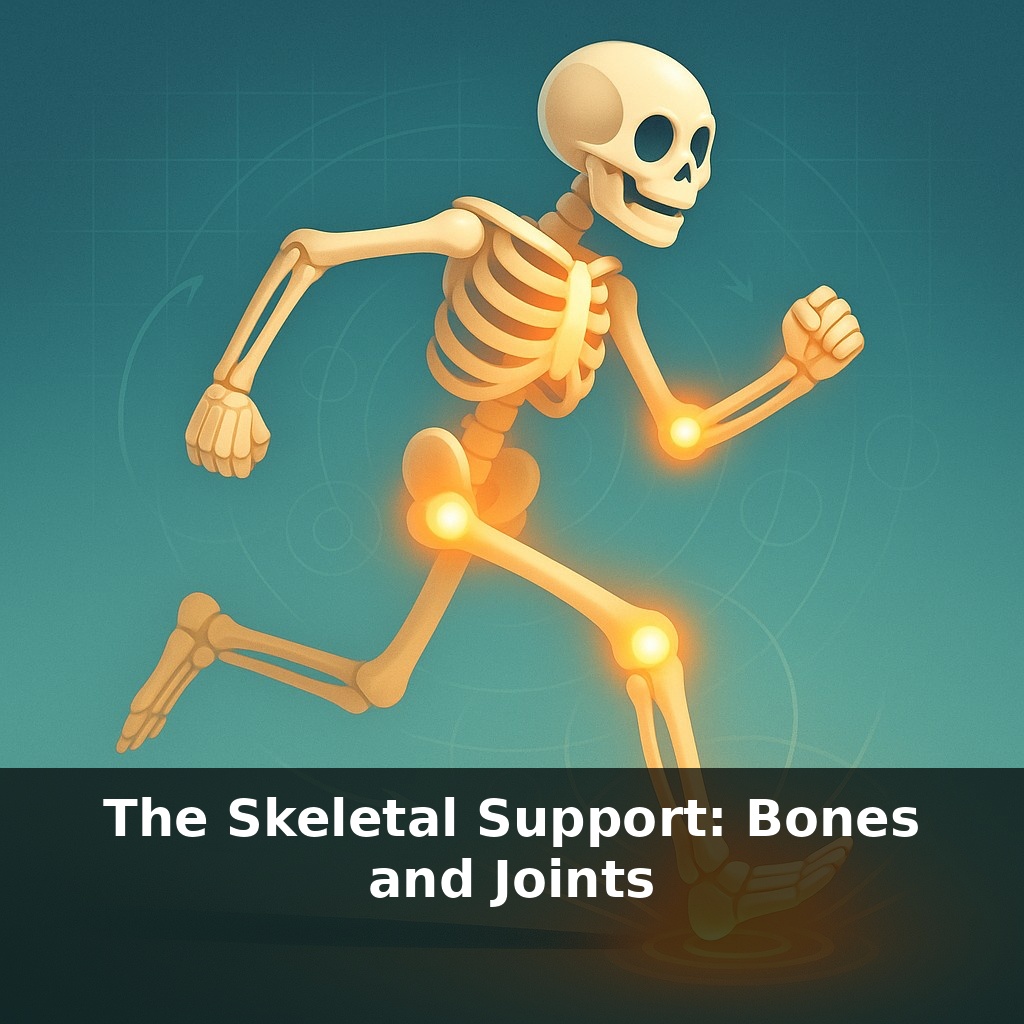
Your skeleton is far from static. With every stride you take on a run, it quietly absorbs forces that can reach several times your body weight—yet, instead of crumbling, it often grows stronger. So here’s the puzzle: how does brittle-seeming bone survive a runner’s pounding?
Every time your foot hits the ground, joints quietly decide how much of that impact travels deeper into your body—and how much gets safely diffused and redirected. Meanwhile, your bones aren’t just tolerating this; over weeks and months, they’re deciding *where* to bulk up, *where* to trim old tissue, and how to adapt to the exact way you move.
That decision-making process is slow compared with your breathing or heart rate changes—each full cycle of bone remodeling takes several months—yet it’s precise enough to respond to tiny shifts in your training: a new shoe, an extra hill session, a sudden mileage spike.
In this episode, we’ll look at how your bones and joints “listen” to your training choices, why some loads are protective while others push you toward injury, and how smart progression, nutrition, and strength work can nudge that long-term remodeling in your favor.
Running also asks a lot from the tissues *around* your bones: cartilage, tendons, ligaments, and the slippery synovial fluid that lets your joints glide. These structures don’t remodel as fast as bone, so they can quietly accumulate tiny irritations from changes in terrain, shoes, or even how tired you are when you start adding speed. That’s why two runners with the same mileage can have totally different injury histories: subtle differences in hip control, cadence, or recovery habits shift where the stress lands. Your job isn’t to avoid impact, but to decide *where* and *how* your body takes it.
Here’s the twist: the very impacts many runners fear are also the signals bones and joints *need* to stay resilient—*if* the rest of the system is set up to handle them.
Start with the layout. Those 206 bones don’t share the load equally. Long bones like the tibia and femur carry most of the vertical forces, while smaller bones in the foot and ankle fine‑tune balance and direction. Where forces concentrate, you tend to see common running injuries: tibial stress fractures, metatarsal issues, hip pain. The pattern of your stride—cadence, foot strike, hip stability—decides which regions get “taxed” hardest.
That’s why two runners doing identical workouts can stress completely different structures. A slightly overstriding heel‑striker may load the tibia and knee; a forefoot striker may pass more work to the calf–Achilles complex and metatarsals. Neither is automatically wrong; it’s a question of whether the tissues downstream are conditioned *yet* for the loads you’re asking them to bear.
Joints contribute by steering how that load moves. The knee, technically a hinge with a bit of rotation, is sandwiched between the strong hip and mobile ankle. If the hip muscles lag—especially the glutes—your knee can drift inward with each step, subtly twisting cartilage and straining ligaments. Not disastrous in one run, but thousands of repetitions with poor alignment can irritate structures faster than they can recover.
Timing matters too. Bone and the tissues around it adapt on the scale of months, but you can change your training in a week. Big, sudden jumps in hill work, speed, or minimalist shoes ask your skeleton to “pay a bill” it hasn’t budgeted for. Think of your weekly mileage and intensity like a diversified investment portfolio: modest, steady increases allow your body to reinvest gains and build capacity; abrupt, all‑in bets court a crash.
Age, hormones, and energy availability quietly tune the whole system. Low energy intake, menstrual disturbance in women, or low testosterone in men can all reduce bone-building signals. In that state, even “reasonable” training can tip toward stress injury, because the raw materials and hormonal green lights for adaptation just aren’t there.
Coming up, we’ll connect these ideas to concrete strategies: how to structure mileage, strength, and recovery so those repetitive impacts become a long‑term asset instead of a liability.
Think about two marathoners training for the same race. One quietly adds a short, easy run over gentle trails each week and mixes in a couple of sets of single‑leg squats and calf raises. The other bolts on a weekly downhill interval session and swaps to stiffer “racing” shoes overnight. Same total mileage, completely different message to the tissues around their bones: the first is sending gradual, targeted signals; the second is reshuffling stress toward quads, patellar tendon, and the small joints of the forefoot.
Surface and footwear choices are levers you can pull. Softer, varied terrain recruits more muscle and slightly spreads forces; cambered roads or endless tight turns bias one side of the body. Rotating between two shoe models with different stack heights or rockers subtly shifts load between ankle, knee, and hip, reducing monotony of stress.
Your action plan comes down to noticing where new stress is going when you change any single variable, then adjusting another (volume, pace, terrain, shoe) to keep the total load tolerable.
Soon, your bones and joints may get “coaching” as precise as your GPS pace. Genetic insights into turnover rates could flag who thrives on hills versus who needs longer build‑ups. AI gait tools might nudge you mid‑run—“ease off, left tibia loading high”—the way navigation apps reroute around traffic. 3D‑printed implants and lab‑grown cartilage could turn what is now career‑ending damage into a remodel instead of a rebuild, extending not just performance years, but pain‑free daily movement.
Your bones and joints are, in a sense, keeping score. Each run adds a tiny entry: terrain, sleep, food, stress, even past injuries. Over weeks, that ledger shapes how you feel in tomorrow’s workout and in your 70‑year‑old walk to the café. Your challenge this week: treat every training tweak as a vote for the runner you want your future skeleton to be.