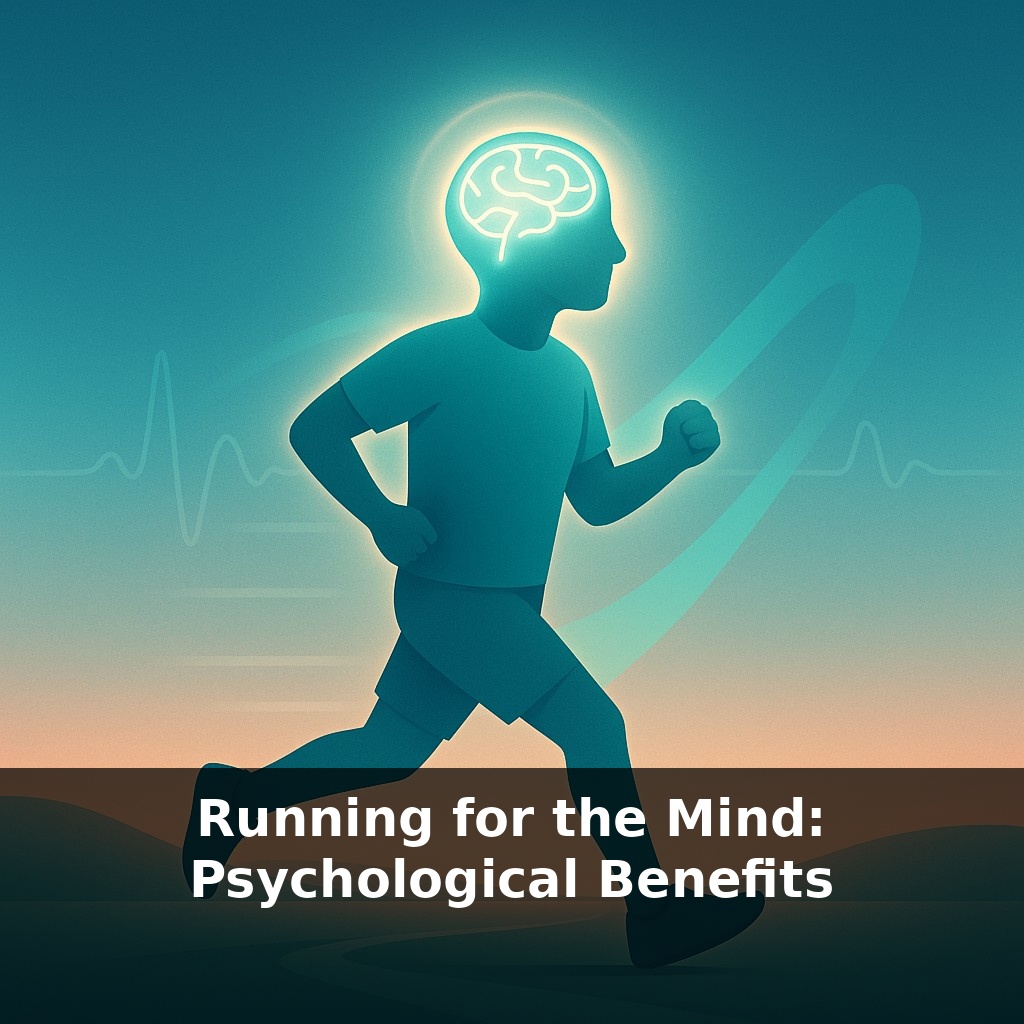
You finish a short run and, within minutes, your brain is quietly rewriting its own code. One brief bout of steady jogging can lift mood as much as a strong cup of coffee—yet it also starts structural changes in the brain that look more like months of therapy than a morning workout.
A 2022 meta-analysis of 97 clinical trials found that aerobic exercise can ease depression about as much as first-line antidepressant medications. Buried in that headline is a simple, practical question for runners: what, exactly, are your miles doing for your mind beyond making you “feel good” after a workout?
In earlier episodes, we focused on lungs, fuel, and bones; today we zoom in on the part of you that decides whether you even lace up: your brain. We’ll look at how just 10 minutes of running can sharpen prefrontal focus, why regular runners tend to have larger hippocampi (a key memory hub), and how repeated exposure to effort reshapes your response to stress. Along the way, we’ll connect these lab findings to everyday moments—like using a short run to reset a spiraling workday or gradually building the psychological “buffer” that keeps anxiety from taking over.
Outside the lab, these changes show up in small, practical ways. A hard interval session can quiet the mental noise that built up during a chaotic day. A relaxed weekend run with friends can loosen worries that felt welded in place at your desk. Over months, the miles you stack start to function like a quietly growing savings account for your mental energy: each outing adds a little capacity to focus under pressure, to ride out a rough patch, or to notice a bad mood without being swallowed by it. In this episode, we’ll unpack how to use running deliberately for these outcomes.
Think of this section as moving from “running helps my mood” to “running is a trainable mental skill set.” The physiological shifts you’ve already heard about are the foundation; what you do with them, repeatedly, is what turns occasional boosts into durable traits.
Start with the smallest useful unit: a single bout of effort. Even a short run contains a sequence of micro-decisions—start, continue, adjust, finish. Each time you notice the urge to stop at the first hill, negotiate with it (“just to the next tree”), and follow through, you’re practicing a specific mental pattern: recognizing discomfort, narrowing focus, and taking the next actionable step. Over dozens of runs, that sequence becomes more automatic and more available in non-running contexts, like finishing a tedious project or staying present in a hard conversation.
Crucially, the difficulty has to be “negotiable,” not overwhelming. Runs that are so hard you feel panicked or out of control are less likely to build helpful patterns. The sweet spot is where effort feels challenging but still answerable by a conscious choice to keep going. This is where you’re effectively rehearsing stress-tolerance: your body signals strain, your thoughts want escape, and you calmly test the boundary rather than immediately backing away.
Consistency matters more than heroics. A three-day streak of moderate runs does more for these skills than one dramatic sufferfest followed by a week off. That’s because you’re not just logging miles; you’re reinforcing identity: “I’m someone who does this even when I don’t perfectly feel like it.” Identity is sticky. Once it forms, it reduces the mental friction of starting, which is often the main barrier when mood is low.
Social running adds another layer. Joining a group or a weekly event like Parkrun introduces gentle external accountability and positive peer comparison. You’re not just convincing yourself to show up; you’re part of a pattern that includes others, which tends to stabilize habits and make the psychological gains less fragile.
Over time, these elements—micro-decisions under strain, manageable difficulty, consistency, and community—interlock. The result isn’t just feeling better after runs; it’s slowly becoming the kind of person whose default response to internal stress is a bit steadier, more deliberate, and less at the mercy of the worst moment of the day.
A practical way to see running’s mental effects is to treat different workouts as “mental drills.” A short, brisk run before a demanding meeting can serve as a deliberate reset: you’re not chasing fitness, you’re aiming for a sharper, less cluttered mind for the next 90 minutes. A longer, slower outing on a weekend can act more like a walking meeting with yourself, where the steady rhythm makes it easier to notice looping thoughts without getting caught in them.
You can also pair specific routes with specific intentions. A flat neighborhood loop might become your “problem-solving circuit,” where you bring one sticky work or life decision, then let your thoughts circle it loosely rather than forcing a solution. A hillier park route could be your “confidence builder,” reserved for days when you need evidence that you can do hard things on purpose.
Over time, these associations make the mental shift faster. Lacing up for the hill route starts to cue a readiness to confront, while the easier loop signals space to reflect.
As wearables, mental-health apps, and city design evolve, your runs may become as tailored as a streaming playlist. Stress data could nudge you toward a quiet park loop after a brutal workday, or a tempo effort before deep-focus tasks. Doctors might “prescribe” specific session types, while urban planners treat shaded paths like essential utilities. Think of it as shifting from one-size-fits-all jogging to a personalized portfolio of runs that supports both your mind and your week.
Treat your runs less like chores and more like appointments with your future self. Over months, patterns of lacing up even on messy days can spill into how you tackle emails, conflicts, or big decisions—like compounding interest on small deposits of effort. The experiment isn’t “can running fix my mind?” but “who do I become if I keep showing up?”
Before next week, ask yourself: 1) “On a day when my mood dips, what exact time and route could I choose for a 10–15 minute ‘mental reset’ run, and how will I notice if my thoughts feel even slightly lighter afterward?” 2) “During my next run, what’s one specific worry I’ll bring with me, and how will I deliberately reframe it—step by step—as I focus on my breathing and stride?” 3) “If I treated running as ‘therapy on the move,’ what simple post-run ritual (like a slow walk, a glass of water, or a 2-minute pause on a park bench) would help me actually register the mental benefits instead of rushing on to the next thing?”