Right now, as you listen, your body is quietly replacing hundreds of billions of its cells. And here’s the twist: many of the “deciders” in this process don’t yet know what they’ll become. They’re blank, but not clueless—waiting for just the right nudge to choose a lifelong role.
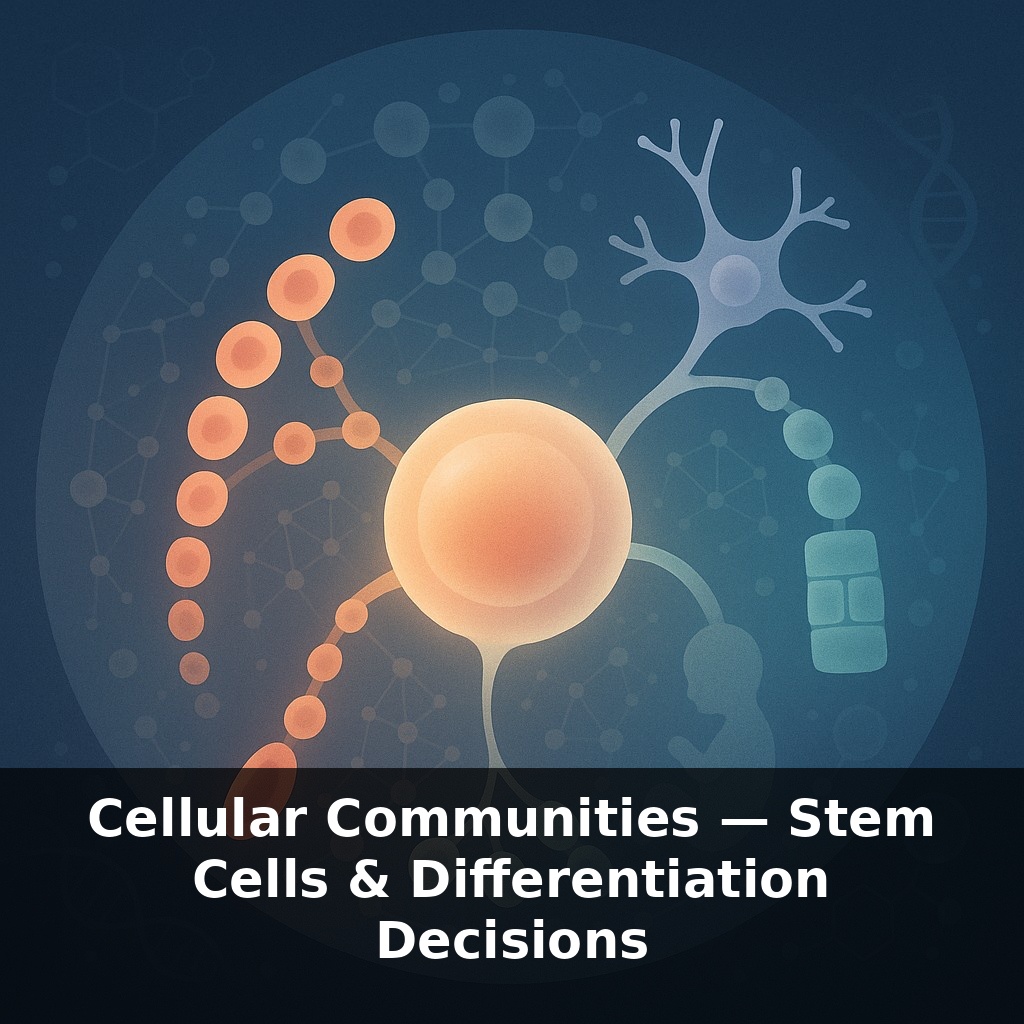
Some of those undecided cells carry an almost absurd level of possibility. Early in development, a single totipotent cell can generate every tissue in your body *and* the supporting structures of the placenta. A bit later, pluripotent stem cells lose that extra option but still hold the blueprint for any of the roughly 200 human cell types. Modern labs now freeze this moment of open potential, reprogramming adult skin or blood cells back into induced pluripotent stem cells—iPSCs—essentially rewinding their developmental story. From there, scientists coax them toward heart muscle, insulin‑secreting pancreatic cells, or dopamine‑producing neurons using cocktails of signals, stiffness‑tuned gels, and precisely timed gene switches. Each combination doesn’t just change a cell’s job title; it rewrites what that cell can repair, replace, or completely reinvent inside a future patient.
In real tissues, stem cells rarely act alone. They live in “neighborhoods” called niches—specialized pockets where nearby blood vessels, support cells, and extracellular matrix quietly script their options. A hair‑follicle stem cell, for instance, hears very different cues than one tucked in bone marrow. Shift those surroundings, and you can tilt the odds toward repair or scarring, growth or quiescence. That’s why organoids—mini‑organs grown in dishes—are so powerful: they recreate just enough neighborhood context to reveal how communities of cells negotiate who divides, who specializes, and who stays on standby.
At first glance, potency sounds like a simple ranking: totipotent at the top, unipotent at the bottom. But inside the cell, the choice isn’t a straight ladder; it’s more like standing at a trail intersection where some paths split into many branches and others quickly dead‑end. Pluripotent cells sit where the map is widest. Multipotent tissue stem cells occupy mid‑level junctions—say, blood stem cells that can still diverge into red cells, platelets, or multiple flavors of immune cells. Oligopotent and unipotent cells sit further downstream, where side roads have mostly closed and the “decision history” is locked into chromatin marks and stable gene circuits.
What actually shoves a cell down one trail instead of another? Biochemical signals are one layer, but physical context is just as decisive. Bone marrow, for example, is surprisingly soft—its squishy environment helps maintain blood stem cells in a more flexible, renewal‑friendly state. Move similar cells onto a stiffer scaffold, and they skew toward bone‑like fates. Shear forces from flowing blood, tension from neighboring cells, even how a cell can spread or cling to its matrix, all feed into internal sensors that tune which genes stay on or off.
Underneath these cues sit gene‑regulatory networks that behave more like toggle systems than dimmer switches. Once certain transcription factors rise above a threshold, they reinforce their own expression and suppress rivals. A cell hovering near that threshold can flip decisively—like a weather front snapping from drizzle to thunderstorm when conditions line up. This “bistability” is why some differentiation decisions feel all‑or‑nothing and hard to reverse.
Regenerative medicine exploits these tipping points. In leukemia, transplants of healthy hematopoietic stem cells don’t just refill blood; they must re‑establish balanced decision rules so no single lineage dominates. In organoid and lab‑grown organ work, researchers now layer gradients of morphogens, 3D‑printed scaffolds with tuned stiffness, and CRISPR‑edited control nodes into these networks. The goal isn’t merely to get the “right” cell type, but to rebuild a self‑correcting community where a few resident stem cells can keep choosing wisely for a lifetime.
Think about how this plays out in real labs. Researchers growing heart tissue don’t just “add heart factors”; they pulse cells with electrical signals and rhythmic stretch, then watch as some clusters thicken into beating patches while neighboring ones stay more plastic, ready to fill gaps. In brain organoids, scientists sometimes see rogue pockets of cells start drifting toward the wrong identity—mini “zoning errors” that echo developmental disorders. Tweaking a single transcription factor can pull those pockets back in line, the cellular equivalent of a conductor bringing a section of the orchestra back to the score after they drift off‑tempo. Blood researchers track thousands of individual progenitors, noting that even “sibling” cells can diverge wildly under subtle changes in oxygen or inflammation. Companies building stem‑cell therapies now stress‑test their products in hostile conditions—low nutrients, mechanical stress—to check whether differentiation decisions stay stable or flip into risky, tumor‑like programs when the environment turns unpredictable.
Edited stem‑cell “patches” might one day be infused like software updates, quietly correcting failing tissues before symptoms appear. But following these cells long‑term will matter as much as creating them: regulators are now debating cellular “black boxes” that record every major state change, like flight data recorders in planes. As mixed cell communities are implanted, consent may need to cover not one therapy, but evolving ecosystems inside a person’s body.
As we learn to steer these cellular crossroads, medicine edges toward forecasting repair the way meteorologists track storms—spotting subtle shifts before damage hits. Your challenge this week: notice each scab, sore muscle, or bruise as a live regeneration project, a reminder that countless tiny fate decisions are already reshaping you.