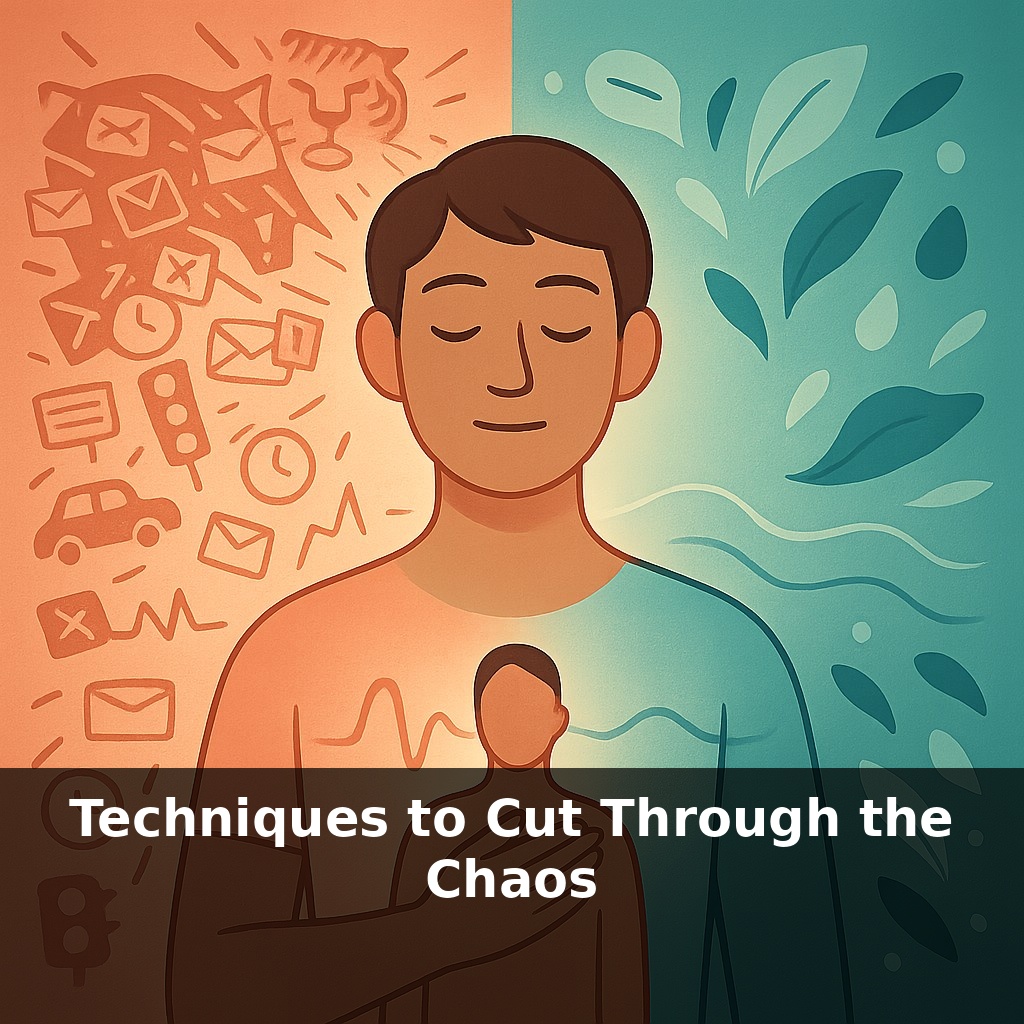
Your body’s stress alarm can spike in barely fifteen minutes—yet most of the time, nothing truly life‑threatening is happening. You’re just opening email, stuck in traffic, or walking into a meeting. So here’s the puzzle: why does your biology act like every inbox ping is a tiger?
Stress isn’t just “in your head”—it’s in your habits, your calendar, your notifications, even the way you breathe while scrolling. That’s why trying to “think your way” out of stress rarely works for long. The people who actually feel calmer, not just hopeful, usually don’t rely on a single magic tactic; they build a small toolkit that hits stress from multiple angles.
In this episode, we’ll explore four layers of that toolkit: fast-acting levers you can pull in the middle of a tense moment, mindset shifts that change how your brain labels a situation, daily routines that quietly fortify your nervous system, and environmental tweaks that stop so many stressors from reaching you in the first place. Instead of chasing one perfect method, you’ll see how combining a few simple tools can dial down the “constant buzz” and give your system room to reset.
Some days, it’s not one “big thing” that wears you down but a swarm of small frictions—back‑to‑back pings, half‑finished tasks, a calendar that feels like a Tetris game you’re losing. Research suggests those micro‑stressors stack, nudging cortisol up and nudging your patience, sleep, and focus down. So instead of hunting for one grand fix, it’s more useful to ask: where, exactly, is the chaos leaking in? In the next few minutes, we’ll map the main entry points—body, thoughts, habits, and environment—so you can see which few levers might give you the biggest relief, with the least effort.
Start with the levers you can actually feel in under two minutes: your breath, your muscles, your senses. Slow, deep breathing at about six breaths a minute isn’t just “relaxing”—studies show it can nudge blood pressure down and steady your heart’s rhythm. A simple pattern: inhale through your nose for four, pause for one, exhale for six. Two to three minutes of that during a tense call or before you open a daunting document is enough to shift your internal “volume” down a notch.
Next, add a physical reset. When tension climbs, your body often clenches—jaw, shoulders, fists—without you noticing. A quick body scan helps: starting at your forehead and moving down, lightly tense each area for five seconds, then let it go completely. This contrast makes “relaxed” easier to access on command, so when chaos hits, your system has a well-practiced way back.
Cold can be another fast dial. Briefly rinsing your face with cool water, holding an ice cube, or stepping outside into crisp air stimulates receptors that can slow heart rate and sharpen attention. It’s not about suffering; it’s about a tiny, controlled jolt that helps interrupt the mental spiral.
Layered on top of these are cognitive skills that change what a stressful moment *means* to you. Reframing is one: instead of “This presentation will expose me,” try “This is a rep; reps make the next one easier.” Mindfulness works similarly, but with less language—notice the sensations of tension, label the thoughts (“planning,” “worrying”), and bring your focus back to one anchor, like your breath or the feeling of your feet on the floor.
Over time, it helps to treat your day like a sports schedule rather than an endless tournament. You build in warm‑ups (a brief walk before demanding work), intervals (focused sprints with real breaks between), and cool‑downs (a wind‑down routine before bed that doesn’t involve scrolling). These simple structures reduce constant task‑switching, which research links to more errors and more physiological strain.
All of this gets easier when your environment doesn’t constantly pull you back into fight‑mode. That might mean batching notifications, keeping your phone out of the bedroom, or setting one “office hour” when people know they’ll get your response. Even a small boundary—like checking email at the top of each hour instead of every few minutes—can carve out patches of calm where deeper focus, and recovery, are possible.
Think of your day like designing a building instead of just surviving a storm. The structure matters. A software engineer I worked with used to start work straight from bed, laptop open, Slack exploding. Now, her “entry ramp” is a 10‑minute walk, a coffee, and setting three realistic priorities on a sticky note. Same job, fewer blowups—because the *sequence* of actions changed.
Or consider a nurse on rotating shifts who can’t control her schedule but can control one anchor per shift: a five‑minute stretch before handover, a real meal away from her phone, and a short decompression ritual in the car before driving home. None of these erase the pressure, yet together they stop it from bleeding into every corner of her life.
You can do this even in cramped circumstances. A parent in a two‑room apartment turned one kitchen chair into a “no‑work zone”—no laptop, no bills, just a book or quiet. That single constraint gives their brain a consistent signal: “here, we’re not on call.”
Stress tools may soon feel less like “self-help” and more like basic infrastructure. Think mood-aware lighting that dims when your smartwatch flags overload, or meeting software that auto-schedules recovery blocks after intense sessions. Workplaces might treat recovery metrics the way they treat deadlines, rewarding teams that protect focus and recharge. Even cities could bake in calm, with quiet transit cars or micro‑parks, so decompression is woven into daily life instead of squeezed in at the margins.
You don’t have to overhaul your life to feel a difference; you only need a few reliable “handles” you can reach for when things spike. Over time, these small, consistent choices act like quiet software updates: you still run the same programs—work, family, goals—but with fewer crashes, smoother performance, and more bandwidth for what actually matters.
Your challenge this week: treat stress like a signal to experiment, not a verdict. Each time you notice it, pick one layer to adjust—body (breath, movement, temperature), mind (reframe, label thoughts), routine (tiny pre‑ or post‑task ritual), or environment (one boundary or tweak). By week’s end, keep whatever actually made the day feel even 5% more workable.