Why Nutrition Matters for Longevity
📝 Transcript
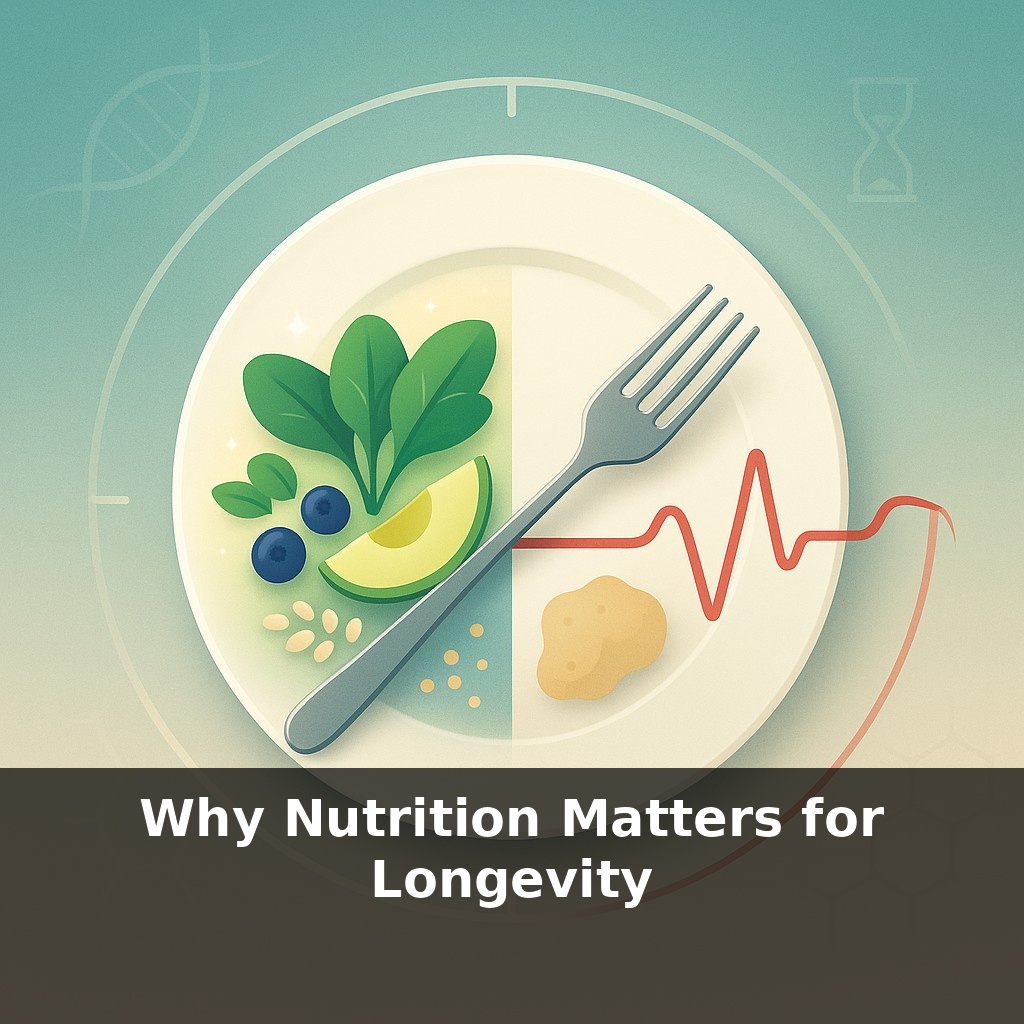
Right now, your fork is quietly voting on how long you’ll live. In one scenario, breakfast calms inflammation and steadies your blood sugar. In another, the same calories quietly speed up aging. The twist? You can change that trajectory, starting with your very next meal.
Longevity isn’t just about “good genes” or avoiding bad luck—nutrition is one of the few levers you touch multiple times a day that can measurably shift your odds. Large population studies keep circling back to the same pattern: people who eat mostly whole, minimally processed foods tend not only to live longer, but spend more of those years able to move, think, and recover like younger versions of themselves.
Here’s where it gets interesting: the foods you choose can nudge your biology toward repair or wear-and-tear at the level of your gut microbes, your blood vessels, even how your genes are expressed. Over time, that daily pattern of choices looks a lot like compound interest in a savings account—small, consistent deposits that grow into a surprisingly large “health balance” later in life.
In this episode, we’ll unpack what long-lived cultures actually eat—and how to translate that to your plate.
Think of your daily menu as a long-term contract with your future self. Every snack and dinner doesn’t just affect how you feel tonight; it quietly updates the “terms” on your risk for heart disease, dementia, and frailty decades from now. Large studies now track people for years and see clear patterns: certain eating styles show up again and again in those who stay sharp, mobile, and independent into their 80s and 90s. These patterns aren’t about perfection or strict rules—they’re about what you do most of the time, week after week, not the occasional celebration or detour.
Start with this: people who eat the most ultra-processed food have a sharply higher risk of dying earlier—even when they’re the same age, weight, and exercise level as those who eat less. So something about *what* we eat is quietly steering the odds, beyond willpower or gym time.
Across very different places—the Mediterranean, Loma Linda, Okinawa—you see a surprisingly tight pattern. Their plates are built around plants, but not just salads: beans, lentils, whole grains, nuts, seeds, plenty of vegetables and fruits, plus herbs, spices, and modest portions of fish or fermented dairy where culturally typical. Meat, sweets, and refined snacks show up, but more as cameos than the main cast.
Zoom in and you find overlapping themes. Fiber from plants feeds gut residents that, in turn, produce compounds supporting blood pressure, vessel flexibility, and brain resilience. Healthy fats from olives, nuts, and cold‑water fish shift the body away from the damage-prone profile seen with trans‑fats and a steady stream of deep‑fried foods. Even the timing and *density* of eating matters: groups with the longest health-span usually avoid constant grazing and rarely eat to the point of feeling stuffed.
One underappreciated player is protein *source*. When most protein comes from plants and fish instead of processed meats, studies link it with lower risks of heart disease and earlier death. That’s part of why Adventist vegetarians and semi‑vegetarians tend to outlive their neighbors—even within the same zip codes and healthcare systems.
Another thread is how food arrives on the table. Home cooking, simple recipes, and limited ingredient lists usually mean fewer additives and “engineered” textures that bypass natural fullness signals. Over years, that can translate into steadier body weight and less metabolic wear.
If this sounds restrictive, it’s closer to a broad template than a strict script. The goal isn’t to mimic a Sardinian shepherd; it’s to tilt your weekly pattern in the same direction: more plants, more intact foods, fewer “lab-built” products.
Your challenge this week: pick one daily eating moment—breakfast, afternoon snack, or late-night nibbling—and run a 7‑day swap experiment. Each day, replace whatever ultra‑processed option you’d normally have in that slot with a plant‑centric, minimally processed choice: oats with nuts instead of boxed cereal, hummus and carrots instead of chips, berries and plain yogurt instead of ice cream. At the end of the week, notice: energy swings, digestion, cravings, and how easy (or hard) it was to make that one recurring upgrade feel automatic.
A 70‑year‑old in the Adventist Health Study who leans into a plant‑heavy pattern isn’t just “being virtuous”—they’re statistically more likely to be walking unaided, driving, and volunteering in their 80s while peers juggle multiple prescriptions. That’s the quiet payoff researchers call added “healthy years,” not just added birthdays. In Okinawa, elders who practiced modest intake from youth didn’t simply weigh less; they showed sharper grip strength and independence well past retirement age.
Think of it like a retirement fund for your body: each serving of beans, leafy greens, or nuts is a small deposit toward better mobility, clearer thinking, and resilience when illness hits. Processed snacks and sugary drinks are more like high‑interest debt—instant gratification with long tails of cost. Over decades, the gap between consistent investors and chronic borrowers widens into two very different late‑life realities: one where you’re planning trips and grandkid playdates, and another where each year brings a new specialist and a longer medication list.
In the next decade, your plate may come with a “user manual” written from your DNA and gut profile, quietly steering you toward choices that extend not just life, but independence. Policy nudges—warning labels, sugary drink taxes, zoning that favors fresh markets over fast‑food clusters—could reshape entire city blocks of habits. And as climate‑savvy, plant‑forward patterns spread, your grocery basket doubles as a tiny vote for a more livable planet in your 70s and beyond.
Over years, your daily menu quietly rewrites your body’s maintenance schedule—what repairs get priority, which systems stay robust, how well you bounce back after surgery or a bad virus. There’s no perfect formula, only patterns you can lean into. Treat each grocery trip like a small course correction, steering you toward the version of your future self you’d most like to meet.
Before next week, ask yourself: 1. “If I had to upgrade just *one* daily meal for longevity, which would it be—breakfast, lunch, or dinner—and how could I pack it with more fiber, colorful vegetables, and lean protein starting tomorrow?” 2. “Looking at what I ate yesterday, where did ‘added sugars’ or ultra-processed foods sneak in, and what’s one realistic swap (like berries instead of a sugary dessert, or nuts instead of chips) I’m actually willing to try this week?” 3. “On a typical busy day, when do I usually end up making my least healthy food choice, and what can I prep in advance—such as a simple bean-based lunch or a ready-to-go veggie snack—to make the healthier choice the easiest one in that moment?”
From this course
Age-Defying Nutrition: Building a Diet for Longevity
7 episodesUnlock all episodes
Full access to 7 episodes and everything on OwlUp.
Subscribe — $1.99/monthLess than a coffee ☕ · Cancel anytime