“You can eat a so‑called ‘superfood’ every day and still have an unhealthy diet.”
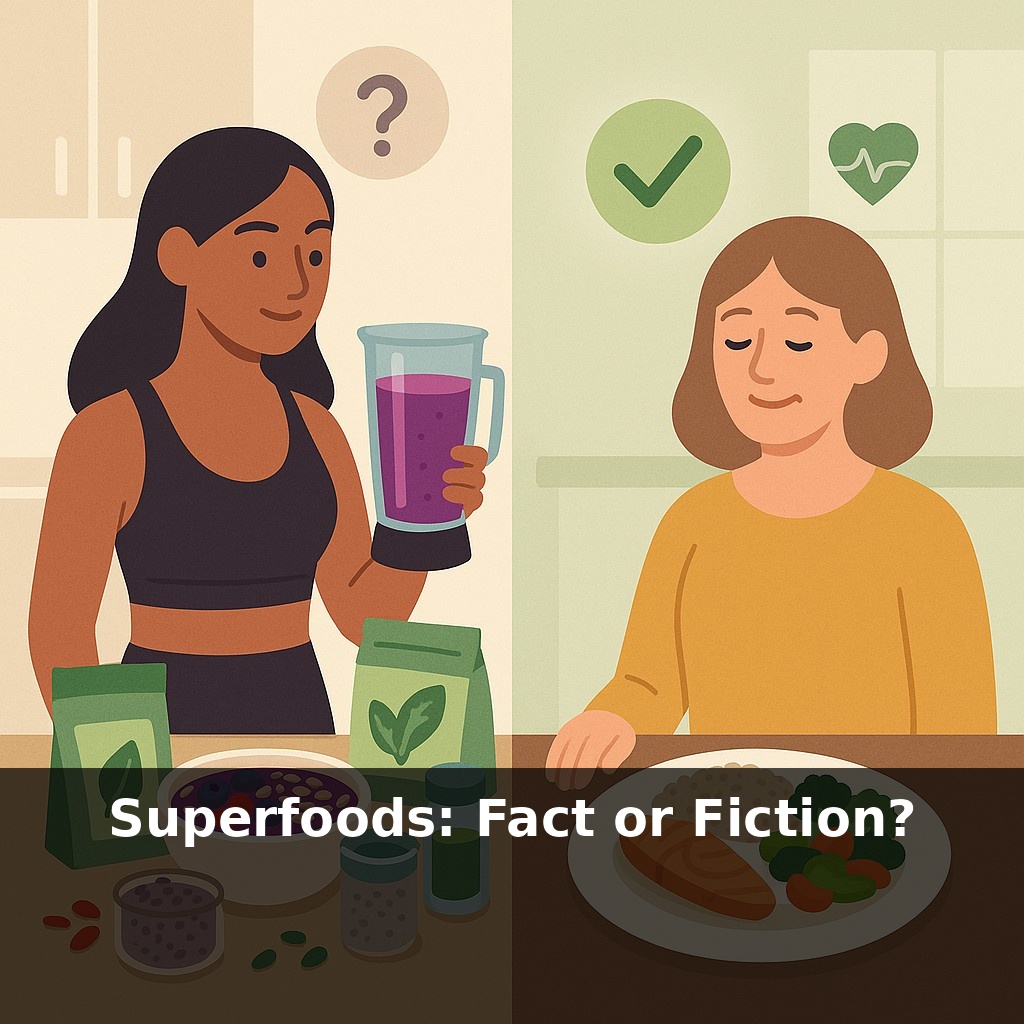
A woman blends an expensive açai smoothie every morning, while her neighbor eats simple, balanced meals. Ten years later, only one has great bloodwork—and it’s not the person with the trendy health drinks.
Blueberries, kale chips, açai bowls, chia puddings—if marketing were medicine, we’d all be immortal by now. In the last episode, we focused on building an age-defying meal plan from everyday foods. Now we’re zooming in on the “hero” items that tend to steal the spotlight.
Some are genuinely nutrient-dense: a cup of cooked kale can flood you with vitamin K for barely any calories; berries do come packed with antioxidants. But here’s the twist: the science behind individual “it” foods is usually far less dramatic than the headlines—or the price tag—suggest. Studies that look impressive in a test tube or in tiny human trials often fade when tested in large, long-term groups.
Meanwhile, what quietly moves the needle on longevity isn’t a rare powder; it’s patterns: how often you cook at home, how colorful your plate is, how processed your staples are. In this episode, we’ll separate marketing sparkle from evidence—and show you how to keep the nutrient gold.
Marketers love single heroes; your body runs on ensembles. A headline hypes blueberries for brain health, but the study behind it might involve huge doses of isolated compounds in animals—nothing like a handful on your oatmeal. ORAC scores once ranked foods by “antioxidant power,” yet the FDA walked away from that metric because those lab results didn’t predict real‑world health.
So where does that leave you, standing in front of protein bars with goji, maca, and matcha on the label? In this episode, we’ll look at how to read the fine print, keep the benefits, and skip the hype.
A good way to decode “superfoods” is to flip the question you’re asking. Instead of, “Is this food magical?” ask, “What **job** can this food realistically do for my body—and where does it fit in my week?”
Take blueberries and kale. Those headline numbers about lab scores and sky‑high vitamin content sound impressive, but your body doesn’t give extra credit for megadoses of a single nutrient. It cares about **coverage**: do you consistently hit the basics—enough fiber, a mix of vitamins and minerals, healthy fats, and quality protein—most days of the week?
That’s why nutrition researchers increasingly focus on **dietary patterns** and swaps, not star ingredients. In large cohorts, tiny shifts—like trading a bit of animal protein for plant protein—add up to meaningful differences in longevity. The power isn’t in a spoonful of chia; it’s in the overall tilt of your plate over months and years.
So how do you use “superfoods” wisely instead of magically?
1. **Ask what it’s replacing.** An açai bowl instead of sugary cereal? Likely a win. The same bowl on top of an otherwise ultra‑processed day? Not so much.
2. **Look for overlap, not exceptions.** Many hyped foods are just fancy members of familiar families: berries, leafy greens, legumes, whole grains, nuts, seeds. If goji is pricey, raspberries or frozen mixed berries probably give similar benefits. If quinoa is costly or scarce, lentils, barley, or oats can play a similar role without straining your budget—or disrupting local food systems the way quinoa demand did in parts of Peru and Bolivia.
3. **Favor boring consistency over exciting rarity.** A daily apple, a scoop of oats, and a handful of beans will quietly outperform a once‑a‑week exotic powder for most people’s health markers.
4. **Watch the add‑ons.** Superfood‑branded snacks often smuggle in sugar, refined oils, and low fiber. The front label shouts “matcha” or “maca”; the back label tells you whether it behaves more like candy or like real food.
Used well, these foods can be like specialist tools in a well‑stocked kitchen: helpful for certain jobs—like adding color, fiber, or healthy fats—but only valuable when you’ve already built the basic toolkit of a mostly whole‑food, plant‑tilted diet.
Think of your week like a garden you’re tending, not a single exotic plant you’re trying to keep alive. A few blueberries or a spoonful of chia are like colorful flowers—they make the space more vibrant—but your “soil health” comes from everyday choices: whole grains, beans, nuts, a rotation of vegetables, and modest portions of animal foods, if you eat them.
Here’s how that plays out in real life. One person sprinkles hemp seeds on a fast‑food burger and calls it balanced. Another eats a simple lentil soup with carrots, onion, and a drizzle of olive oil. The soup has no halo word on the label, yet it quietly delivers fiber, minerals, and steady energy. Over years, it’s the second pattern that cushions blood sugar spikes, cholesterol, and inflammation.
You can also rotate “budget heroes”: beans instead of meat once or twice a week, frozen mixed vegetables instead of imported greens, ground flax on oats instead of pricey powders. No single swap is dramatic, but together they reshape your internal “climate” toward slower aging.
Future guidance may feel less like chasing trendy ingredients and more like tuning an orchestra: which mix of foods plays best with your unique biology, local ecosystem, and values. As wearables track glucose, sleep, and mood, “super” may describe how your whole menu performs, not a berry on top. Climate‑resilient crops and stricter labels could nudge us toward choices that age well—for our cells, farms, and wallets—without promising miracles from a single bite.
When a headline crowns a new “miracle” ingredient, treat it like a weather report, not destiny: interesting, but only one signal. Over time, it’s the climate of your habits—how often you cook, shop, and share meals—that shapes aging. Your challenge this week: pick one routine meal and quietly upgrade it with an extra plant food every day, then notice how sustainable that feels.