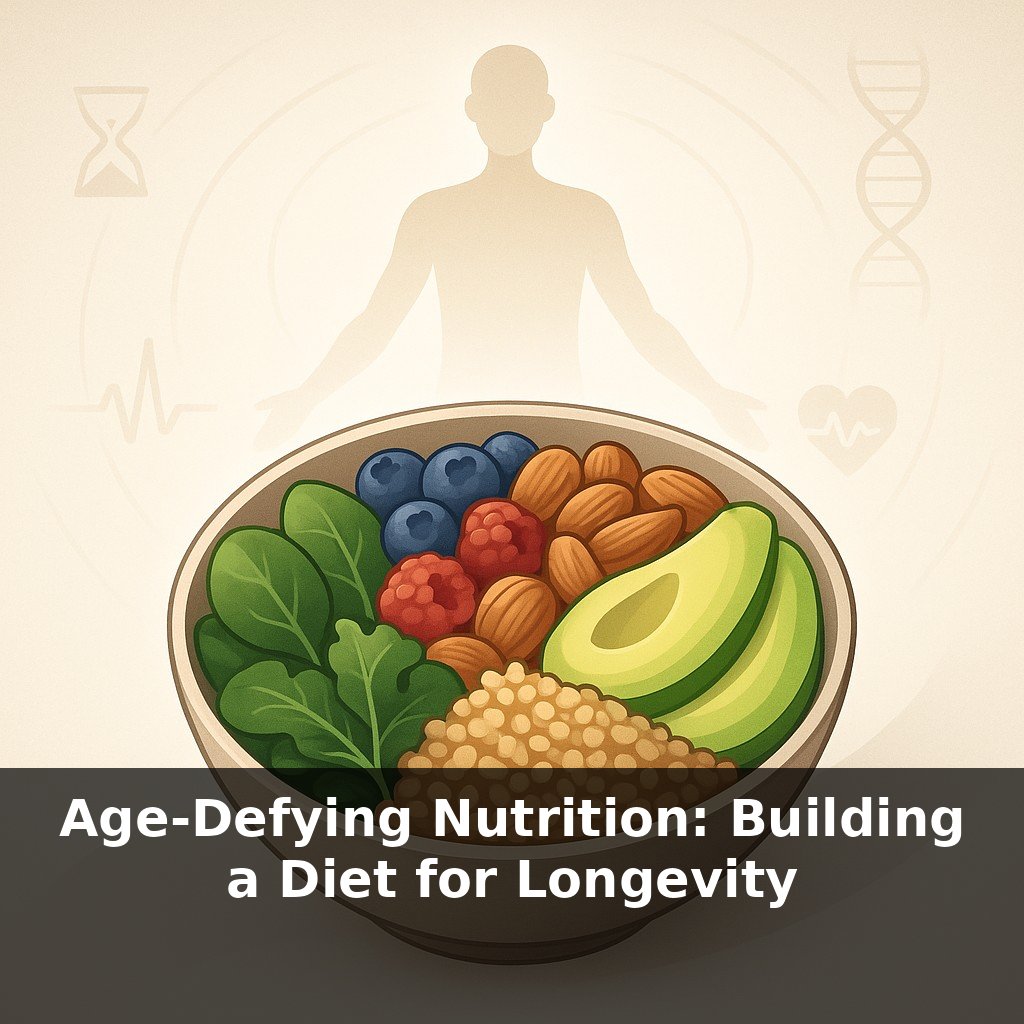
Right now, most adults eat fewer than half the plants their bodies need to age well—yet they believe their diet is “pretty healthy.” In large trials, like the 7,447-person PREDIMED study, simply shifting what fills your plate cut major cardiovascular events by about 30%.
Most people plan their meals around convenience, not longevity. Yet in large trials, like the 7,447-person PREDIMED study, simply shifting *what* fills your plate cut major cardiovascular events by about 30%. That’s not a niche biohack—that’s the power of a structured pattern repeated day after day.
In this episode, we’ll translate big-picture principles into a concrete, age-defying meal pattern you can actually follow. You’ll see how to:
- Move toward getting 90–95% of your calories from whole plant foods, like many Blue Zone centenarians. - Build fiber up toward at least 30–40 g per day, knowing every extra 10 g is linked to roughly 10% lower all-cause mortality. - Keep calories and protein in a “sweet spot”—enough to stay strong and energized, but not so high that they accelerate wear and tear.
By the end, you’ll be able to sketch a full week of meals that matches your tastes and supports a longer healthspan.
Here’s the twist: age-defying eating isn’t about a single “perfect” meal—it’s about the pattern that repeats 21 times a week. In long-lived populations, that pattern is surprisingly structured. Breakfast might hit 20–25 g of protein to protect muscle; lunch and dinner regularly include 2–3 cups of vegetables; snacks add another 8–10 g of fiber. Sodium stays under 5 g daily, added sugar under about 25 g for most women and 36 g for most men. Your task now is to turn these targets into a repeatable template that fits your culture, budget, and schedule.
Think of this step as upgrading from “healthy-ish eating” to a **repeatable blueprint**. You’re no longer asking, “Is this meal okay?” but, “How does this week line up against what we know from PREDIMED, CALERIE, and Blue Zone patterns?”
Start by sketching **weekly anchors**, not individual recipes:
1. **Pick 3 go-to breakfasts** you can rotate. - Example set: - Oats cooked with soy milk, ¼ cup walnuts, ½ cup berries, 1 tbsp ground flax (≈18–20 g protein, 10–12 g fiber). - 2 eggs + 1 cup sautéed greens + 1 slice whole-grain toast + ½ avocado (≈22–25 g protein, rich in monounsaturated fat). - Unsweetened yogurt (¾–1 cup) + ¼ cup mixed nuts + 1 cup fruit + 2 tbsp chia seeds.
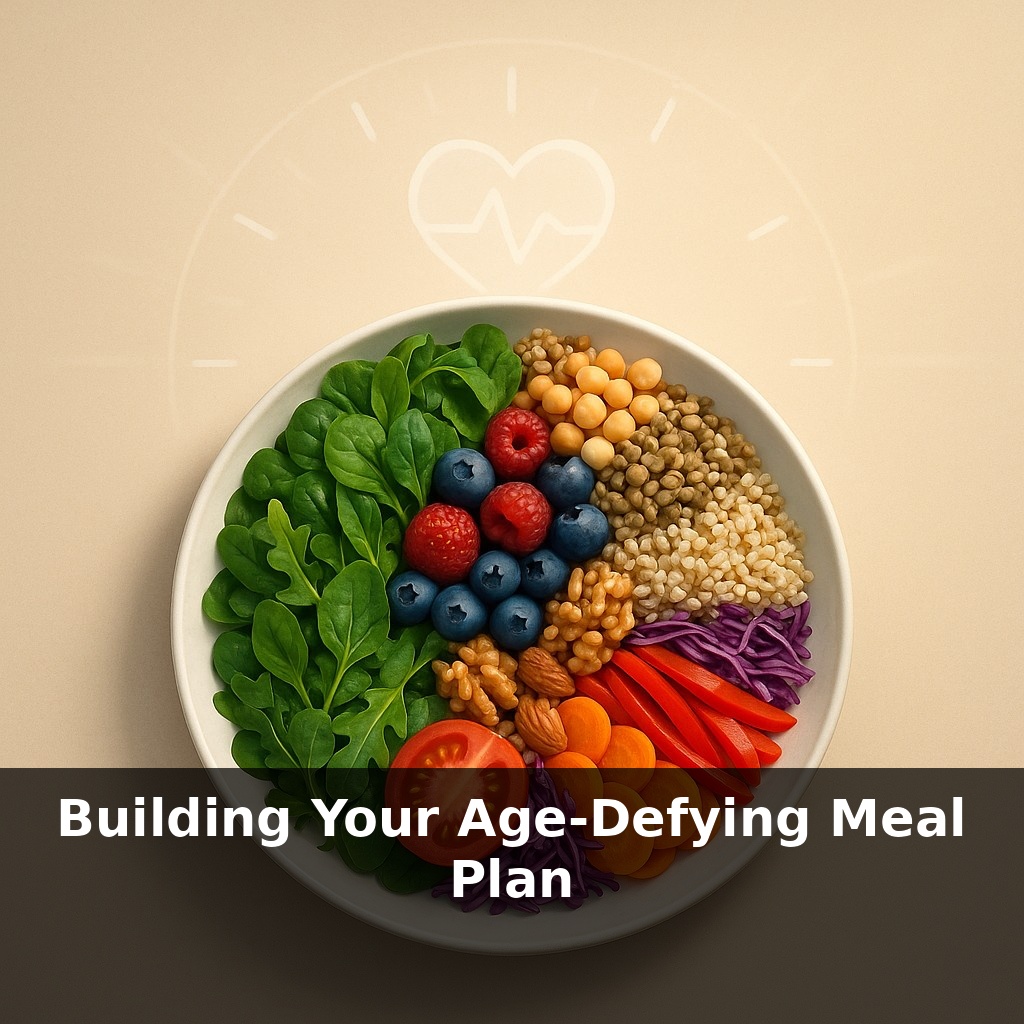
2. **Define a simple lunch formula** you can reuse 5 days a week: - 1–1½ cups cooked whole grain or starchy veg (e.g., ¾ cup quinoa + ¾ cup lentils). - 2 cups raw or 1 cup cooked vegetables. - 1–2 tbsp extra-virgin olive oil or nuts/seeds. This gets you close to a Mediterranean-style pattern without complex cooking.
3. **Standardize dinners into “themes”**: - Legume night: bean chili with 1 cup beans per person. - Fish night: 3–4 oz fatty fish + 1 cup whole grain + 2 cups vegetables. - Tofu/tempeh night: 3–4 oz tofu stir-fry over 1 cup brown rice. Repeat each theme 1–2 times weekly so shopping stays predictable.
Layer in **quantitative guardrails**: - Aim for **2–4 legume servings daily** (½ cup cooked each) to echo Blue Zone intakes. - Cap **animal protein** at roughly **1–2 palm-sized portions per day** for most adults, favoring fish and fermented dairy. - Keep added sugar to **<6 tsp (≈25 g)** for most women and **<9 tsp (≈36 g)** for most men—read labels and budget it, like money. - Use the **WHO sodium cap (~5 g salt/day)** by cooking mostly at home and limiting packaged foods to once daily or less.
Now personalize around **medical needs and activity**: - Hypertension? Swap one restaurant meal for a home-cooked one; that alone can drop sodium by 1–2 g. - Prediabetes? Make at least **2 main meals per day** built around beans or lentils to flatten glucose peaks. - Very active or over 65? Nudge total protein toward **1.2–1.6 g/kg/day**, mostly from plants plus fish/dairy.
Your blueprint isn’t rigid; it’s a **default setting**. Once it’s on paper, tweaks are easy—scrambling every day is not.
Here’s one way to turn principles into something you can actually shop and cook from. Start with a **7-day “default” grid** and plug in specific, repeatable options:
- **Breakfast row:** Mon/Wed/Fri: overnight oats with 30 g oats, 200 ml fortified soy milk, 20 g nuts, 80 g fruit. Tue/Thu/Sat/Sun: 2 boiled eggs, 1 slice rye bread (40 g), 1 tomato, ½ cucumber. - **Lunch row:** Aim for 1 “bowl” template most weekdays. Example: 100 g dry quinoa (≈1 cup cooked), 80 g chickpeas, 100 g broccoli, 50 g carrots, 10 g olive oil–lemon dressing. - **Dinner row:** Assign themes to each day: e.g., Mon lentil stew, Tue salmon, Wed tofu, Thu bean tacos, Fri sardines, Sat mixed-veg pasta, Sun slow-cooker bean soup.
One analogy to guide choices: build each main meal with **3 “slots”**—1 slot for something that grows in the ground, 1 for something that grew on a plant (legumes/whole grains), and 1 for a flavor booster (herbs, spices, fermented foods).
---
Your challenge this week: create a **one-page template** that maps 3 specific breakfasts, 3 lunches, and 4 dinners you’re realistically willing to repeat for the next month. For each, write:
1. Exact ingredients with approximate amounts (e.g., “½ cup dry lentils,” not “some lentils”). 2. A quick prep method that fits your schedule (e.g., “10-minute stir-fry,” “slow cooker in the morning”). 3. A built-in upgrade for days you have more time (e.g., “add 1 extra veg,” “swap white rice for farro”).
Post this template on your fridge or notes app. For 7 days, **only shop and cook from that page**, adjusting portions as needed. At week’s end, circle the 5–7 meals you actually enjoyed and would repeat; those become the core of your personal, age-defying rotation.
Within a decade, expect your weekly template to plug into smart systems that adapt automatically. A watch detecting poor sleep might cut added sugars by 10 g the next day; a microbiome update could nudge you toward 3 extra legume servings per week. Cities may offer “longevity lanes” in cafeterias—pre-set menus capped at 5 g salt and 500 kcal per meal. Start now by logging how your current plan affects energy, digestion, and blood pressure; those notes will train future tools to serve you better.
Track your results like an experiment: in 4 weeks, note body weight, waist at navel, resting heart rate, and average blood pressure (e.g., 128/82 vs 122/78). Aim for 150–300 minutes of brisk walking weekly to complement your plate. If waist drops ≥2 cm and energy improves by ≥20%, lock in your template and upgrade just 1–2 meals at a time.
Before next week, ask yourself: 1) “If I looked at my meals from the past three days, where am I clearly missing ‘age-defying’ staples like colorful vegetables, omega-3s (salmon, sardines, walnuts, chia), or high-quality protein, and which *one* meal tomorrow will I upgrade with at least two of these?” 2) “Knowing what the podcast said about blood-sugar balance and inflammation, which daily habit of mine (e.g., sweetened coffee drinks, evening dessert, ultra-processed snacks) is most likely aging me faster—and what realistic swap can I make for the next three days to test how I feel?” 3) “If my ‘future 80-year-old self’ were planning my grocery list today, which 5 specific age-supportive foods from the episode (like berries, leafy greens, olive oil, fermented foods, green tea, etc.) would absolutely be on it, and which of those am I willing to buy and use before the week is out?”