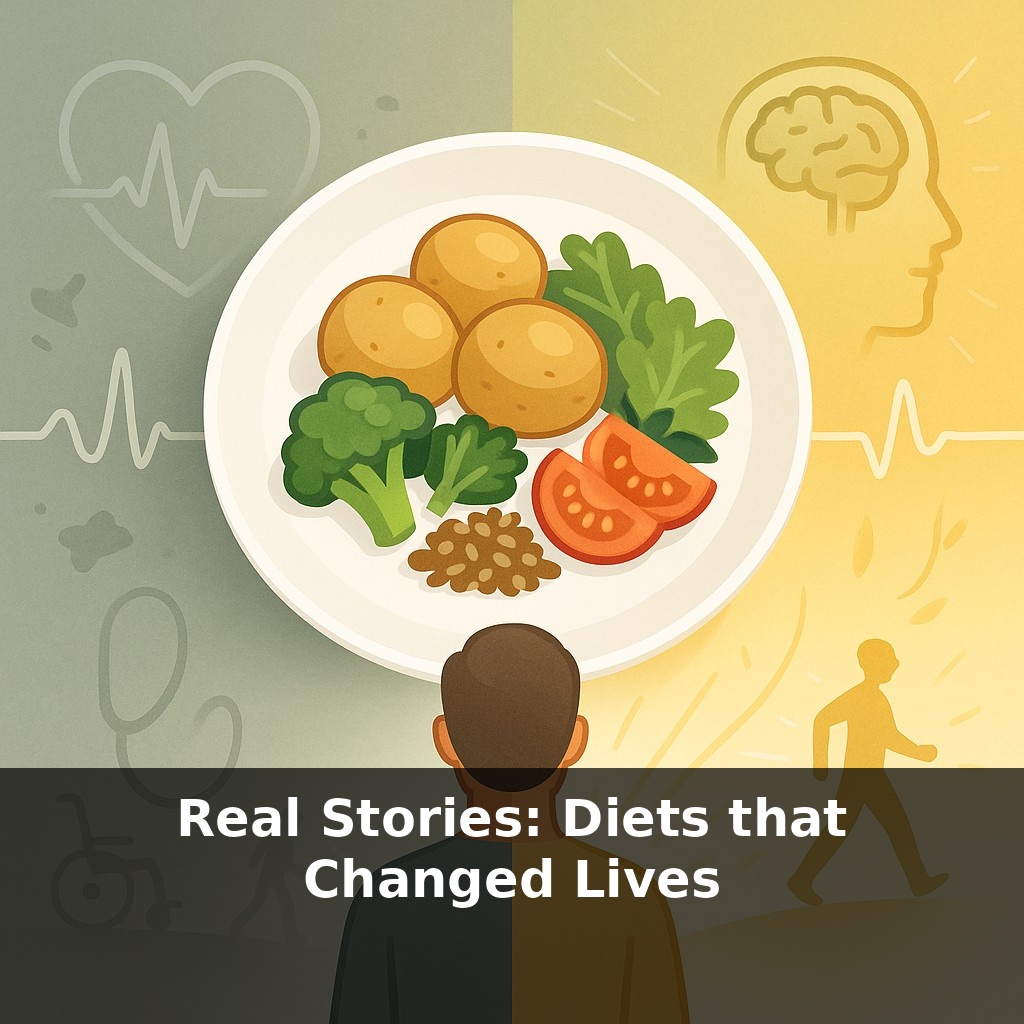
A man eats nothing but potatoes for two months—and his cholesterol and blood pressure improve. A doctor with multiple sclerosis leaves her wheelchair after radically changing her meals. Today, we’re stepping into these real-life nutrition experiments that rewrote people’s health stories.
Up to 80% of premature heart disease and stroke, according to the WHO, could be prevented with lifestyle changes—mostly what ends up on your plate. That’s not a gentle nudge; it’s a giant, flashing arrow pointing straight at your daily meals. In earlier episodes, we talked about upgrading what you eat in theory; today, we’re looking at what happens when people push those ideas to the extreme—and stick with them.
Think of this episode as opening real-life “before and after” chapters, not from ads, but from clinic notes and lab printouts. We’ll explore how a rigid potato experiment, a disciplined plant-based overhaul, and a high-vegetable, paleo-ketogenic protocol reshaped lab values, symptoms, and daily energy. As we walk through these stories, your job isn’t to copy them—but to notice which levers might exist in your own diet that you haven’t pulled yet.
Clinical researchers sometimes call these sharp health turnarounds “responders”—people whose bodies seem to wake up once the right dietary switch is flipped. But “right” isn’t one-size-fits-all: what worked for a New York politician, an Iowa potato board director, or a physician with MS emerged from different goals, constraints, and trial‑and‑error. Think of it less as finding a magic menu and more as tuning an instrument: some strings (like blood sugar) may retune quickly, others (like joint comfort or sleep) change more slowly, but all respond to how consistently you “play” your routine.
Dr. Terry Wahls didn’t start with a theory; she started with a wheelchair and a clock ticking on her career. What’s crucial in her story isn’t just the label “Wahls Protocol,” but how aggressively she shifted nutrient density. Nine cups of vegetables and greens a day, organ meats, seaweed, fermented foods—she essentially flooded her system with fiber, antioxidants, minerals, and healthy fats while cutting gluten, dairy, and ultra‑processed foods. Her NIH‑funded pilot trials now track not only symptom scales, but MRI changes, fatigue scores, and walking distance. Early data suggest that for at least a subset of people with progressive MS, this style of eating may modulate inflammation, mitochondrial function, and even perceived cognitive clarity—without being a cure.
Eric Adams’ transformation highlights a different lever: calorie density and insulin demand. A whole‑food plant‑based pattern tends to be naturally lower in saturated fat and higher in viscous fiber and resistant starch. That combination slows glucose entry, alters bile acid recycling, and feeds gut microbes that produce short‑chain fatty acids linked to improved insulin sensitivity. In the Newcastle diabetes trials, very‑low‑calorie diets shrank liver and pancreatic fat; that “defatting” appears to restore beta‑cell responsiveness in many people. Adams didn’t follow that exact protocol, but he tapped into the same physiology: reducing the constant “insulin noise” so his cells could listen again.
Then there’s Chris Voigt’s potato sprint. On paper it looks absurd, yet it exposes how powerful consistency and monotony can be for short‑term metabolic cleanup. Potatoes, eaten without frying or heavy toppings, offer potassium, vitamin C, fiber, and an unusually high satiety index. For 60 days he removed almost all sources of added sugar, alcohol, and excess fat simply because they weren’t on the menu. His story isn’t a template; it’s a loud signal that when you strip away dietary clutter, the body often responds quickly.
Across these very different approaches, a shared pattern emerges: fewer ultra‑processed foods, more fiber‑rich plants, and a clear structure people actually followed day after day.
A gardener doesn’t change the soil, sunlight, and watering schedule all at once; they tweak one variable, watch what happens, then adjust again. Your diet can be approached the same way. Instead of “becoming plant‑based overnight” or “going keto forever,” think in focused 30–60 day blocks where you deliberately stress‑test one major shift.
For example, someone with afternoon crashes might run a “fiber and protein at breakfast” experiment: oats plus nuts and berries instead of a pastry, tracked with a simple 1–10 energy rating every two hours. Another person with joint stiffness might try a “color surge” month—doubling deeply colored vegetables and fruits while trimming packaged snacks—and note changes in how easily they get out of bed or climb stairs.
Others test timing rather than content: keeping the same foods, but finishing dinner three hours before bed and watching what happens to sleep quality, morning appetite, and late‑night cravings. Each trial becomes a mini‑case study—not to prove a universal rule, but to map how your own body responds when you pull one clear lever at a time.
Clinical “food as medicine” is still in its early innings, yet health systems are quietly testing it. Some clinics now pair prescriptions with grocery vouchers and cooking classes, tracking outcomes like fewer ER visits. Think of it as tending a community orchard: one person’s successful diet trial can seed programs that nourish thousands. As data accumulate, insurers may start covering tailored meal plans the way they cover cardiac rehab, blurring the line between kitchen and clinic.
Your story doesn’t need a dramatic diagnosis to matter. Quiet tweaks—a steadier breakfast, extra legumes, fewer late‑night snacks—can still bend your health curve. Think of each week’s menu as a draft, not a verdict. When you treat your plate like a lab bench instead of a scoreboard, curiosity replaces guilt—and progress becomes a series of small, repeatable wins.
Before next week, ask yourself: 1) “If I borrowed just ONE tactic from Jenna’s story—like prepping her ‘non-negotiable’ breakfast or doing a Sunday batch of roasted veggies—which exact meal could I lock in as my own daily anchor starting tomorrow?” 2) “Looking at Mark’s switch from nightly takeout to his ‘3-home-cooked-dinners’ rule, what realistic boundary could I set around ultra-processed foods this week (for example, no soda after 3 p.m. or cooking at home Monday–Wednesday)?” 3) “Like Priya tracking how her mood changed when she tried a Mediterranean-style lunch, what single meal will I experiment with this week, and how will I quickly check in with myself 30 minutes afterward about my energy, focus, and cravings?”