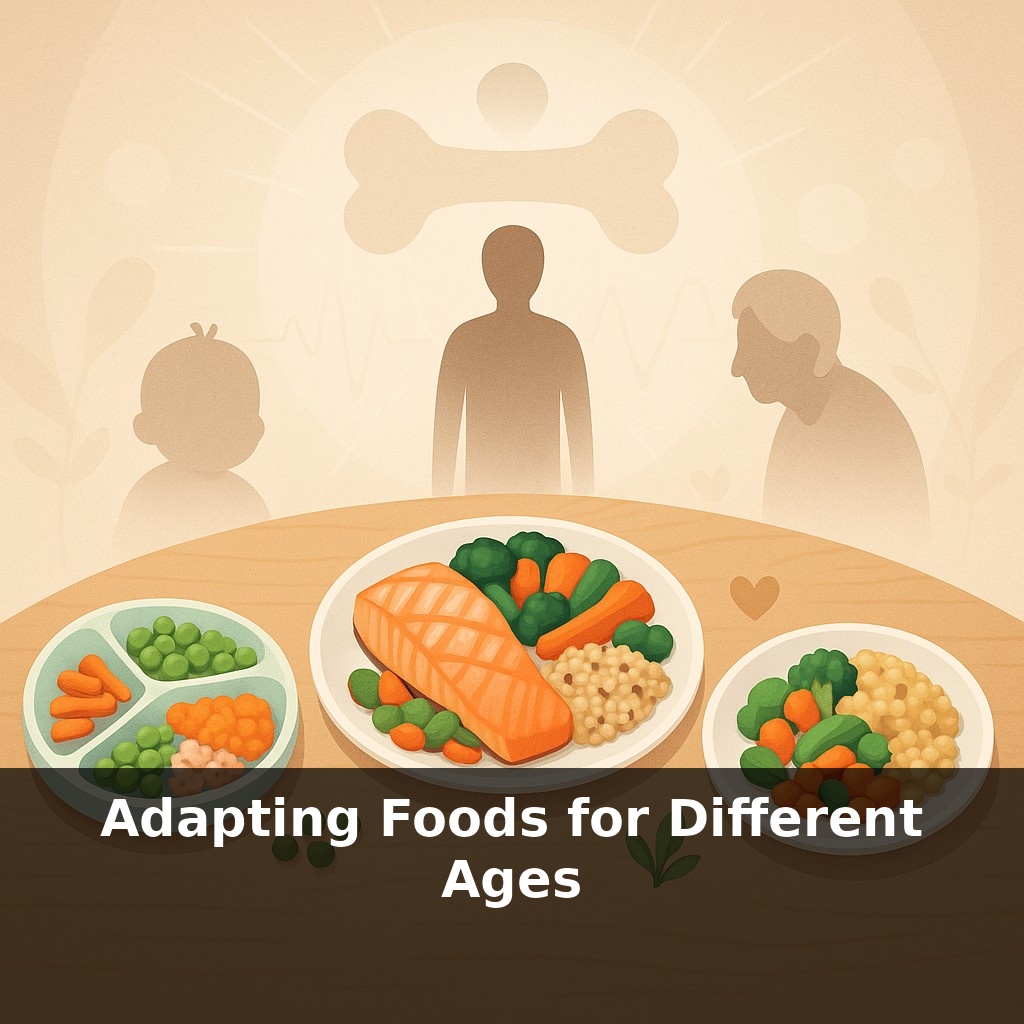
Right now, a toddler and their grandparent could be eating the exact same dinner—yet needing totally different “fuel.” In this episode, we’ll step into three kitchens: a nursery, a busy midlife home, and a quiet retirement table, and uncover how each plate should truly change.
“By age 18, you’ve built almost all the bone you’ll ever have.” That single fact quietly decides whether a 70‑year‑old breaks a hip from a minor fall or walks away unscathed. In this episode, we’re zooming out from nutrients in isolation and looking at timing: *when* your body most urgently needs what.
So far in this series, we’ve talked about superfoods and supplements as tools. Now we’ll layer in the life‑stage map that tells you *where* to actually use those tools. A teen mainlining soda, a 40‑year‑old skipping lunch, and a 75‑year‑old nibbling toast might all hit the same calorie total—but those calories “vote” very differently in their bodies.
We’ll explore how to re‑shape familiar breakfasts, school snacks, workday lunches, and late‑life meals so they quietly protect growth, strength, and cognition at each age.
Think of today’s episode as zooming the camera in even further—past “kids vs adults,” down to *very specific* windows where a small tweak makes an outsized difference. Like: the 6–24‑month “launchpad” when poor complementary foods can lock in stunting, or the decade after 30 when quiet muscle loss starts if protein and movement slip. We’ll also look at how hormones—growth spurts, pregnancy, menopause, and andropause—temporarily rewrite the body’s shopping list, and how a few smart swaps at those moments can echo forward for decades.
A newborn’s needs are almost the opposite of a retiree’s, yet we often feed them from the same cultural script: “more veggies,” “less sugar,” “watch the fat.” That’s far too blunt. Let’s move through the lifespan and zoom in on what *actually* shifts.
First, the very young. Breast milk is unusually rich in fat for a reason: rapid brain wiring. When solid foods begin, the trap is going too “diet” too soon—thin porridge, mostly starch, little color or protein. The better pattern: small portions, high density. Think mashed beans with olive oil, egg yolk, full‑fat yogurt, avocado, and soft fruits—each spoonful pulling double duty with iron, zinc, and healthy fats rather than just filling the belly.
School‑age children are no longer growing at warp speed, but their brains and immune systems are still building infrastructure. What matters most here is *reliability*. Not heroic “perfect” meals—consistent anchors. A protein + fiber + color formula at breakfast and lunch (for example, scrambled eggs, whole‑grain toast, berries; or lentil soup, rice, carrot sticks) stabilizes attention and mood far more than any “brain supplement” ever will.
Adolescence is your last big leverage point for both height and lifelong bone strength. Calcium and vitamin D are the headliners, but they work best in a band: protein for the scaffolding, magnesium and vitamin K from greens and legumes, and impact movement (jumping, court sports) to signal bones to absorb those nutrients. Soda and energy drinks crowd out calcium‑rich foods; that swap matters more here than at any other time.
Then, the long middle. From roughly 25 to 60, prevention is quiet and cumulative. The priorities: not overeating total energy, not under‑eating plants, and not skimping on protein. A simple target that fits most adults: make half the plate vegetables, one quarter protein, one quarter whole grains or starchy veg, plus some healthy fat. Repeated, that pattern steadily lowers cardiovascular and diabetes risk.
Later life flips the script again: calories down, nutrient density up. Appetite often falls, but needs for protein, calcium, vitamin B12, and fluids climb. Here, it’s smarter to enrich smaller meals—add powdered milk or soy protein to soups, extra tofu or fish to stews, olive oil and nuts to vegetables—than to push bigger portions that never get eaten. And with thirst signals blunted, setting “automatic” hydration cues (a glass with every medication time, herbal tea after walks) quietly protects kidneys, blood pressure, and cognition.
Think of your diet like a travel itinerary that keeps changing stops. You wouldn’t use the same day‑plan for a 3‑day city sprint and a slow month in the countryside; likewise, one “perfect” menu doesn’t stretch from kindergarten to retirement. The trick is learning when to upgrade the ticket.
For toddlers, “snack” can quietly become a fourth or fifth mini‑meal: a chance to slip in nut butters, hummus, or yogurt instead of crackers on repeat. For teens, the real leverage may be *timing* more than content—front‑loading food earlier in the day so late‑night raids aren’t doing all the work.
In midlife, the questions shift: how does your menu change on lifting days vs desk‑bound days? Extra protein and carbs are better spent *around* activity than drifting into mindless evening nibbling. Later on, that same idea morphs into protection: a protein‑rich breakfast before balance exercises, a salty broth on hot days, B12‑rich foods if you’ve taken heartburn meds for years. The through‑line isn’t perfection; it’s noticing when your body quietly changes the itinerary, and letting your plate catch up.
Soon, those age‑tuned choices won’t rely on guesswork. Your watch, fridge, and health record may “talk,” nudging you toward iron‑rich snacks in a growth spurt year, or extra B12 after a medication change. Like a navigation app rerouting after traffic, menus could update when sleep, step count, or lab results shift. The open question: who steers—your goals, or food and tech companies? The more you understand these needs now, the better you can demand tools that truly serve you.
Your body’s needs will keep shifting, even within the same decade—pregnancy, illness, a new sport, a desk job. Each change is a little “plot twist” that asks for a menu rewrite. Your challenge this week: notice one place your routine no longer fits your current season, and run a small experiment to update it—like rewriting a playlist for a new chapter.