Why Diets Fail: The Psychology of Restrictive Eating
📝 Transcript
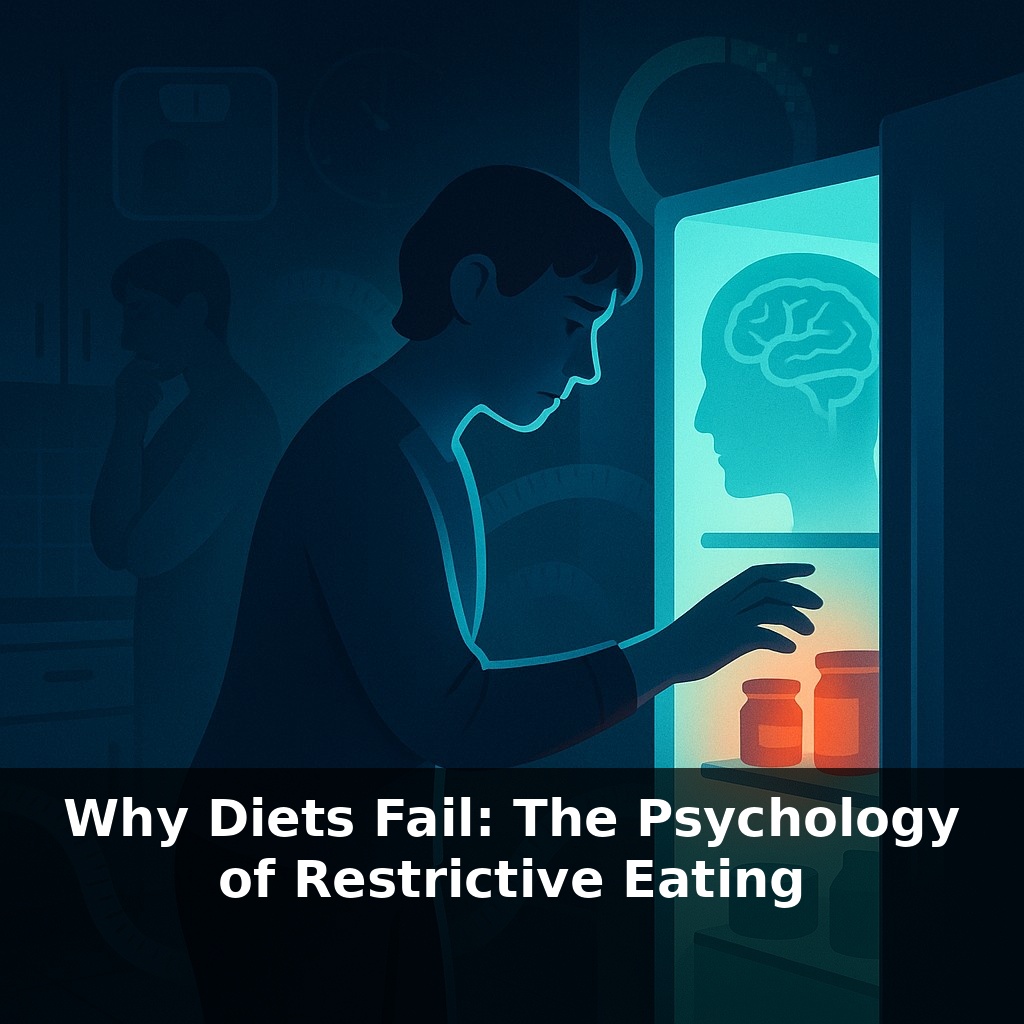
Most diets don’t fail on day one—they fail the moment you say, “I’ll be good.” From that second, your brain quietly shifts into survival mode. Later that week, standing in front of the fridge at night, you’re not just fighting cravings… you’re fighting your own biology.
So here’s the twist: when a diet “works” at first, that early success can quietly set the trap. The scale drops, people praise your “willpower,” apps flash green checkmarks—and your brain starts logging all of this as proof that strict rules equal safety and approval. That feels good… until one “off-plan” snack happens. Suddenly, it’s not just a cookie; it’s evidence (in your mind) that you’ve failed the role you were just rewarded for playing.
This is where psychology steps in. The more moral weight you put on food—“good,” “bad,” “clean,” “junk”—the more every bite turns into a test of identity instead of a simple choice. Eating becomes less like fueling a body and more like walking a tightrope: one wobble, and the whole act feels ruined.
And all this is happening while your body is quietly running its own program. Cut calories hard and hormones like leptin and ghrelin start shifting, nudging you to eat more while your resting metabolism trims back behind the scenes. On paper, the diet still looks “disciplined”; in real life, you’re thinking about food more, feeling less satisfied, and burning fewer calories doing the exact same things. It’s as if you’re following a perfectly color‑coded budget spreadsheet while the bank keeps adjusting your balance in the background, making every “mistake” feel bigger than it is.
Here’s the catch most diets never mention: your brain is wired to hate rigid rules around food. Not because you’re weak, but because inflexible rules are a terrible match for a messy, constantly-changing real life.
Think about how most plans are framed: “No sugar,” “No eating after 7 p.m.,” “No carbs on weekdays.” On day one, those rules feel clean and powerful. You get an instant sense of control. But your brain also starts running a quiet side process: monitoring. Suddenly those 200‑plus food decisions you make each day are being scanned for violations. That constant background checking is mentally expensive, and the cost goes up the more stressed, tired, or emotional you are.
Now add all‑or‑nothing thinking: if the rule is “no sugar,” then a single cookie is the same as a whole box. Once the rule is broken, your brain automatically shifts from “protect the rule” to “maximize the opportunity before the rule comes back.” That’s why “I already blew it, might as well keep going” feels almost automatic. It’s a flip, not a gradual slide.
Meanwhile, another process is kicking in: reward prediction. When a food is labeled off‑limits, its psychological value climbs. Your brain learns: “This is rare and special.” So when you finally eat it, your reward circuits fire more strongly, reinforcing a pattern of intense, out‑of‑control experiences with exactly the foods you’re trying to “fix.”
Over time, this pairing of strict rules + intense rebounds trains a specific habit loop: 1. Feel stressed / tired / criticized. 2. Reach for “forbidden” food. 3. Experience big relief and pleasure. 4. Feel guilt and vow to be stricter tomorrow.
The intention is control; the result is more time thinking about food, more emotional eating, and less trust in yourself.
And because most traditional diets don’t teach flexible responses—like “How do I course‑correct after a big meal?”—each lapse feels like a dead end instead of a bend in the road. So the only tool left is starting over with an even stricter plan, which quietly deepens the very cycle that made you feel out of control in the first place.
Your challenge this week: pick just one food rule you live by—“no bread,” “no eating at night,” “no dessert unless I worked out”—and simply observe when it shows up. Not to change it yet, just to notice: Does this rule make my choices feel easier… or more fragile? At the week’s end, ask: where did this rule actually help, and where did it backfire?
Think of two people facing the same office birthday cake. Emma’s on a strict “no sugar” plan; Jordan’s practicing flexible habits. Emma cuts “just a sliver,” decides she’s “blown it,” and spends the afternoon raiding the break room, then skips dinner out of guilt. Jordan takes one slice, eats it slowly, and adds a bit more protein at dinner to feel balanced. Same cake, completely different mental script—and only one of them ends the day feeling like they can be trusted around food.
You can see this in restaurant menus, too. When you’re dieting, the “forbidden” section might as well be printed in neon; every other table’s fries feel louder, closer, harder to ignore. But when you allow any food in some context, the volume on those cues drops. A plate of fries becomes one option among many, not a test of character.
Over months, these tiny, low‑drama decisions add up. Instead of swinging between “on track” and “off the rails,” your eating starts to look more like gentle course corrections on a long drive.
Most people will keep trying stricter plans, assuming discipline is the missing piece, while their bodies quietly adapt to each new push. Over years, this can feel less like “getting healthy” and more like managing a volatile stock: big crashes, brief rallies, never‑ending worry. The next wave of approaches will likely prioritize stability—smaller, sustainable shifts in routines, environments, and expectations—so your eating habits behave more like a slow, reliable investment than a risky bet.
Real change starts when food becomes less like a test and more like learning an instrument: clumsy at first, then gradually more fluid as you practice responding instead of reacting. As you loosen rigid rules, you make space to notice patterns—sleep, stress, movement—that quietly shape your appetite, and you gain options that never show up in diet plans.
Try this experiment: For the next 3 days, take one food you usually “forbid” (like bread, pasta, or dessert) and intentionally add a small, planned portion of it to one meal each day—no “making up for it” later, no extra workout. Before you eat it, rate your craving for that food from 1–10, then rate it again 20 minutes after you finish. Notice whether your craving intensity, anxiety, or urge to binge on that food changes across the 3 days as your brain learns it’s no longer off-limits.
From this course
Eat Better Without Dieting
7 episodesUnlock all episodes
Full access to 7 episodes and everything on OwlUp.
Subscribe — $1.99/monthLess than a coffee ☕ · Cancel anytime