Your brain prefers sugar, your hormones love fat, and your muscles crave protein—yet most diets tell you to pick a side. On Monday you’re cutting carbs, by Friday you’re scared of oil. Today we’re stepping into the kitchen of your body and asking: what actually happens when they work together?
Somewhere between “no carbs after 6,” “butter in your coffee,” and “hit your protein target at all costs,” we quietly lost the plot: your body doesn’t care about trends, it cares about teamwork. Every time you eat, you’re not just filling up; you’re sending instructions. A high-carb, no-fat breakfast says, “Burn fast, get hungry soon.” A high-fat, low-carb dinner whispers, “Slow burn, keep me full, maybe make me sleepy.” A balanced meal can say, “Focus now, repair later, stay steady.”
Here’s where it gets interesting: the same food combo can land very differently in two people. One person’s oatmeal-and-nuts is stable energy; another’s is a glucose rollercoaster. Why? Sleep, stress, muscle mass, hormones, timing, even gut bacteria all tune your response. This episode, we’ll zoom in on that quiet control panel—and show you how to tweak the mix without counting or obsessing.
Here’s the twist: most people try to “fix” their eating by zooming in on one number—grams of protein, calories, grams of carbs—like staring at a single pixel and trying to guess the whole picture. What actually matters more, especially if you want to eat better without dieting, is the pattern across a day: which macro tends to show up alone, and which ones travel together. A naked bagel, a plain chicken breast, a handful of nuts by themselves—each nudges energy, hunger, and mood differently than when paired thoughtfully on the same plate. That pattern is where your real leverage lives.
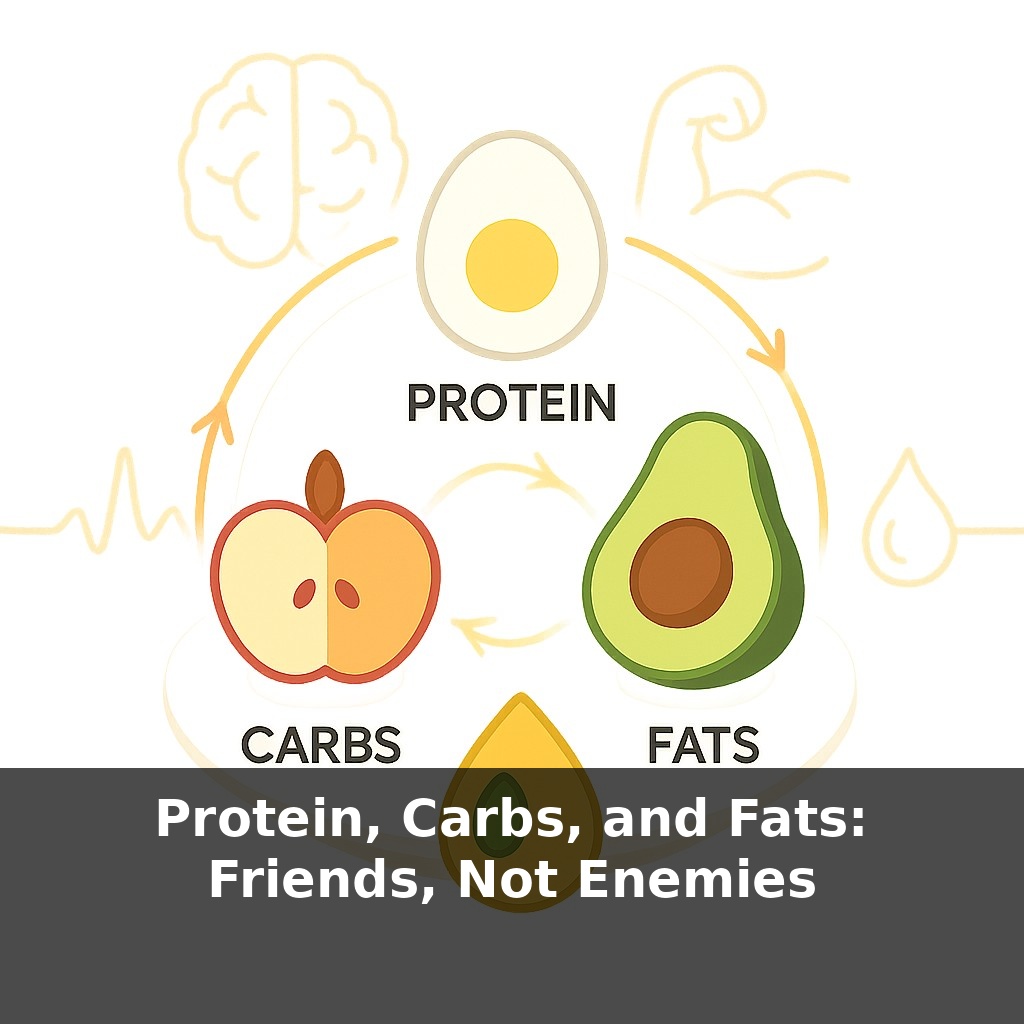
Here’s where the “friends, not enemies” idea becomes practical: start noticing which macro tends to hog the spotlight on your plate.
When carbs show up mostly alone—toast with jam, a big bowl of pasta with barely any oil or protein—you usually get rapid energy, but it doesn’t last. Your blood sugar rises faster, insulin steps in, and a couple of hours later you’re prowling for snacks. Add protein and some fat, and that same carb source usually lands softer and keeps you satisfied longer.
Flip it: when fats dominate without enough carbs—think a big cheese-and-salami plate, or coffee plus spoonfuls of nut butter—you might feel pleasantly calm or focused at first, but many people notice sluggishness, constipation, or “brain fog” if this becomes the default, especially earlier in the day when the brain is pulling for glucose. Add some smart carbs and the picture changes: mood, digestion, and workout performance often improve.
Protein is the one people love to isolate: shakes, bars, plain chicken ready to “hit the target.” High-protein can help with appetite and muscle, but over-focusing on it can quietly squeeze out fibre-rich carbs and healthy fats. That’s where you see low energy, stalled digestion, and cravings for “something sweet” after meals—it’s not a willpower problem, it’s a distribution problem.
The AMDR ranges (roughly 45–65% carbs, 20–35% fat, 10–35% protein) are less about perfection and more like guardrails on a highway: they keep you away from extremes where one macro crowds the others off your plate. Inside those guardrails, you have room to personalise based on age, activity, culture, and preference.
Think like a clinician adjusting a medication regimen: instead of asking, “Is fat bad?” ask, “Given my day tomorrow—sleep, meetings, workout—do I want a little more carb at breakfast, more protein at lunch, more fat at dinner?” You don’t need math to do this. You need curiosity and a rough visual rule: most meals work better when you can clearly point to all three—something starchy or fruity, something that grew or grazed, and something that’s naturally oily, not just added cream or sugar.
Think of building a meal like designing a budget, but your “currency” is energy, focus, and comfort. If lunch is mostly bread and fruit, you’re spending everything on quick cash flow—great for an afternoon sprint, terrible for staying solvent until dinner. Add grilled fish and avocado, and suddenly you’ve funded both today’s bills (energy now) and long-term projects (hormones, cell repair) without going into “craving debt” at 4 p.m.
Concrete example: Say you’re lifting weights three evenings a week. On training days, you might shift more of your starchy foods toward the meals before and after your workout, while keeping fats a bit lighter at those times so digestion doesn’t slow you down. Rest days, you might nudge up the oily foods and vegetables, with just enough starch to keep mood steady.
Another angle: chronically low fibre (from skimping on plants) often shows up not just as constipation, but as “I’m full but not satisfied.” Restoring it is less about rules, more about rearranging what’s already on your plate.
Today’s “perfect” macro ratio may be tomorrow’s rough draft. As tech gets cheaper, your plate could be guided less by generic charts and more by your sleep data, mood trends, and even how your gut microbes shift after certain dinners. Think of your meals as hypotheses: “If I move more of my carbs near my workout, do I sleep better?” Future tools will help you test those hunches quickly, then nudge your macros like a coach tuning an athlete’s training plan.
Your challenge this week: run a 5‑day macro‑mix experiment without counting grams.
Pick ONE main meal (say, lunch). Each day, change which macro is most visible on your plate that meal only:
- Day 1: Carb‑forward - Day 2: Protein‑forward - Day 3: Fat‑forward - Day 4: Even mix of all three - Day 5: Repeat the day that felt best
Right before and 2 hours after that meal, quickly rate (0–10): - Energy - Focus - Hunger
At the end, compare which macro balance gave you: - The steadiest energy - The least “snack urgency” - The clearest thinking
Use those results to design ONE go‑to macro mix for busy days next week.
Think of this as sketching your own “macro fingerprint.” As you test different mixes, patterns emerge like constellations: certain lunches pair with calmer meetings, certain dinners with deeper sleep. You’re not chasing a perfect ratio; you’re learning which small shifts quietly unlock better days—and giving yourself knobs to turn instead of rules to break.
Here’s your challenge this week: For the next 5 days, build every main meal around protein first (at least one palm-sized serving), then add a fist-sized portion of carbs and a thumb-sized portion of healthy fats. Choose whole-food versions you heard about: for example, eggs or Greek yogurt with oats and berries plus peanut butter at breakfast, chicken or tofu with rice and avocado at lunch, and salmon, potatoes, and olive-oil veggies at dinner. Commit to eating these balanced meals at roughly the same times each day and notice how your energy, hunger, and cravings shift by the end of the week.