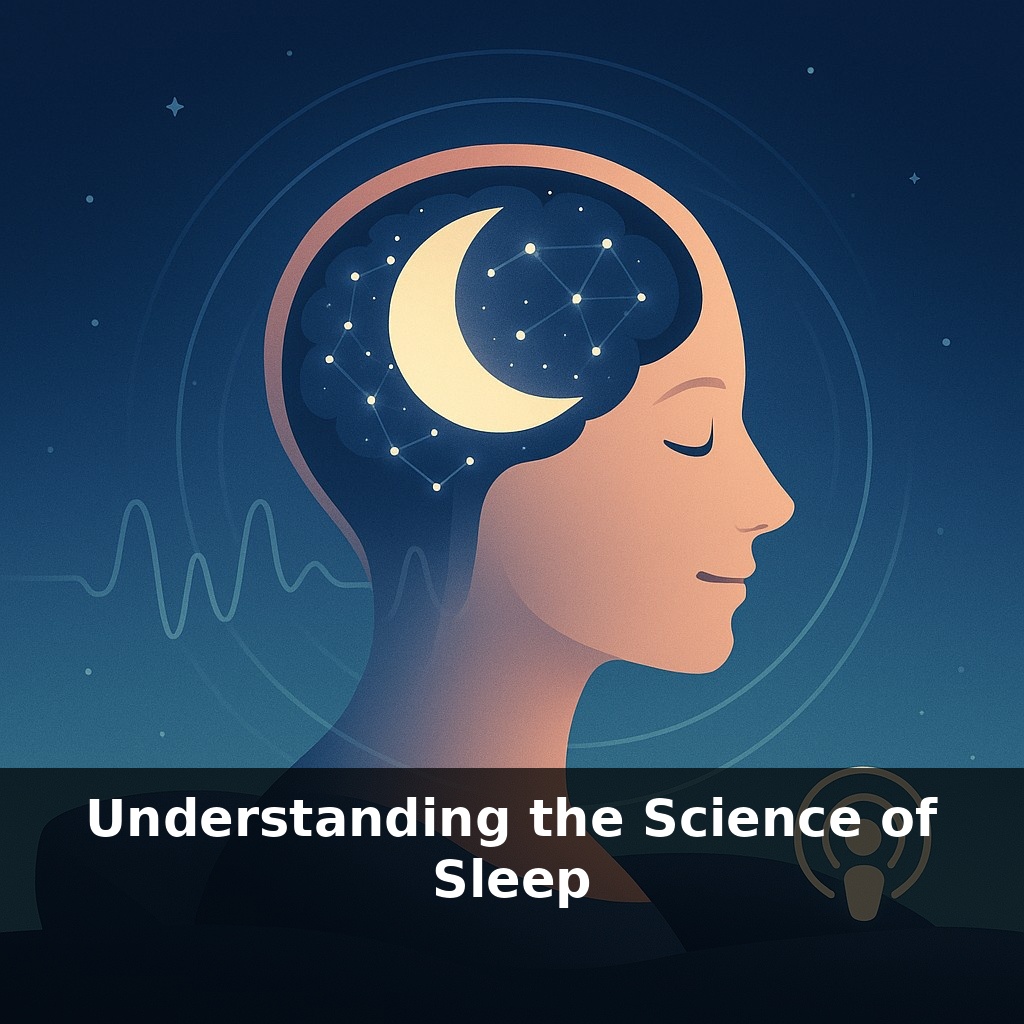
Understanding the Science of Sleep
📝 Transcript
Right now, while you’re awake, your brain is already quietly planning tonight’s sleep. In one typical night, it will rotate through several distinct modes—some clear your body, others edit your memories, others tune your emotions. Miss sleep, and those invisible shifts start to misfire.
Thirteen percent. That’s how much your risk of dying from any cause jumps when you regularly sleep under six hours. Not because your body is weak, but because you’re quietly running it outside its design specs. The “how tired do I feel?” test is a terrible gauge of this—your brain adapts to chronic sleep loss the way someone adapts to a noisy apartment: you stop noticing, but the damage doesn’t stop.
Behind the scenes, two forces are steering every night: your circadian clock, tuned by light and timing, and a rising “sleep pressure” that tracks how long you’ve been awake. Together they decide *when* you get sleepy and *how* deep your sleep runs. Misalign them—late screens, erratic bedtimes, social jetlag—and the whole system drifts.
In this episode, we’ll unpack how these two systems work together, and how to nudge them back into sync so sleep becomes easier, deeper, and more reliable.
Your sleep isn’t just about “enough hours”; it’s about *when* those hours land and *what* your body does with them. Across the night, you pass through stages—N1, N2, N3 and REM—that don’t show up in equal slices. Early sleep is usually richer in deep N3, while the late morning hours are packed with REM. That means shifting your schedule by even 60–90 minutes can trade away specific benefits, like moving money out of a long‑term investment and into a checking account: more “accessible” time awake, but less growth in the background. In this episode, we’ll map these stages onto real-life choices: alarms, naps, and late-night work.
Think of tonight’s sleep as a carefully timed sequence rather than a single “on/off” block. Once you’re past that light N1 drowsiness, your brain spends roughly half the night in N2. This is where your sensory gates start to filter out the outside world just enough that sounds and light are less likely to yank you awake—*if* they’re not too intense. Sleep spindles (those rapid bursts on an EEG) seem to act like temporary earplugs, protecting your sleep while your brain quietly organizes skills and facts you practiced during the day.
Then comes N3—your deepest, slow‑wave sleep. Most adults front‑load it in the first third of the night, especially the first 2–3 hours after you fall asleep. Growth hormone surges, blood pressure dips, and your body leans hard into physical restoration and immune support. Cut your sleep short at the beginning of the night—early shifts, late gaming, “I’ll just start my sleep at 1 a.m.”—and you’re disproportionately cutting this heavy‑duty repair window.
Toward the early morning, your architecture tilts toward REM. This is where emotional experiences from the day get reprocessed and integrated, often showing up in dreams. Heart rate and breathing become more variable, and your brain becomes almost as metabolically active as in wakefulness. When your alarm slices through this late‑stage REM, you’re not just “losing 30 minutes”; you’re interrupting a block that stabilizes mood, creativity, and social intuition.
Here’s the catch: your body *expects* these phases in a predictable order and timing. Drift your sleep window around the clock and you’re constantly shuffling the balance—trading deep N3 for lighter N2, or REM for groggy awakenings. This is why two people can both get seven hours, yet feel completely different: one preserved those early N3 and late REM-rich segments, the other scattered them with awakenings, light pollution, or inconsistent schedules.
The goal isn’t perfection; it’s stacking the odds so your natural architecture can run its full program most nights.
Think of your night like a carefully coded app release: if you keep pushing updates at random times, bugs slip through. Let’s ground this in real life. The new parent who grabs fragmented naps may total seven hours, yet wakes feeling “wired and tired” because their deepest cycles keep getting rebooted. The shift nurse who flips from days to nights every week often notices mood swings before true exhaustion—those late‑night REM blocks are constantly being undercut. And the entrepreneur working on a product launch who cuts the first hour of sleep for email might hit deadlines, but slowly loses recovery capacity—workouts feel heavier, minor colds linger longer.
Notice too how travel changes the “build”: fly three time zones east, and your early‑night N3 now arrives when your calendar still says “evening.” Go to a 10 p.m. CrossFit class there and you’re forcing high intensity right into your body’s default repair slot, like running a heavy database query during backup.
Shift the lens forward, and sleep becomes less like a nightly chore and more like infrastructure we’re starting to engineer. Precision sleep medicine could mean your work hours, meds, even chemo are timed to your personal rhythm, like scheduling payments to match cashflow. Cities may dim and warm their lights after dusk, schools might start later, and AI could quietly scan home sleep data to flag apnea early—turning tonight’s rest into tomorrow’s most underused lever for public health and performance.
Conclusion: Sleep is less a nightly shutdown than a rehearsal for tomorrow’s decisions, impulses, and resilience. Treat it like rebalancing an investment portfolio: small, steady adjustments in timing, light, and routine compound into lower health “fees” and higher daily returns. In the next episode, we’ll turn this biology into specific, testable habits.
Here's your challenge this week: Use a sleep tracking app to set a reminder at 10:30 p.m. to start a wind-down routine personalized for your relaxation, like dimming the lights and practicing a pre-sleep meditation available on Headspace. Avoid caffeine after 2:00 p.m., and record any changes in sleep onset time daily. Each morning, document in a journal not just your wake-up time, but also a quick note on one dream or a dominant morning feeling. Use this data to adjust the wind-down activity at the end of a week based on what correlated most with positive sleep experiences.
From this course
Mastering Healthy Sleep Routines
7 episodesUnlock all episodes
Full access to 7 episodes and everything on OwlUp.
Subscribe — $1.99/monthLess than a coffee ☕ · Cancel anytime