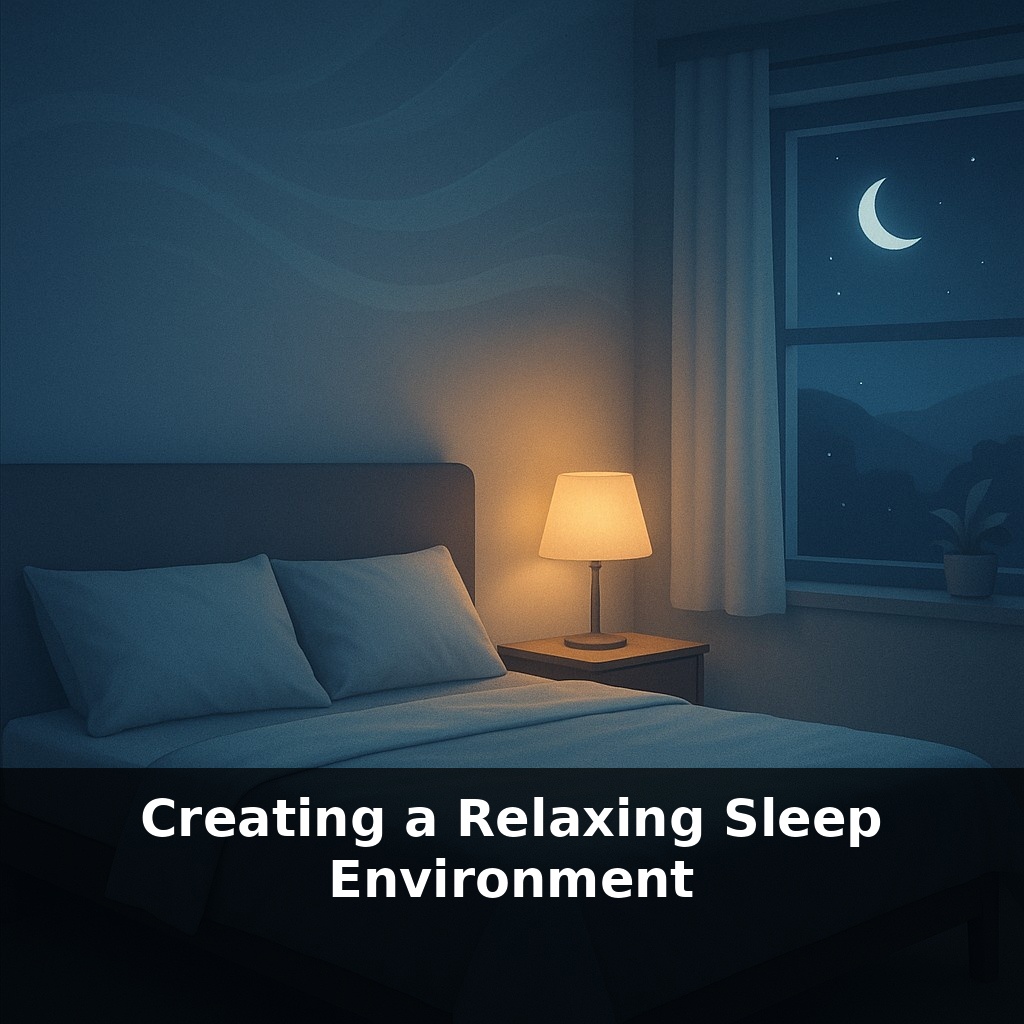
Right now, your bedroom might be quietly sabotaging your sleep more than stress or caffeine. In one study, a slightly cooler room and softer light helped people fall asleep faster—without changing their schedule at all. So what, exactly, is your room doing to your brain at night?
A lot of people try to “fix” their sleep by adding things: supplements, gadgets, complicated routines. But the most powerful changes often come from subtracting what quietly agitates your senses. Consider which elements in your sleeping space might be causing disruption, like a loud clock or unnecessary lighting, and remove them to see if it makes a difference.oyances you ignore during the day—a dripping faucet, a buzzing fridge, a neighbor’s TV. At 2 a.m., those same details can act like tiny alarms, nudging your brain out of deeper rest over and over again.
This is where design—not décor, but deliberate setup—starts to matter. How your surfaces absorb or bounce sound. Whether your bedding supports your body or pressures your joints. How your tech behaves once the lights are off. In this episode, we’ll zoom in on these “background settings” and show how small, precise tweaks can turn a neutral bedroom into a space that actively protects your sleep instead of chipping away at it.
Many bedrooms are “almost” restful: dark-ish, quiet-ish, comfortable-ish. The problem is that your nervous system doesn’t grade on a curve—it reacts to tiny mismatches between what it expects at night and what the room actually delivers. A faint streetlamp line across your wall, the heater cycling louder every hour, a pillow that feels fine at 10 p.m. but cramped at 3 a.m.—each one is a nudge toward wakefulness. Modern tools can help here, but only if you decide what you want your room to do for you, moment by moment, from winding down to deep sleep to early-morning light.
Melatonin doesn’t care how “cozy” your room feels; it cares about inputs. Blue-heavy light at or above 30 lux can cut its production in half within half an hour—that’s the kind of brightness you get from a typical phone or tablet at arm’s length. The goal isn’t a monastic cave, it’s strategic dimming and color-shifting at the right times.
Start by separating “daylight” and “pre-sleep” modes. During the day, you actually want brighter, cooler light in your bedroom to anchor your circadian clock. Two hours before bed, flip the script: drop overall brightness and shift to warm tones. Smart bulbs make this automatic: set scenes so lights glide from neutral white to amber without you having to think about it. If you don’t want new hardware, even a cheap lamp with a low-watt warm bulb dedicated to evenings is a meaningful upgrade.
Screens are trickier because they’re close to your eyes. Night modes and blue‑light filters help, but distance and brightness are just as important. Pull devices a bit farther away, cut the brightness to the lowest comfortable level, and give yourself a device “last call” at least 30–60 minutes before sleep. If you tend to scroll in bed, move chargers out of arm’s reach so picking up your phone is inconvenient by default.
On the sound side, the real enemy is irregularity. Sudden car doors, pipes clanking, a partner’s notifications—these are what jolt your brain. This is where consistent low-level noise becomes useful. White, pink, or brown noise, a gentle fan, or an app linked to a smart speaker can smooth over those spikes. Think of it as using a steady background “track” so random sounds don’t crash the system like surprise pop‑ups on your computer.
You can get more targeted with tech: some smart sound machines and apps adjust volume based on ambient noise, rising slightly when your street gets louder, then settling back. If you’re sharing a room, directional speakers or pillow speakers can keep the sound field closer to you, so you’re not negotiating over volume every night.
All of this works best when each sense has a “night script”: your lights know how to fade, your soundscape knows how to hold steady, and your devices know when to quiet down. Your job is to set those scripts once, then let the environment carry more of the effort.
A helpful way to test your bedroom setup is to borrow a mindset from software debugging: change one variable at a time and watch what breaks—or suddenly works. For light, try treating your room like a photography studio. Ask: where are the “hot spots” and glare? A small floor lamp behind a chair, aimed at the wall, can create a soft bounce that feels calmer than a bright bulb overhead. If you read on paper at night, position the light so it hits the page from behind your shoulder, not straight into your eyes.
Sound is similar. Instead of immediately buying a device, experiment with what you already own. A fan plus a closed closet door can sometimes buffer hallway noise better than expensive panels. If traffic or neighbors are loud, play with distance: moving your bed just one meter away from a shared wall can noticeably change how sharp sounds feel.
Your mattress and pillows are worth treating like tools, not heirlooms. Rotate or flip components, change pillow heights, and notice how your body feels not just in the morning, but at 3 p.m.—lingering stiffness is feedback that last night’s “settings” were off.
Your challenge this week: run a three‑night “environment split test.”
Night 1: Focus only on light. Don’t buy anything new—just rearrange what you already have. Shift lamps, block a crack under the door, or angle a shade differently. Notice how long it takes you to feel drowsy and how often you wake before morning.
Night 2: Reset the room to normal light, and now adjust sound only. Try a fan, an app, or even closing specific doors. Track whether you’re waking from small noises or dreaming more vividly.
Night 3: Keep light and sound as usual, and tweak just your physical setup: pillow height, blanket weight, or bed position. Pay attention to how your back, neck, and shoulders feel on waking.
At the end of the three nights, choose the single change that gave you the clearest benefit and make that your new baseline before adding anything else.
Soon, your bedroom might behave less like static furniture and more like adaptive software. As biosensors get cheaper, a wristband noticing rising heart rate at 3 a.m. could nudge your room cooler, dim an LED display, or subtly thicken sound masking—like a thermostat that also “reads” your stress. On a city scale, we may see noise and light treated like pollution, with building codes and zoning tuned to protect sleep as deliberately as drinking water or air quality.
Treat this as an ongoing build, not a one‑time makeover. As habits shift—new job, partner, baby, pet—your “sleep code” will need updates. The win isn’t perfection; it’s noticing when the room stops matching your life and being willing to tweak it. Over time, those small edits add up to something rare: a bedroom that quietly has your back every night.
Start with this tiny habit: When you turn off the main light in your bedroom at night, take 10 seconds to dim or switch off any bright screens and turn on just one softer, warmer light (like a lamp or salt lamp). As you do it, gently say to yourself, “This is my wind-down light.” That’s it for today—no full bedroom makeover, just choosing calmer light as your signal that it’s almost sleep time.