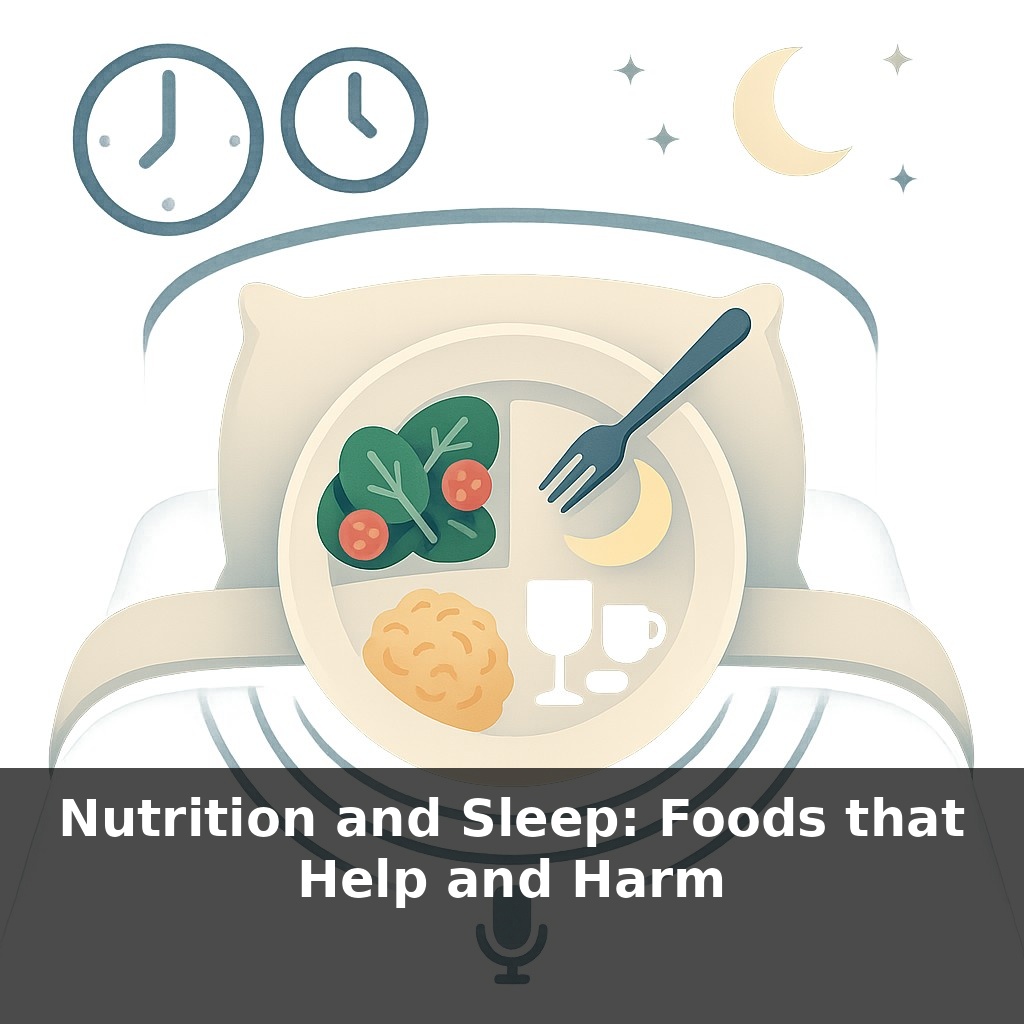
Surprisingly, what's on your dinner plate, like that healthy salad, might be delaying your sleep onset. Tonight's meal can quietly push back your natural melatonin production by over an hour—without leaving you feeling 'wired.' In this episode, we'll explore how even nourishing choices can ripple into your sleep patterns and their surprising impact.
You already know that light and timing can nudge your sleep in the right (or wrong) direction—now we’re going to open the fridge door and see how your menu does the same thing. Some foods quietly smooth the runway for sleep, others throw speed bumps across it. And the twist is, the “healthy” choice isn’t always the sleepy choice: a virtuous-looking late salad, an extra-dark chocolate square, or that post‑workout energy drink can all send mixed signals to a brain that’s trying to power down.
In this episode, we’ll zoom in on specific nutrients that act like green lights for drifting off, and contrast them with the usual suspects that jolt you awake at 2 a.m. We’ll also talk timing: not just what you eat, but when, and how that changes the night ahead—even if you fall asleep “just fine.”
Tonight we’re going to zoom in closer—not at nutrients in theory, but at the actual foods and habits that sneak into your evening routine. Think less “nutrition textbook,” more “what’s really on your plate at 8:30 p.m.” Because the gap between a soothing pre‑sleep snack and a 2 a.m. wake‑up call can be as small as swapping dark chocolate for kiwi, or wine for tart cherry juice. We’ll connect specific research findings to common dinners, desserts, and drinks, and show how tiny tweaks—portion, toppings, and timing—can flip a regular meal from sleep-disrupting to sleep-supportive without overhauling your entire diet.
Let’s walk through a realistic evening, plate by plate, and quietly upgrade it.
Start with dinner. Many people go heavy here—creamy pastas, big burgers, loaded takeout. For sleep, think “comfortable fullness,” not “food coma.” A practical rule: aim for something you’d be happy to take on a relaxed walk after, not something that makes you want to unbutton your pants. Grilled fish or tofu, a modest serving of whole grains, and cooked vegetables usually land in that sweet spot. Cooking your veggies (steamed, roasted, sautéed) makes them easier to digest than a giant bowl of raw crunch late at night.
Now look at “healthy” extras that sneak in stimulation. Dark chocolate after dinner? Many bars contain as much caffeine as a light cup of tea, plus the stimulant theobromine. Green tea with your evening emails? Still caffeinated, even if it feels gentle. Energy bars or “pre‑workout” powders used for late exercise sessions often hide caffeine, guarana, or yerba mate—that can echo into bedtime even if you feel calm.
Alcohol deserves its own spotlight. A small glass of wine with food may not wreck your night, but stacking drinks—especially closer to lights‑out—pushes your most fragile sleep stages off a cliff. If you notice 3–4 a.m. awakenings, try a simple swap: keep any drink with alcohol at least 3 hours before bed, and alternate with water or a non‑sugary, non‑caffeinated drink.
Even desserts can be edited rather than erased. Instead of a big bowl of ice cream or a pile of cookies, think fruit-forward: berries with a spoon of yogurt, baked apple with cinnamon, or half your usual dessert portion plus something naturally sweet on the side. You’re trimming the added sugar without feeling punished.
Late-night “second dinners” are their own trap. Standing at the fridge with leftovers, snacking straight from the box, or building a towering sandwich at 10:30 p.m. gives you extra calories precisely when your body is trying to power down. If you truly need something, make it deliberate and small: a sliced banana with a dab of nut butter, a few whole-grain crackers with cheese, or a small bowl of oats with milk—chosen, plated, and then you’re done.
Think of your evening as a little “nutrition playlist” you’re building track by track. The order you queue things up matters as much as what you pick. Start with something steady and simple: water or an herbal tea earlier in the evening, so you’re not chugging fluids right before bed and waking up for bathroom trips. Then layer in foods that quietly support the mood you want later: magnesium‑rich pumpkin seeds sprinkled on your salad, or potassium‑rich potatoes instead of fries drowned in salt.
Now zoom into the hour before bed. This is where “micro‑decisions” add up. That tiny square of chocolate while scrolling? Swapping it for a few tart cherries or a sliced kiwi shifts the tone without feeling like a big sacrifice. The same goes for “just one more” salty snack versus a small bowl of yogurt with some berries. Over a week, these small substitutions teach you which combinations leave you feeling settled versus wired, and make your evening plate feel less like a guilty pleasure and more like an intentional wind‑down ritual.
Your diet might be quietly reshaping your future sleep more than your mattress ever will. As wearables and home tests get cheaper, you could see “sleep nutrition” scores next to your step counts—flagging which dinners leave you tossing and which snacks predict deeper rest. Like updating an app overnight, small tweaks now (more color on the plate, fewer “surprise stimulants”) may patch long‑term “bugs” such as mood dips and foggy mornings before they harden into chronic problems.
Your sleep menu will never be perfect—and it doesn’t need to be. Treat it like tuning a playlist: keep what leaves you clearer in the morning, skip what makes the night feel “scratchy.” As you notice which small tweaks pay off, you’re not just chasing one good night; you’re quietly training a body that expects, and protects, deeper rest.
To go deeper, here are 3 next steps: (1) Use a free app like Cronometer to track your caffeine, added sugar, and alcohol for 7 days, then line it up against your sleep data from an app like Sleep Cycle or Oura to spot which evenings most disrupt your sleep. (2) Grab a science-backed cookbook like “The Circadian Code” by Satchin Panda or “The Sleep Prescription” by Aric Prather and choose 2–3 early-evening dinner recipes this week that prioritize complex carbs (e.g., quinoa, sweet potato) and tryptophan-rich protein (e.g., turkey, tofu) while keeping fat moderate. (3) Tonight, set a “sleep nutrition” alarm 3 hours before bed and use that window to (a) stop caffeine, (b) cap alcohol at 1 drink max and finish it by then, and (c) have a light snack from the podcast’s suggestions—like a banana with almond butter or plain yogurt with tart cherries—to test how it affects your sleep quality.