Most of us wander through roughly a third of our lives asleep without truly understanding what occurs in those silent hours. We often wake up groggy, determined to fix our sleep, only to fall back into the same old patterns. This episode starts where the guesswork ends: tracking what’s really going on.
Adults who sleep less than 6 hours have a 13 % higher risk of dying sooner, yet most people still “go by feel” when deciding bedtime. That’s like flying a plane by vibes instead of instruments. In this episode, you’ll move from guessing to running a personal sleep experiment using real data.
You’ll learn how to combine a simple 2‑minute sleep diary with whatever device you already use—watch, ring, phone, or no gadget at all. We’ll focus on three key metrics: how long it takes you to fall asleep, how efficiently you stay asleep (aiming above 85 %), and how alert you feel the next day.
You’ll see how small, targeted tweaks to your bedtime, wake time, and pre‑sleep habits—tested over just 7–14 days—can meaningfully cut insomnia symptoms, improve mood, and sharpen thinking, without overhauling your entire life overnight.
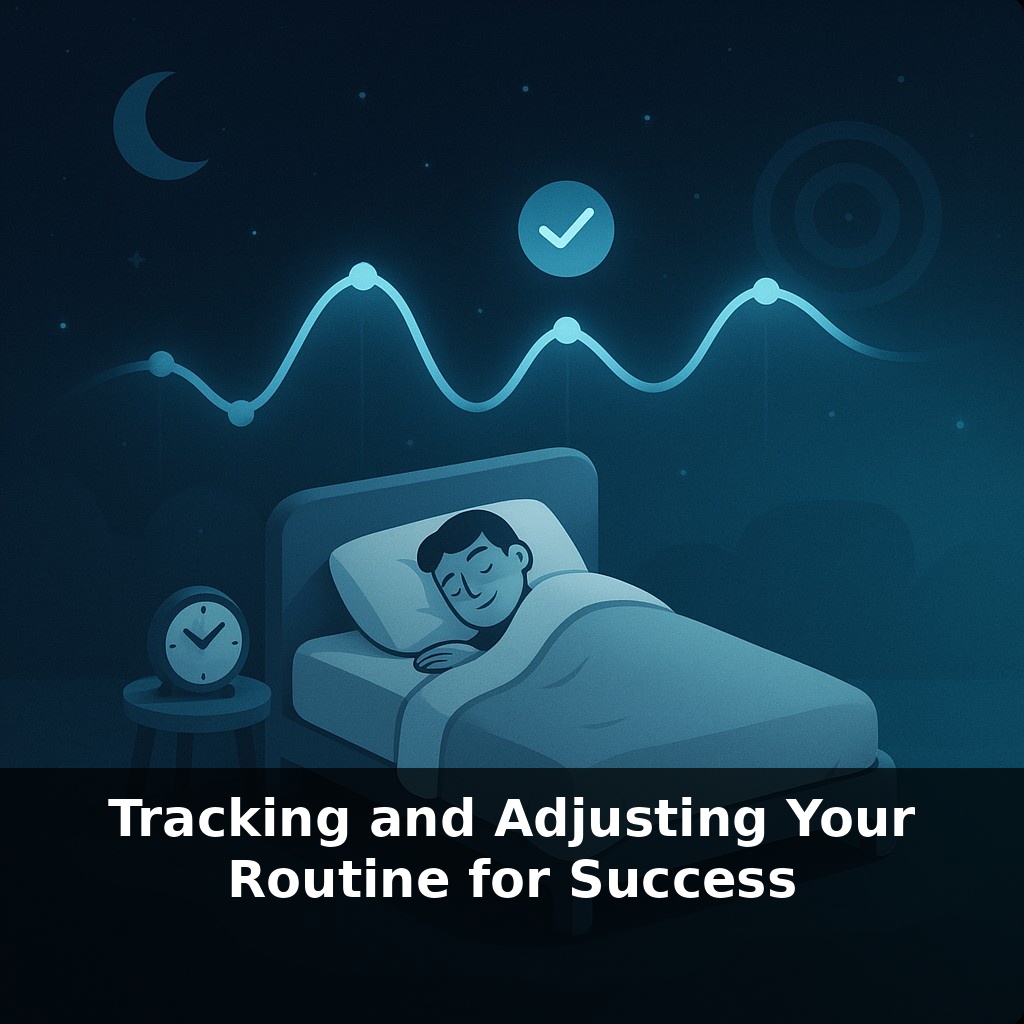
Now we’ll shift from “collecting data” to actually using it. Over the next 2 weeks, you’ll treat your logs and device readouts like a control panel: instead of changing 10 things at once, you’ll adjust just 1–2 variables, then watch what happens. For example, you might pull back caffeine to before 2 p.m., or move your bedtime 15 minutes earlier every 3 nights, and track whether your time to fall asleep drops by at least 5 minutes or your efficiency climbs by 2–3 %. When a change consistently improves 3 nights out of 5, it’s a keeper; if not, you roll it back and test the next lever.
Here’s where your notes and numbers turn into decisions. Start by ranking your last 7–14 nights. On a 0–10 scale, mark overall sleep quality and next‑day functioning. Now sort your diary: which 3 “best” nights scored 8–10, and which 3 “worst” nights fell at 0–4? You’re going to reverse‑engineer those.
Look at bedtime and wake time first. If your three best nights cluster around 11:15 p.m.–7:00 a.m. and your worst sit at 12:30 a.m.–6:00 a.m., that’s a 75‑minute compression. Rather than jumping straight to 8 hours, nudge by 15 minutes every 3 nights. Example: if you’ve averaged 6 h 10 min of actual sleep, set a fixed 6 h 30 min “time in bed” window for the next week. If efficiency climbs above 85 % for at least 4 of 7 nights, extend by another 15 minutes.
Next, scan for recurring “inputs” before those best and worst nights. Circle patterns with numbers, not vibes:
- Caffeine: latest cup time; total shots/mg (e.g., 3 coffees ≈ 300 mg). - Screens: last bright‑screen use (10:45 p.m. vs 9:30 p.m.). - Food: last calorie intake (snack at 11:00 p.m. vs 8:30 p.m.). - Temperature: room around 18–20 °C vs 23–24 °C. - Stressors: evenings with work email after 9:00 p.m. vs disconnected nights.
Now pick a single “lever” that differs by at least 60 minutes or a clear dose. Examples of specific 7‑night tests:
- Caffeine cut‑off: move your last coffee from 4:00 p.m. to 1:00 p.m. Track whether your average time to fall asleep drops by ≥5 minutes and nighttime awakenings fall by at least 1. - Screen dimming: no bright screen after 9:30 p.m. Replace with audio or a paper book. Watch if your wake‑after‑sleep onset shrinks by ≥10 minutes. - Temperature tweak: lower bedroom from 23 °C to 19 °C. Aim for a 2–3 % bump in efficiency on at least 4 of 7 nights.
Your wearable helps confirm trends, but your diary and daytime function make the final call. If a change improves at least 3 of 5 similar nights and doesn’t worsen your days, keep it for another cycle and layer in the next experiment. Over a month, two or three data‑driven adjustments like these can realistically deliver the 30–60 % insomnia reduction seen in structured CBT‑I programs.
A practical example: say your wearable shows you average 7 h 5 min in bed but only 6 h 10 min actually asleep, and your diary notes “dragging” mornings 4 days a week. You decide on a 10‑night experiment: bedtime 11:30 p.m., wake 6:00 a.m., no alcohol on weeknights, and a hard stop on intense work at 8:30 p.m. By night 6, your data show 6 h 25 min asleep and just 15 min awake after lights‑out; your notes shift from “groggy” to “OK” to “decent energy” on 5 of 10 mornings. That’s a small but real win—so you lock those changes in and test one new lever.
Think of this like rebalancing an investment portfolio: every 1–2 weeks you look at “returns” (how your days feel), compare them to “risk” (how strict the rules feel), then decide whether to add 10–15 minutes in bed, protect a new wind‑down habit, or roll back something that clearly isn’t paying off. Over 6–8 weeks, those periodic reviews compound into a routine that’s built around your actual data, not generic advice.
Adults sleeping under 6 hours face a 13 % higher mortality risk—so the tweaks you’re testing now may literally add years. Your next step: think beyond tonight. In 3 months, aim for at least 70 % of nights meeting your personal “good sleep” criteria. In 6 months, review trends: are bad nights down by 30–40 %? If not, tighten one habit by 30 minutes or 1 “unit” (1 coffee, 1 episode, 1 email block) and retest for 14 nights before deciding your new baseline.
Your progress marker: aim to create a “green zone” week—5 of 7 nights that meet your own quality standards. When you hit that twice in a month, lock in those settings for 30 days before changing anything else. If you’re still under 4 “green” nights after 6 weeks of tweaks, that’s your cue to bring your data to a sleep professional.
To go deeper, here are 3 next steps: 1) Set up routine tracking in **Notion** or **Google Sheets** today using columns for wake time, focus blocks, energy (1–5), sleep hours, and “wins,” then schedule a 15‑minute weekly review on your calendar titled “Routine Debrief.” 2) Pair the episode’s “test-and-tweak” idea with James Clear’s **Atomic Habits** Habit Tracker (free PDF on his site) and commit to running a 7‑day experiment on just two levers: your start-of-day routine and your shutdown routine, adjusting only one variable per day (e.g., bedtime, first task, caffeine timing). 3) Install **RescueTime** or use **Screen Time** / **Digital Wellbeing** on your phone to get objective data on where your work hours actually go, then this evening compare that data with your “ideal routine” from the episode and pick one time block tomorrow to protect with a calendar event titled “Non‑Negotiable Deep Work.”