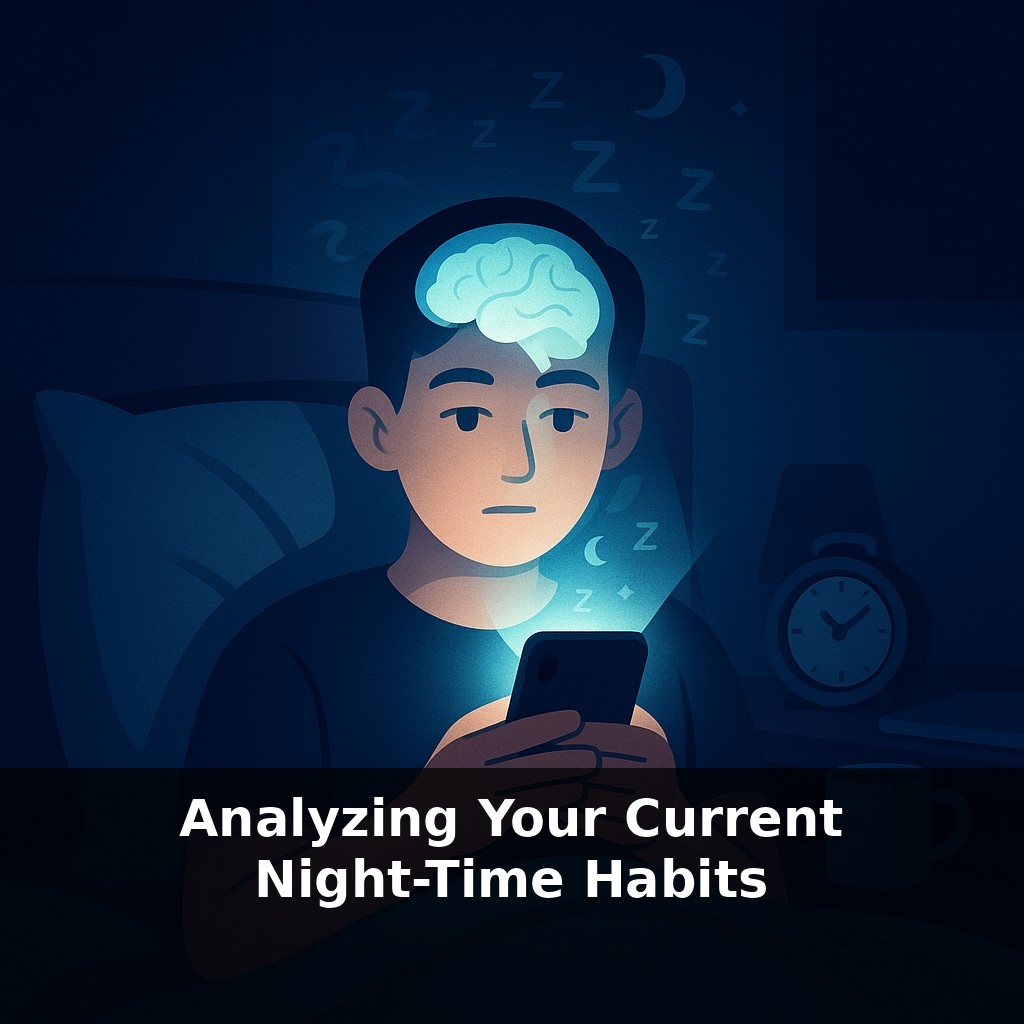
Right before bed, your brain may think it’s midday. A single bright screen can delay the hormone that says “time to sleep.” You brush your teeth, scroll “for a minute,” and suddenly you’re wide awake. So what, exactly, are your nights teaching your brain to do?
Every night, you run a quiet experiment on your sleep—even if you’re not paying attention. The timing of your last coffee, how long you stay at your desk, the “one more episode” decision, the brightness of your kitchen lights at 10 pm… each choice sends a tiny signal about when your body should be alert or drowsy. Over days and weeks, those signals add up to a pattern your brain starts to expect.
Here’s the catch: most of us only notice the end result—feeling wired at bedtime or heavy in the morning—while the causes hide in the hour-by-hour details we never track. That’s where a more curious, scientist mindset helps. Rather than guessing, you’ll start capturing what actually happens: what time you head toward bed, how often you wake up, how rested you feel. We’ll use that data to spot which habits are quietly stealing your best sleep.
Some of your most powerful sleep disruptors hide in “normal” habits that feel harmless: the snack you grab at 9:30, the emails you answer “quickly” at 10:15, the way your bedroom light stays blazing until you’re under the covers. Each of these has a timing, an intensity, and a ripple effect you rarely see. That’s why researchers look beyond bedtime itself and map the full 3–4 hours before it. In this series, you’ll do the same—zooming in on your actual evenings, not your ideal ones, and turning vague hunches (“I sleep badly”) into specific, fixable patterns.
If you only look at what time you “went to bed,” your sleep story is missing most of its plot. Research labs don’t just note lights-out; they zoom in on *how* people slide (or stumble) toward sleep—especially in the last couple of hours. That’s where your current habits quietly create either a smooth runway or a bumpy, last-minute landing.
Start with *regularity*. Your body’s clock loves predictable cues. When your bedtime swings by 1–2 hours from one night to the next, your internal rhythms drift. You might fall asleep eventually, but the deep, restorative stages become patchier and more fragile. Self-tracking often reveals this in ways your memory glosses over: you *feel* like you sleep “around 11,” but the log shows 10:20 one night, 12:40 the next, then 1:05 after that.
Next, there’s what happens *after* you lie down. Clinicians look at: - How long it takes you to fall asleep - How often you wake up - How quickly you return to sleep - How much of your time in bed is actually spent sleeping
That last one—sleep efficiency—is especially revealing. If you’re in bed for eight hours but only asleep for six, your nights are fragmented, even if you don’t fully remember each awakening.
Substances and evening activities leave signatures too. That “harmless” late coffee, the glass of wine, the intense gaming session, the 11 pm work sprint—they show up as longer time to fall asleep, more middle-of-the-night stirrings, or lighter, less refreshing sleep. You might not connect Tuesday’s meeting prep with Wednesday’s foggy brain, but your log will.
Think of this stage as debugging a slow computer: you’re not judging yourself for every background program; you’re simply surfacing which ones run late, hog resources, and make everything lag. Once you see them clearly, you can decide which to close, which to reschedule, and which are truly worth the cost.
Think of a typical weeknight: you eat a late dinner, answer one last message, stream a show, then crash into bed. On Monday you add a 7 pm workout; on Wednesday, a drink with friends; on Friday, a late-night project push. Each of those evenings *feels* different, but over time they often produce the same result: dragging yourself through the next morning. The value of analyzing your routine is in separating *which* ingredients reliably upset your sleep from those your body actually tolerates.
For example, some people discover that any caffeine after lunch shows up as long, restless settling-in at night, while a short, early-evening walk has no downside. Others find that even light social media scrolling close to bed leaves their mind buzzing, but reading a physical book doesn’t. Setting a baseline here is like tuning software performance logs: you’re not blaming the laptop for being “slow”—you’re identifying the specific processes that quietly keep everything from running smoothly.
Your nights might soon come with a “forecast” as detailed as the weather. As wearable sensors get better at reading subtle shifts in heart rate, temperature, and even micro-movements, your evening patterns could trigger real-time nudges: dim lights now, pause caffeine tomorrow, move bedtime 20 minutes earlier. Like a navigation app rerouting you around traffic, these systems won’t just describe your sleep—they’ll suggest tiny course corrections before trouble builds.
As you collect these details, resist rushing to “fix” everything at once. At first, treat your notes like a map you’re still sketching—curious about blank areas, not ashamed of rough edges. Over time, you’ll see which small tweaks reliably pay off, like refining a recipe: a bit less stimulation here, a touch more consistency there, tasting for deeper rest.
Here’s your challenge this week: Set a 'digital sunset' alarm and explore apps like 'Flux' to automatically dim screens 60 minutes before bed. During this time, practice a specific calming task such as preparing your morning coffee station or a to-do list in Trello. Opt for ambient activities, like playing soft music or creating a bedtime playlist. Record in a sleep app your sleep quality each evening and review the app’s weekly insights to identify how tech modifications are impacting your relaxation.