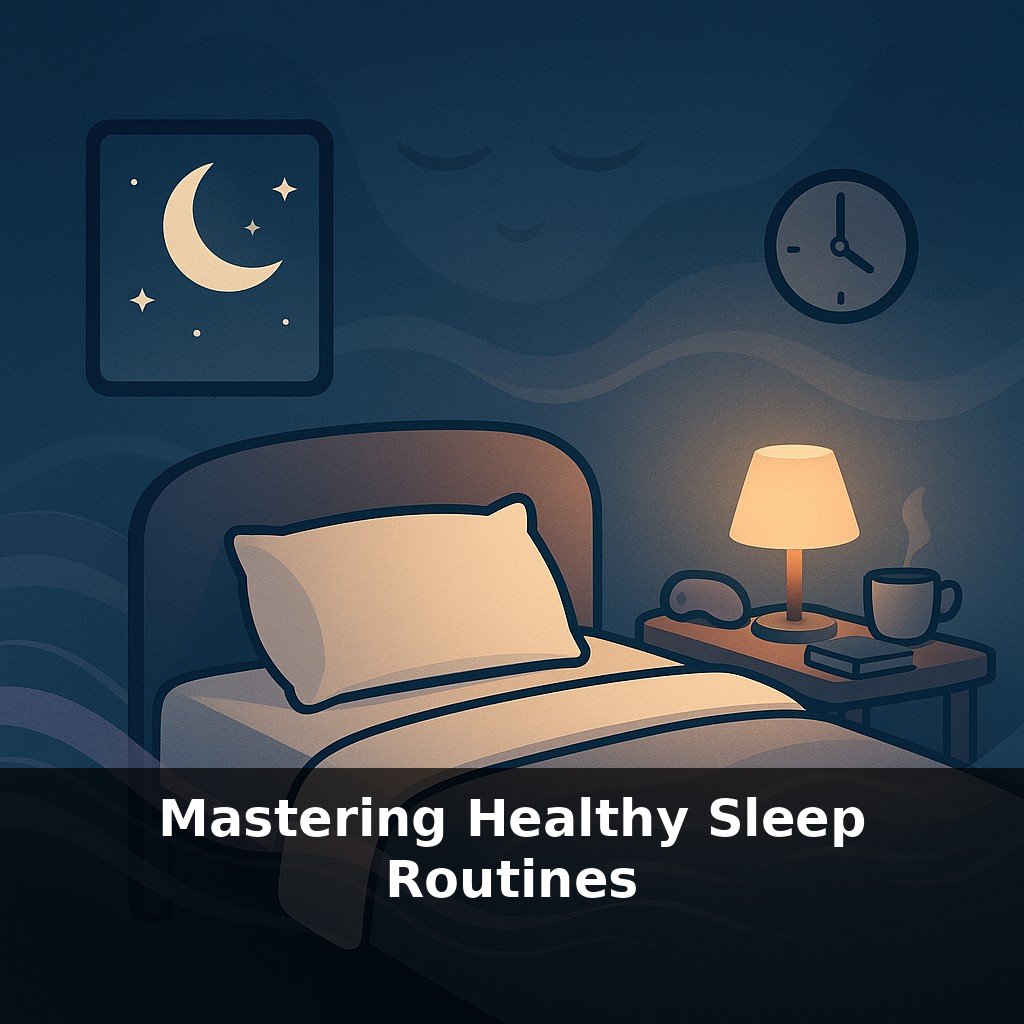
Without even realizing, most people are engaged in nightly routines—from doom-scrolling in bed to catching up on shows and snacking late into the night. Yet, research highlights that tiny, intentional changes before sleep can drastically alter how your next day unfolds.
About 90 minutes before your usual lights-out, your biology quietly flips into “night mode”: melatonin starts rising, your core temperature drifts down, and your brain becomes more sensitive to light and stress. That window is prime real estate—you can either spend it accidentally winding yourself up, or deliberately showing your brain how you want the night to go.
This is where a personalized routine comes in. Instead of copying someone else’s checklist, you’ll build a short sequence that fits your actual life: your work hours, your energy dips, even your quirks (like needing a “last scroll” or a late shower).
Think of it less like self-improvement homework and more like arranging your kitchen so cooking is easier: the right tools, in the right place, at the right time—so good sleep becomes the default, not the exception.
Here’s where things get interesting: your biology provides the raw materials, but your habits decide the “flavor” of your nights. Some people naturally fade out at 10 p.m.; others don’t hit their stride until late evening—and forcing yourself into someone else’s schedule is like cooking from a recipe that ignores what’s actually in your pantry. The research suggests the real win isn’t perfection, but consistency: a predictable window, a familiar sequence, and a few well-chosen wind-down cues that your brain starts to recognize as a reliable, nightly pattern.
Think of this step as moving from “knowing the theory” to actually designing your own template. Instead of starting with a list of ideal behaviors, start with ruthless honesty about how your evenings actually unfold.
Most people have a “default chain” after dinner—emails, dishes, TV, scrolling, snacks. The goal isn’t to erase that chain overnight; it’s to gently rearrange its last 60–90 minutes so they stop fighting your biology.
A useful way to do this is to work backward from your target lights‑out. Say you want to be in bed at 11 p.m. Instead of declaring, “I’ll be calm by 10,” map concrete slots:
- 10:30–11:00: In bed, low‑stimulus activity - 10:00–10:30: Bathroom, PJs, last prep for tomorrow - 9:30–10:00: First wind‑down, away from bright screens
Now defend those slots by choosing specific actions that lower arousal rather than raise it. Some people relax with a slow, absorbing novel; others get sleepy folding laundry or doing a short puzzle. The rule of thumb: if it makes time disappear and doesn’t rev you up emotionally or physically, it probably belongs here.
Next, layer in environmental cues. You’re aiming for “my body can tell what time it is without looking at a clock.” That might mean dimming one main light at the same time every night, setting your bedroom a couple of degrees cooler right before your wind‑down starts, or using a simple sound cue—a fan, white‑noise app, or soft playlist that only ever comes on near bedtime. Small, repeated signals like these train your brain faster than sheer willpower.
Personalization matters more than perfection. A 5‑minute stretch you enjoy beats a 20‑minute yoga flow you never start. If journaling feels like homework, swap it for a two‑line “today’s wins” list. If you hate silence, build in low‑key audio—an audiobook, a boring podcast—well before you get into bed, and keep the content predictable rather than gripping.
You’re not chasing the “perfect” routine; you’re shaping a recognizable pattern your brain can anticipate and follow, even on chaotic days.
Think of your routine like customizing an app’s settings instead of using the default mode. Two people can start at 10:30 p.m., but their “settings” look totally different. One person might slide into “low power mode” by putting their phone to charge in another room, switching to a dim lamp, and doing a slow skincare ritual that takes exactly the same five steps every night. Another might cue their brain with a warm shower, a specific playlist they only use after dark, and ten quiet minutes rearranging tomorrow’s to‑do list into three priorities.
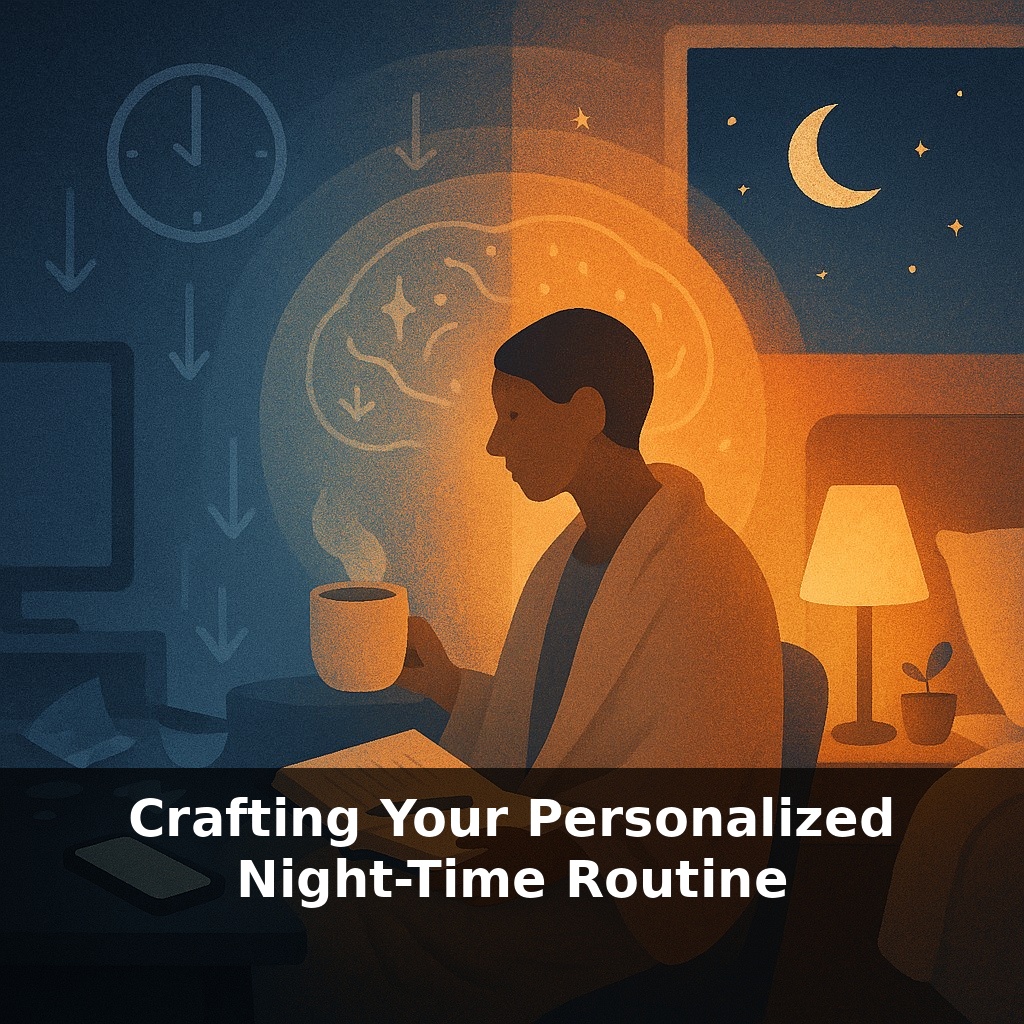
You can also use micro‑cues: a certain mug you only use for herbal tea after 9 p.m.; a single lamp that becomes your “evening light”; a particular chair that’s just for pre‑bed reading. Over time, those objects become shorthand for “day is closing,” the way your work bag might signal “commute mode.” The point isn’t to copy anyone else’s sequence, but to notice which tiny, repeatable moves make your shoulders drop—and then string those together in the same order, at roughly the same time, night after night.
In a few years, your evening could feel more like using a smart budgeting app than guessing with a spreadsheet. Instead of willpower, you’d lean on quiet, automated nudges: bedroom lights that fade when your stress tracker spikes, playlists that shift as your heart rate slows, calendars that refuse late‑night meetings after three rough sleeps. The frontier won’t be “sleep hacking” but gentle course‑corrections—systems that learn your patterns and help you protect them when life gets noisy.
Over time, your pattern will quietly reshape more than evenings. Mornings may feel less like an alarm blast and more like a soft launch; focus stretches longer, emotional “spikes” smooth out. Treat this as ongoing beta testing: keep what feels like loosening a tight backpack strap, discard what pinches, and let the routine evolve with your seasons.
Before next week, ask yourself: 1) “If I watched a 10-minute ‘trailer’ of my ideal wind-down tonight, what exact sequence would I see from 9:00 p.m. onward—lighting, screens, snacks, last scroll, and the moment I actually get into bed?” 2) “Which specific habit from my current nights (late Netflix episode, scrolling in bed, checking email ‘one last time’, heavy snack) leaves me feeling the worst the next morning, and what is one realistic swap I’m willing to try just for the next three nights?” 3) “What concrete ‘shutdown cue’ can I start using tonight—a particular song, making herbal tea, a 5‑minute stretch, or setting my phone to Do Not Disturb—that clearly tells my brain, ‘The day is over; it’s time for rest’?”