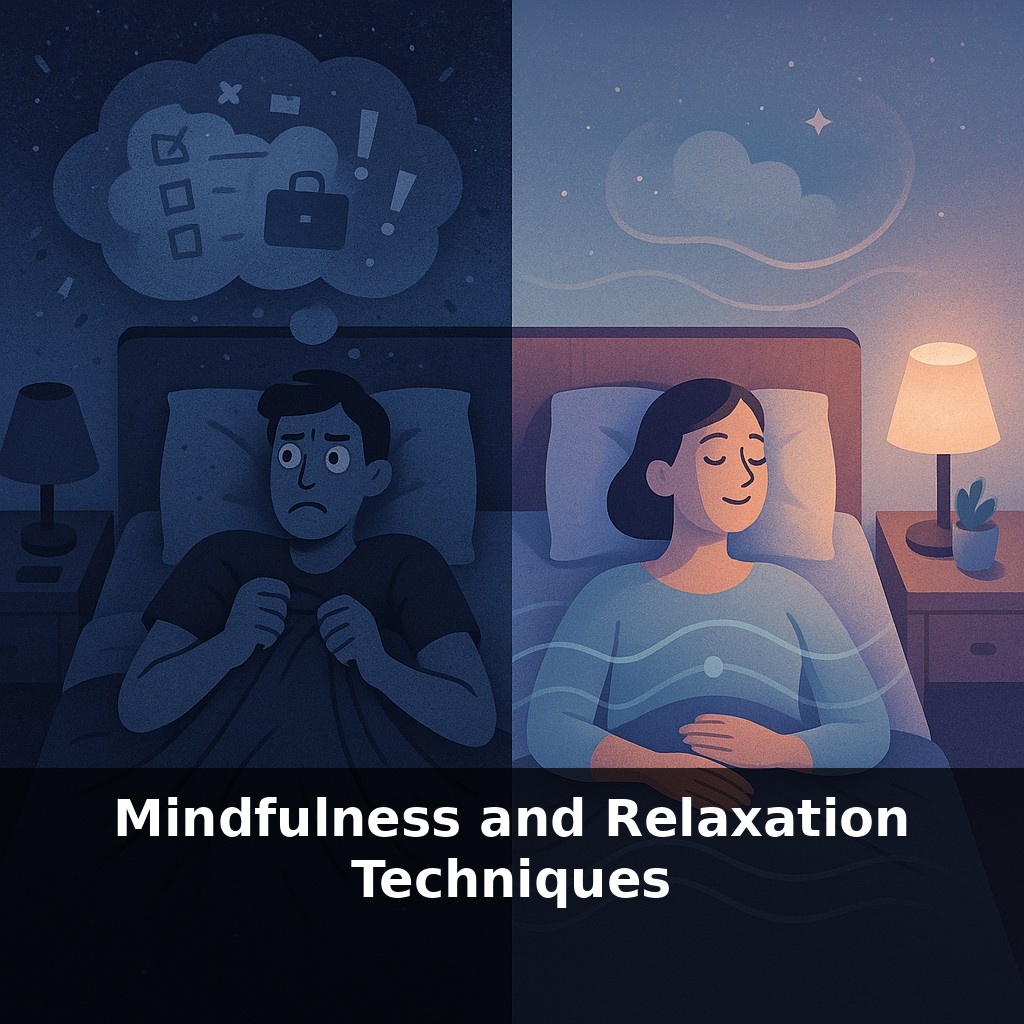
About half of adults say they lie awake replaying the day instead of drifting off. Now shift scenes: one person lies in bed, heart racing with to‑dos; another breathes slowly, muscles softening, thoughts settling. Same bedroom, same worries—completely different outcome.
Building on the importance of calming your mind, most people treat “winding down” like a vague vibe: maybe scroll less, dim the lights, hope for the best. But your body actually has buttons you can press—real, measurable levers in your nervous system that shift you from wired to ready‑for‑sleep. Over the last decade, labs have wired people up to heart monitors and brain scanners and watched what happens when they use simple, structured practices before bed. The patterns are striking: certain breathing rhythms, brief mindfulness exercises, and short bouts of muscle release consistently tip the body toward a quieter state. Not just in monks or wellness gurus, but in teachers, shift workers, new parents—people with messy, modern lives. The twist is that these tools are most powerful when they’re treated less like emergency fixes and more like tiny, repeatable routines, the way you might learn a keyboard shortcut that suddenly makes your whole workflow smoother.
Here’s the twist most people miss: those “calm your mind” tools don’t just work *during* the exercise—they leave a fingerprint on your whole evening. After a few weeks of short, consistent practice, research shows your body starts to anticipate the routine the way your phone learns your most-used apps. That anticipation matters: heart rate drops faster, mental chatter quiets sooner, and you need less effort to feel the same ease. Think of it as teaching your system a predictable shutdown sequence, so instead of randomly crashing, it closes tabs in the same smooth order every night.
Think of these tools less as “calm down tricks” and more as three different dials you can tune: attention, breath, and body tension. Each one has its own strengths, and you don’t need all of them every night.
First, attention. Mindfulness before bed isn’t about forcing thoughts to disappear; it’s about changing *how* you relate to them. Studies that wired people up to EEGs show that when you repeatedly practice noticing thoughts and coming back to a simple anchor (like the feeling of the pillow or sounds in the room), the brain gradually spends less time in rumination loops and more time in patterns linked with relaxed wakefulness. In real terms, that means fewer “mental tabs” staying open when the lights go off. Over weeks, people often report that worries still pop up—but they pass through more like notifications you can swipe away instead of alerts that hijack the whole screen.
Next, breath. Slow, structured breathing at a steady rhythm (often around six breaths per minute) gives your cardiovascular system something predictable to sync with. In lab studies, that regular pacing nudges heart‑rate variability up, which is a fancy way of saying your body gets better at flexibly shifting gears into rest mode. Many people notice the effect *after* they stop the exercise: there’s a lingering sense of heaviness in the limbs, like the body has quietly downshifted one level.
Then there’s muscle tension. Progressive muscle relaxation takes advantage of a simple loop: deliberately tensing a group of muscles, then releasing, makes the “off” signal more obvious to the nervous system. Research with older adults and people with chronic pain shows that when they do brief, systematic passes through the body in the evening, they wake up less often from minor discomforts or startled arousals. The body has, in a sense, been pre‑taught what “loose” feels like.
Here’s where it gets interesting: combining these dials seems to matter. Programs that pair a few minutes of mindful attention with slow breathing or muscle work tend to show bigger gains than any single element alone. It’s a bit like updating both the software and hardware on a device—cleaner code plus quieter fans leads to smoother shutdowns. And the dosage is smaller than most people expect: consistently hitting 10–20 minutes a day over several weeks is what shows up, again and again, in the studies that move the needle on sleep timing and depth.
A helpful way to think about these practices is to treat them like setting up “background apps” that run quietly and support everything else you do in the evening. You don’t open your banking app only on payday; you use it in small, regular ways so the big decisions feel less chaotic. In the same spirit, people who get the most from mindfulness and relaxation often sprinkle them inBy integrating mindfulness into ordinary moments long before bed—such as taking three slow breaths while a video buffers, relaxing your jaw at a red light, or doing a 60-second body scan while the kettle boils—you create a foundation for nighttime relaxation. Over days, this builds familiarity, so the longer bedtime version feels less like a new task and more like an upgrade of something you already know. You can also experiment with formats: some people prefer audio guides from apps like Calm or Headspace, others like silent timers, others pair the practice with stretching or a cup of herbal tea, turning it into a small, personalized “pre‑sleep program” that reliably cues the body it’s time to power down.
Slowly, these practices are moving from “nice extras” to standard tools in clinics, apps, and even workplaces. As wearables track patterns in real time, guidance may adjust on the fly—like a GPS recalculating your route if stress spikes at 10 p.m. Insurers testing coverage for digital programs could make them accessible beyond wellness enthusiasts. And as researchers study traditions from more cultures, you may see a richer “menu” of options, so your nightly wind‑down feels less scripted and more genuinely your own.
Your challenge this week: treat your evening like testing a new app feature. For 7 nights, commit to *one* tiny practice—maybe a 3‑minute body scan or six slow breaths while the lights are off. Note only two things each morning: how long you *felt* it took to drift off, and how refreshed you feel. After a week, decide: keep, tweak, or ship a new version.