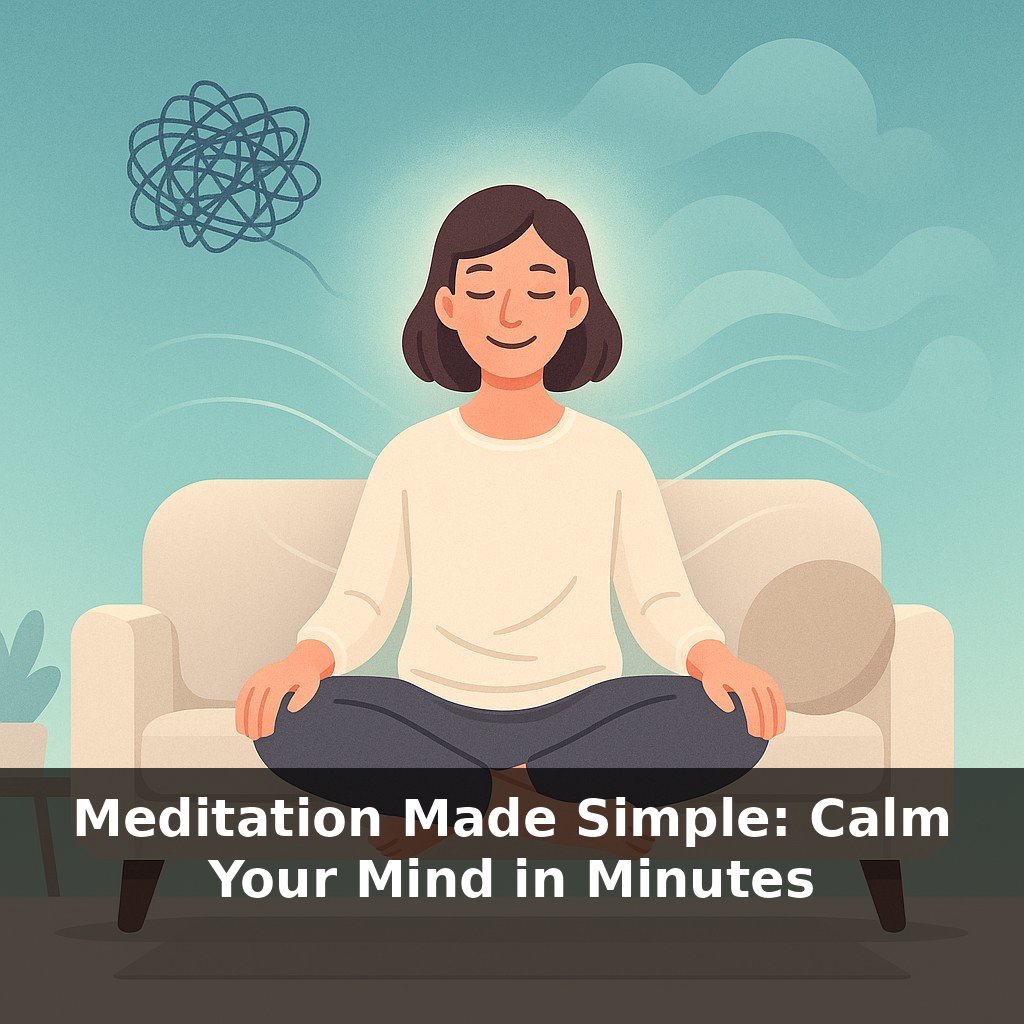
About one in seven adults now meditates—and most of them start with just a few quiet minutes. Your phone buzzes, email pings, someone calls your name… and in that brief pause before you react, there’s a tiny doorway. This episode is about stepping through that doorway on purpose.
One reason that tiny doorway matters: you can walk through it in less time than it takes to scroll a single social feed. Research labs have wired people up to heart monitors and brain scanners and found something striking: even five minutes of guided practice can nudge attention, stress, and your heartbeat’s rhythm in a healthier direction. Not someday—right away.
You don’t need a mat, incense, or a special corner of your home. You just need a way to count to five minutes and a place where you’re unlikely to be interrupted—parked in your car before walking inside, sitting at your desk with your screen dimmed, or on the edge of your bed before you sleep.
Here, we’ll treat those five minutes like a simple recipe: a few clear steps, done the same way each time, so your body and mind start to recognize, “Oh, this is the part where we settle.”
In a moment, we’ll walk through your first short practice step by step, but before we do, it helps to know what you’re stepping into. Hospitals, offices, and even pro sports teams now weave brief meditations into their routines—not as a luxury, but as basic maintenance for a busy nervous system. Neuroscientists see tiny shifts in regions linked to decision-making and emotional balance when people sit regularly, even for short spells. Think of it as setting a daily “baseline”: a reference point you can return to when your day speeds up, like resetting a compass so you don’t get pulled too far off course.
Here’s how that short practice will actually look from the inside.
We’ll divide it into three clear phases: arriving, anchoring, and allowing. They flow into each other, but it helps to know what you’re doing in each one so you’re not guessing or judging yourself the whole time.
First, arriving. This is the shift from “doing” to “being here.” You decide on a posture that’s steady but not stiff—feet on the floor or legs loosely crossed, hands resting where they don’t have to work. You might gently close your eyes or lower your gaze. The only job in this phase is to notice that you’ve paused. You’re not trying to feel peaceful. You’re just registering, “I’m here, on purpose, for a few minutes.”
Next comes anchoring. Here you choose one simple thing to rest your attention on: most people start with the breath at the nostrils, the rise and fall of the chest, or the feeling of the body sitting. You let that sensation be home base. Thoughts and sounds will still come and go; the point is that you now have a place to return to. It’s like a doctor placing a stethoscope on one spot and listening there, even while activity continues all around the exam room.
Finally, allowing. This is where many people think they’re “failing.” Instead of trying to block out everything else, you gently open the lens a bit wider. You still have an anchor, but you also notice whatever else shows up—tight shoulders, impatience, boredom, a random memory—without needing to fix or follow it. You’re practicing letting experience unfold, and then choosing where to rest your attention next.
Throughout, two skills matter more than anything else: kindness and repetition. Kindness each time you realize, “I’ve drifted,” and repetition as you come back, again and again, to your chosen anchor. That “back and back again” movement is the core of the exercise. Over days and weeks, that simple loop trains a new default: instead of being swept away automatically, you get used to noticing what’s happening and steering gently toward what helps.
Think of this first session like simmering a broth on low heat. At first, it doesn’t look like much is happening—no dramatic boil, no big transformations. But if you let it sit, small bubbles start to appear around the edges. In practice, those “small bubbles” might be tiny signals: you notice you unclench your jaw halfway through, or that your next email feels a little less urgent.
For one person, arriving might mean pausing in their parked car after a commute, hands resting lightly on the steering wheel. For another, anchoring could be feeling the weight of their body in a subway seat, eyes softly on the floor. Someone else might practice allowing while waiting in a clinic lobby, noticing sounds and thoughts drifting through.
You don’t need to label any of this as success or failure. You’re just gathering data: “What happens when I do this?” Over time, those small, repeated experiments become your own evidence that the process is worth returning to.
Your first short session is less a wellness trend and more a quiet design choice for your future. As workplaces, clinics, and classrooms start baking in tiny pauses, you’ll have more “entry points” built into your day—like doors held open, waiting for you to walk through. Over time, this makes calm less of a rare destination and more of a familiar side street you can turn down whenever the main road of your day gets jammed.
As you repeat this, notice where it naturally fits—on hold during a call, before opening a message that matters, or while your coffee cools. Like slipping a bookmark into a novel, you’re marking a pause you can return to. Over time, those tiny marked moments can string together into a quiet thread that runs through even your loudest days.
Start with this tiny habit: When you first sit down and feel your body touch the chair or couch, silently say to yourself, “This is my 3-breath pause,” and take just three slow breaths in and out through your nose. On each exhale, gently notice one thing: first your feet on the floor, then your seat on the chair, then your shoulders softening a little. If your mind races, don’t fight it—just say “thinking” once in your head, and return to the next breath. Do this once a day, and only add more breaths when three starts to feel easy.