Right now, you might be meditating without knowing it. A few slow breaths before opening an email. Noticing warm water on your hands while washing a mug. Neuroscientists are finding those tiny moments can calm your stress almost as much as a formal meditation session.
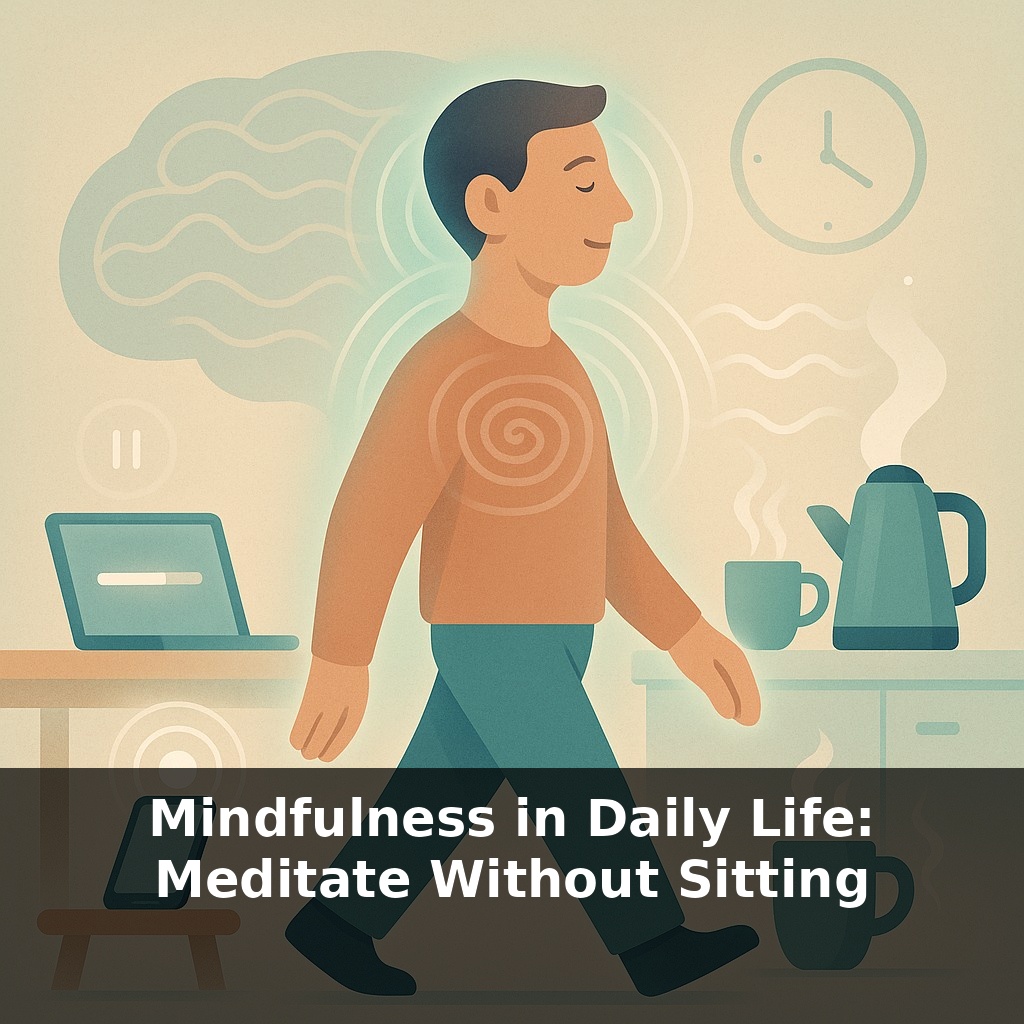
Here’s the twist: your day is already full of built‑in “meditation bells,” you just haven’t labeled them yet. The ping of a notification, the elevator doors closing, waiting for water to boil, the progress bar while a file uploads—each of these is a ready‑made cue to drop into awareness for a few seconds. Research teams studying informal mindfulness have found that these tiny, repeated check‑ins can shift brain activity toward regions linked with emotional balance and focus, even when each moment is shorter than a commercial break. So instead of carving out a separate “mindful time,” you can lightly thread attention through what you’re doing: feeling your feet as you walk to a meeting, noticing your jaw as you read a tense message, or tracking one slow exhale before you answer a question. Bit by bit, ordinary moments become training time for your nervous system.
Think of your day as a series of “doors” you walk through: starting the car, opening the fridge, unlocking your phone, stepping into a meeting. Each door is a natural boundary between mini‑chapters of your life. Mindfulness fits especially well into these in‑between spaces, because your mind is already shifting gears. Studies on habit formation suggest that linking a new behavior to an existing routine—like touching a doorknob or hearing a kettle click—makes it far more likely to stick. So rather than forcing long practices, you quietly “attach” awareness to transitions you’re already making.
Here’s where this gets practical: instead of adding something new to your schedule, you slightly upgrade what you already do.
Start with one sense at a time. For a few days, choose touch. When you wash your hands, feel the exact temperature of the water, the slip of soap, the moment the towel turns your skin dry again. No need to slow down dramatically; just bring the details into HD for 10–20 seconds. Another day, focus on sound: the hum of your laptop fan, footsteps in the hallway, the faint buzz after a notification. You’re not judging or analyzing—just registering: “hearing, hearing, hearing.”
These short sensory “zoom‑ins” work because attention crowds out automatic pilot. Neuroscience studies show that when you actively notice concrete details, regions linked to worry and rumination quiet down, while circuits for present‑task engagement switch on more strongly. You’re not forcing calm; you’re giving your mind a clear job.
Next layer: weave in short, deliberate pauses before you react. Email is a perfect lab. See a message that tugs at you? Before you click reply, take one slow breath and silently note your inner weather: “tight chest, rushing, urge to defend,” or “relief, curiosity.” Then answer as you normally would. Over time, that tiny gap trains your brain to recognize impulses before they run the show.
You can do the same while walking. For the first five steps of any walk—into a store, down the hallway—quietly track: “right foot, left foot,” or the shift of weight in your heels and toes. After those five steps, let your mind wander if it wants. The point is repetition, not duration.
Think of it like adjusting seasoning while you cook: you’re not making a separate dish called “mindfulness,” you’re adding small pinches of attention to everything that’s already simmering. Some days you’ll forget for hours; that’s fine. The moment you remember, that remembering itself is part of the practice.
Over time, these micro‑practices build a subtle familiarity with your own patterns—how tension shows up in your shoulders, how your breath shortens before a difficult call, how your jaw relaxes when you feel safe. You’re gradually learning the landscape of your inner life, not from a cushion in a quiet room, but right in the middle of emails, dishes, and doorways.
Try using specific routines as “micro‑labs” for attention experiments. On your commute, for one red light, notice just the color shift on the traffic signal and the way your hands rest on the wheel, then let the next light be totally ordinary. While making coffee, track only the aroma from grind to first sip, as if you were a food critic. During a meeting, choose the sensation of your feet on the floor as a quiet anchor whenever conversation heats up.
You can also rotate “themes” by day: one day, explore how your body feels whenever you check your phone; another, notice your breath only in the few seconds after you hit “send” on any message. These tiny, themed experiments give variety so practice doesn’t become one more dull task.
Over a week, you may start spotting patterns—times when it’s easier or harder to stay with your experience, or small shifts in how quickly you catch yourself getting swept away. Those patterns are clues for where your next gentle experiment could go.
Workplaces and schools are already quietly testing what happens when “auto‑pilot” is no longer the default. Some companies pair wearables with short guidance, so a spike in tension triggers a 20‑second reset. Classrooms are inserting brief awareness pauses between subjects, like rinsing a glass before pouring in something new. Over time, your day could be dotted with these subtle course corrections, more like adjusting your posture than scheduling a workout for the mind.
Your challenge this week: treat one ordinary task as a quiet “awareness lab.” Choose teeth‑brushing, unlocking your door, or waiting for a page to load. Each time it happens, notice just three details—like color, texture, or motion—then move on. By week’s end, see which task became a stealth reset button, like a dimmer switch gently softening mental glare.