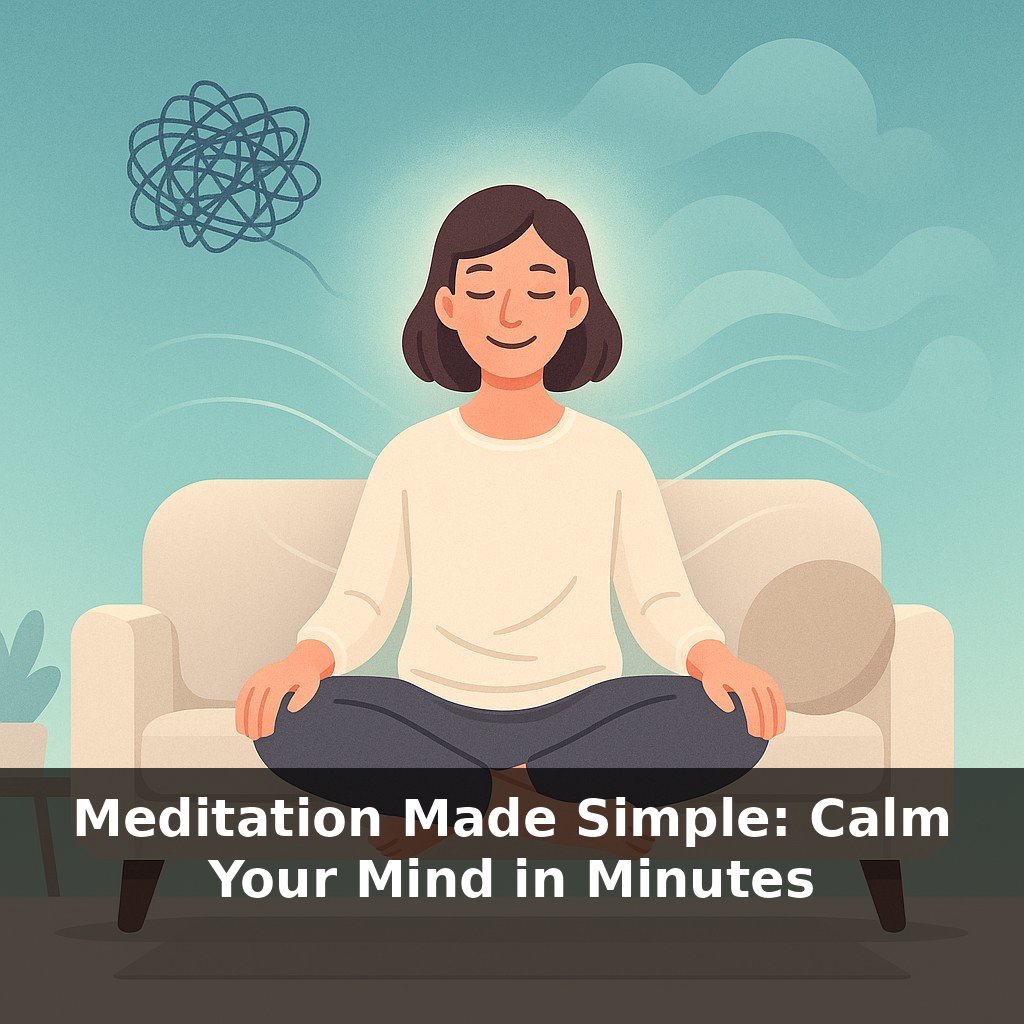
About half of what you do each day runs on autopilot. Yet when it comes to meditation, that autopilot vanishes. You sit down, close your eyes… and by day three, you’re skipping. In this episode, we’ll turn meditation from a fragile intention into a habit that almost runs itself.
Forty to fifty percent of what you’ll do today will happen without a real decision. That’s not laziness; it’s your brain protecting energy. The problem is, most of those automatic loops were built accidentally. In this episode, you’ll learn how to build one on purpose.
We’ll connect two threads: the science of behavior change, and what actually happens in your brain when you sit down, even for 10 minutes. Studies show that four weeks of brief daily practice can cut perceived stress by about 14%. Companies like Aetna have turned that into hard numbers—saving around $2,000 per employee each year.
You’ll see how tiny, well-placed cues, smart environment design, and simple rewards can stabilize your practice until it feels almost inevitable. And you’ll hear how people—from pro athletes to app users—quietly stack these supports so missing a session becomes the exception, not the rule.
Neuroscience helps explain why consistency matters more than intensity. Regular practice trains attention-regulation networks: the prefrontal cortex gets better at steering focus, while the default-mode network—linked to mind‑wandering—quiets down faster and recovers more smoothly. Over just a few weeks, this “re-tuning” makes it easier to notice distraction and return. That’s why 10 minutes a day can beat an hour once a week. Structured supports amplify this effect: LeBron James schedules guided sessions around games, and platforms like Headspace use streaks and reminders to keep that neural training going.
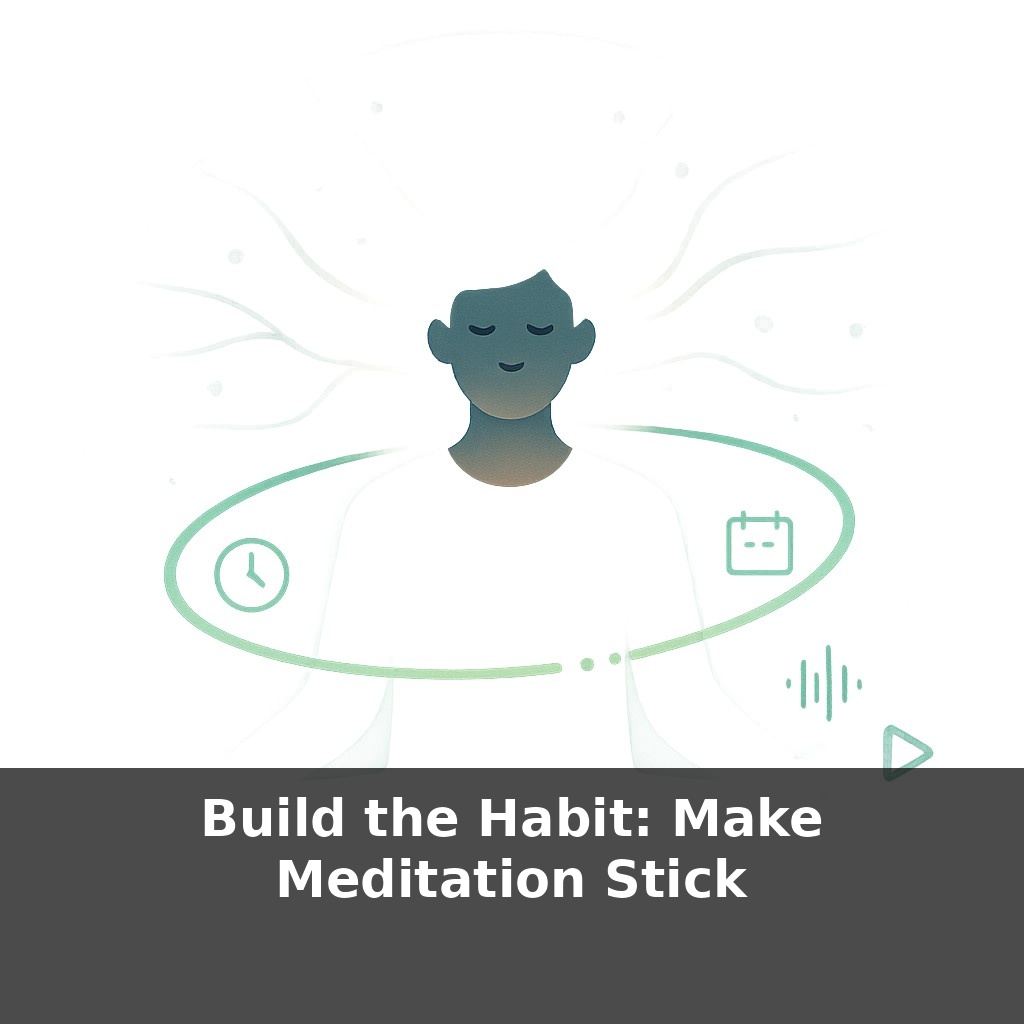
Habits form where three things meet: a clear cue, an easy action, and a result your brain cares about. To make your practice “stick,” you’re going to engineer all three—deliberately.
First, sharpen the cue. Vague plans like “sometime tomorrow” fail. Specific, anchored cues win. Think: “after I brush my teeth at 10 p.m.” or “when I close my laptop at 5:30 p.m.” Go from a fuzzy window (“morning”) to a timestamped event already in your day. Aim for one primary cue, not five. Multiplying options seems flexible, but it actually weakens the link your brain is trying to learn.
Second, shrink the action. Instead of “10 minutes a day,” set your official minimum at 2 minutes. That might sound trivial, but the data on habit formation shows consistency predicts automaticity more than intensity. One study tracking people building health habits found the time to reach “automatic” ranged from about 18 to 254 days, with a median around 66 days. Smaller actions survive the long middle of that curve. You can always extend beyond 2 minutes once you’ve started; the crucial win is starting every day.
Third, make the result visible. Your brain loves feedback it can see or count. Use something you can literally point to: a wall calendar with a big X for each day practiced, an app streak counter, or a sticky note “tally” on your desk. Numbers matter: “I’ve sat 9 of the last 10 days” is more motivating than “I’ve been pretty regular.” This is where digital tools shine: apps that show 3, 5, or 10‑day streaks exploit the same reward circuitry that keeps people checking step counts or sleep scores.
Now stack these elements. For example:
- Cue: phone alarm at 9:15 p.m. labeled “2‑minute sit.” - Action: sit, open your chosen app or timer, and do just 2 minutes. - Result: mark today on your calendar and log your mood from 1–10.
Over 28 days, that’s 56 minutes minimum—roughly the “10 minutes a day for a week” studied in clinical trials—without ever needing heroic motivation. As your attention networks adapt, the practice itself starts to feel more rewarding, but you don’t wait for that; you scaffold the behavior until the brain changes catch up.
At Aetna, employees weren’t told to “just meditate more.” They were given a structure: on-site sessions, set times, trained instructors, and incentives. Over several years, more than 13,000 employees went through the program. The result: about US$2,000 saved per person in healthcare costs and an extra 62 minutes of productivity per week. That’s not magic; it’s deliberate scaffolding.
You can copy this precision at a personal scale. Pick one anchor (say, closing your laptop) and attach a specific action sequence:
1) Open your app within 30 seconds. 2) Tap the same 3‑, 5‑, or 10‑minute track. 3) Log one word about your mood afterward.
LeBron James does something similar with recovery: sessions are scheduled before or after practice, not “whenever.” Headspace users who complete 10 days in a row don’t rely on memory; they lean on notifications, playlists, and streak visuals that make “day 11” feel obvious.
Your version might be a 7:10 a.m. phone chime, a cushion beside your bed, and a simple rule: no news or email until today’s session is done.
Insurers and clinics are already testing “adherence scores” that track minutes of practice, heart‑rate trends, and sleep. Soon, your coach or doctor may prescribe 8 minutes at 7:30 a.m., then adjust based on your data—much like titrating a medication dose. Expect portals where 80–90% of mental‑health plans include structured training, with lower premiums for those who log, say, 150 minutes a month. Start now: behave as if that system already exists and you’ll be ready when it arrives.
Next, treat your practice like a skill you’re measurably training. Set a 30‑day block and track 3 numbers: total minutes, days completed, and average mood from 1–10. After a month, compare week 1 to week 4. If minutes rise by even 20% and low‑mood days drop from, say, 9 to 6, you’ve got proof your system works—then lock it in and protect it.
Try this experiment: for the next 5 days, tie your meditation to something you *already* do every morning—like brushing your teeth—so the rule is: “As soon as I put my toothbrush down, I sit and meditate for 3 minutes.” Use the same spot (same chair/cushion), same time window, and the same simple method the episode suggests: close your eyes, feel your breath at the nostrils, and silently count 1–10, then repeat. Each day, give yourself a tiny “completion cue” right after—like checking a box on a sticky note by your meditation spot or moving a coin from one pocket to another. At the end of day 5, notice: did linking it to brushing your teeth make it easier to remember, and did the repetition start to make the whole thing feel more automatic?