Right now, your body is running an ancient stress program—while you sit still. Your heart speeds up for emails, your breath reacts to calendar alerts. Here’s the twist: the same breath that signals “panic” can, with one simple shift, become your built‑in calm button.
Most people breathe around 12–20 times per minute without noticing. Shift that to about 6 slower, fuller breaths, and your nervous system quietly changes gears: heart and lungs sync up, attention steadies, and your body starts sending “all clear” signals instead of “brace for impact.” This isn’t about forcing relaxation or chasing a mystical state; it’s about giving your mind a simple, physical task it can reliably return to, especially when everything else feels scattered.
In this episode, we’ll turn your ordinary inhale and exhale into an anchor point for focus. You’ll learn how to feel one complete breath from start to finish, how to use that during small daily stress spikes—before a meeting, in traffic, after a sharp email—and how just 1–3 minutes can nudge your brain out of rumination and back into what’s actually happening now. Think of it as training your attention at the same time you’re calming your body.
Most people try to “fix” stress in their thoughts—arguing with worries, rewriting emails in their heads, planning five steps ahead. But the research you just heard points somewhere simpler: your brain is far easier to influence through sensation than through debate. When you track the feel of one breath all the way through, you’re giving those thinking circuits a temporary backstage pass while sensory circuits take the lead. Like a doctor briefly checking a patient’s pulse, you’re taking a quick read on your inner state—then letting each new breath be the next data point, instead of the next problem.
Breath focus is deceptively simple: you’re just noticing what was already there. The power comes from *how* specifically you notice it.
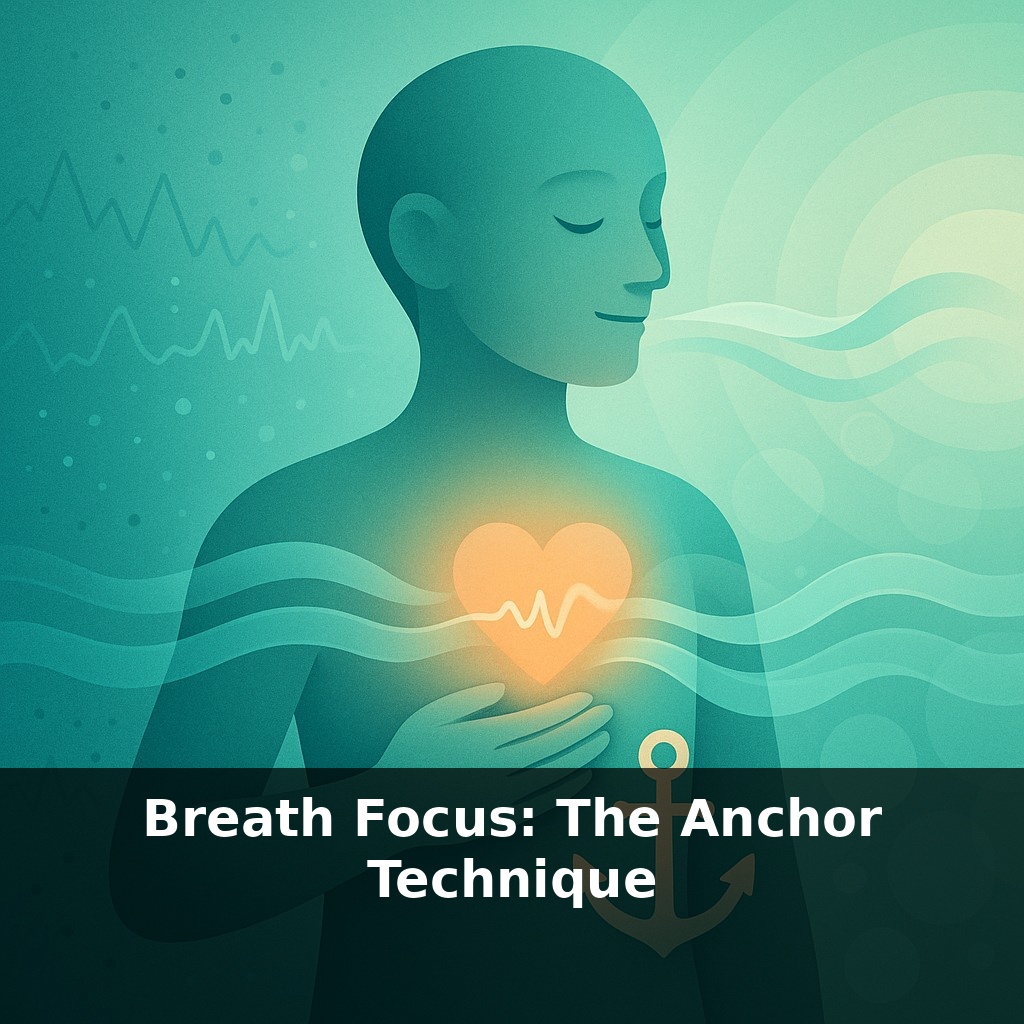
Start with location. Pick one small area as your primary “home base” for attention: the coolness at the nostrils, the rise and fall at the chest, or the gentle expansion at the belly. Choose one and stick with it for a while. Consistency makes the signal clearer, so your mind learns, “When we’re here, we’re in anchoring mode.”
Next, narrow the task. Instead of “follow the breath,” give your brain a concrete job for each cycle: - On the inhale: silently label “in.” - On the exhale: silently label “out.” Or count from 1 to 6 with each out‑breath, then start again at 1. The goal isn’t to reach a certain number; it’s to notice how *often* you lose track and gently begin again.
This is where the science meets practice: every time you realize “I’m gone” and return, you’re reinforcing circuits for noticing and redirecting. That “oh, I drifted” moment isn’t failure; it *is* the repetition that builds skill, like a muscle fiber contracting.
You can also tune into micro‑details within one breath. For example: - The tiny pause after an inhale before the exhale starts - The subtle shift in temperature between in‑breath and out‑breath - The first moment you *can tell* the exhale is ending
These fine-grained sensations give your attention something textured to explore, instead of a vague idea of “breathing.” Many people find this makes the mind less likely to slide back into autopilot thinking.
One helpful tweak: let the exhale be just a touch longer than the inhale. You’re not forcing it; you’re offering the body a slightly extended “downstroke” and letting it settle. If you notice even the hint of strain—clenching the jaw, tightening the throat—soften the effort and return to simply feeling.
Like a weather forecaster watching shifting clouds instead of trying to control the sky, you’re learning to observe internal changes without needing to push them around. The breath is just the reference point—steady enough to return to, flexible enough to meet you exactly where you are.
Think of this like adjusting a medical drip rather than overhauling your whole treatment plan: tiny, steady tweaks that change the overall dose of tension your system runs on each day. For example, before opening your laptop in the morning, you might notice just three full breaths at your chosen “home base.” Not to prepare for anything dramatic—simply to mark the shift from sleep-mode to “on-duty.”
Or try it in motion. Walking down a hallway, match your inhale to two steps, your exhale to three. Let the rhythm ride quietly in the background while you keep moving. During a difficult conversation, you might keep one fingertip resting lightly on your leg, tracking each rise and fall of the breath there. No one else needs to know you’re doing it.
You’ll probably forget often. That’s expected. Each remembered breath is one more proof that you *can* reconnect, even mid‑chaos. Over time, these micro‑check‑ins start to string together, like beads on a thread, into a day that feels just a bit more spacious from the inside.
Soon, breath anchoring may slip quietly into places you don’t normally associate with “meditation.” A smart watch might notice your HRV dip during a tense email and cue a 60‑second reset. Classrooms could open tests with a shared minute of breathing, like sharpening pencils before writing. In clinics, providers may prescribe micro‑sessions the way they suggest walking after meals—small, regular doses that shift how you move through each day, not just how you handle the hardest ones.
As you keep returning to this simple anchor, you may notice side effects that weren’t on your “goal” list: clearer decisions, fewer snap reactions, a bit more patience in ordinary hassles. Like seasoning a dish gradually, each small session subtly shifts the flavor of your day, teaching your mind that calm and clarity are options you can actually choose.
Try this experiment: Set a 3-minute timer, sit comfortably, and place one hand on your belly and one on your chest, then breathe so only your belly hand moves while silently saying “in” on the inhale and “anchor” on the exhale. Once you feel that steady rhythm, think of one mildly stressful situation from your day and deliberately replay it in your mind while keeping your attention glued to the feeling of your breath in your nose or belly. Notice what happens to your heart rate, muscle tension, and thoughts—do they speed up, slow down, or stay steady as you keep returning to the breath anchor? After the timer goes off, immediately test your “portable anchor” by standing up and taking just three of those same breaths while walking slowly across the room, seeing if you can keep that anchored feeling even while moving.