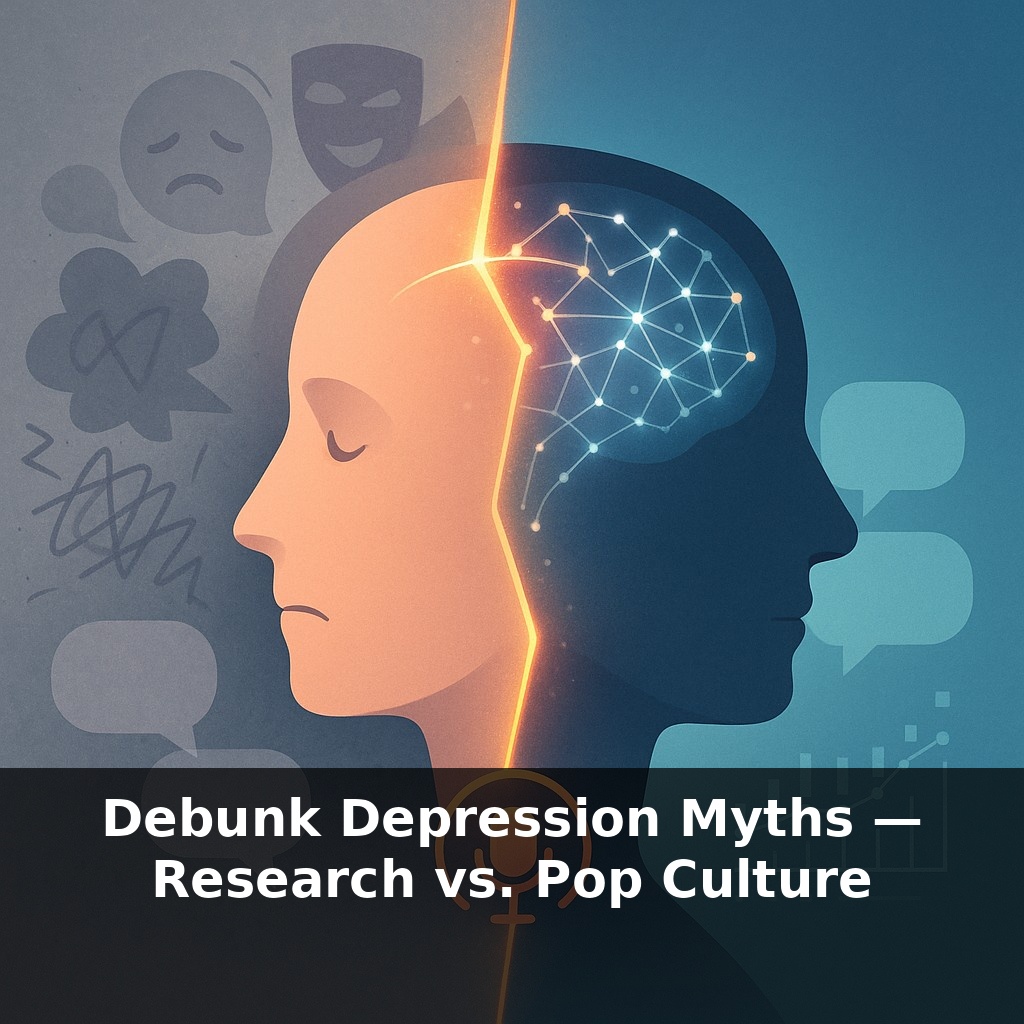
More people worldwide live with depression than live in many major countries. Yet in pop culture, it still gets framed as “just being sad.” In this episode, we’ll walk straight into that gap between what the science shows and what movies keep getting wrong.
On paper, depression is one of the most studied conditions in modern medicine. In everyday conversation, it’s still treated like a personality flaw that people should “snap out of.” That gap matters. It shapes who gets labeled “dramatic,” who gets quietly praised for being “high‑functioning,” and who never gets help because their symptoms don’t look dramatic enough. Some people expect a single pill to flip a switch in two weeks; others assume that if they can work, they can’t possibly be depressed. Both beliefs can delay real care. In this episode, we’ll contrast those cultural scripts with what large clinical trials, brain‑imaging studies, and long‑term follow‑ups actually show about symptoms, treatment, and recovery. Think of this as a myth audit: checking which beliefs deserve a place in your mental health toolkit—and which ones you can finally retire.
So where do these myths actually come from? Partly from story shortcuts: a two‑hour film needs a dramatic crash and a clean resolution, not months of subtle change, side‑effects, and trial‑and‑error. Partly from everyday language, where “depressed” gets tossed around like “starving” or “addicted to this show,” blurring the line between a passing mood and a health condition that can quietly derail sleep, appetite, memory, and motivation. And partly from silence: many people who’ve been through it at work or at home edit out the hardest parts when they finally talk about it.
Here’s where research starts quietly disagreeing with the stories many of us absorbed.
First, severity. Studies show people meeting full criteria for major depression can still be “high‑functioning” on the outside. They show up, hit deadlines, even crack jokes. On questionnaires, though, they score high on exhaustion, guilt, slowed thinking, and feeling detached from life. Pop narratives that focus only on tears and catatonia miss this large, quieter group—especially among men and high achievers.
Second, time course. In large clinical trials, improvement usually looks like small steps over weeks, not a single turning point. Some people notice better sleep or less irritability before their mood shifts. Others feel more mentally clear but still joyless for a while. That staggered pattern is common, but it can make people think, “It’s not working” and stop too soon. The data suggest staying with a reasonable plan—and adjusting with your clinician—beats hopping between quick fixes.
Third, biology and context. Brain‑imaging and genetic studies do show differences in circuits related to reward, threat detection, and concentration. But those differences interact with experiences: discrimination, financial stress, chronic illness, postpartum changes, even long‑COVID. Research keeps underscoring this: you don’t have to choose between “it’s in your head” and “it’s in your life.” It’s typically both.
Fourth, treatment range. Trials don’t just look at pills and hour‑long therapy. They include exercise programs, sleep‑timing shifts, light therapy, structured self‑help, and workplace accommodations. For mild to moderate cases, behavioral approaches alone can match medications. For more severe or recurring episodes, combining tools tends to win. That’s why guidelines emphasize a menu, not a single magic option.
Finally, risk. Statistical links between untreated mood disorders and suicide don’t mean every low mood is an emergency, but they do justify taking any mention of wanting to die seriously. Evidence shows that asking clearly—“Are you thinking about killing yourself?”—does not raise risk; it opens a door to safety plans, crisis lines, or urgent care that many people later credit with keeping them alive.
Think about how weather reports differ from the sky you see out your window. A forecast might say “30% chance of rain,” but on your street it’s either raining or it isn’t. Research on depression works a bit like that: it gives probabilities and patterns across thousands of people, while any one person’s day can look very different.
For example, two colleagues could have the same diagnosis and very different daily realities. One might wake at 4 a.m. every night, wired but exhausted, while the other sleeps 12 hours and still feels drained. One might throw themselves into work and overperform; the other quietly misses micro‑deadlines and loses track of small tasks first. Both patterns show up in large studies—what differs is which cluster of changes lands in which life.
Even treatment response has “micro‑weather.” Someone might feel side‑effects first, another notices hunger returning before their mood, a third only realizes they’re better when a friend says, “You sound more like yourself.” Research maps the climate; your experience is today’s sky.
Precision tools are coming that may quietly rewrite how we respond to low mood. Instead of “try this and wait,” your phone, watch, or blood work could flag early shifts in sleep, speech, or inflammation—like a smoke detector catching heat before flames. That could mean shorter episodes, fewer crises, and workplace norms that treat check‑ins more like safety drills than drama. The open question: who controls this data, and who gets left out if systems are built only around the already‑connected?
Your challenge this week: notice one “depression story” a day—in a show, headline, or hallway chat—and quietly rate it: closer to lab report or movie trailer? Then, once, test a different script: swap “why aren’t they stronger?” for “what load might they be carrying?” Small reframes like tuning a guitar can change how an entire band plays together.