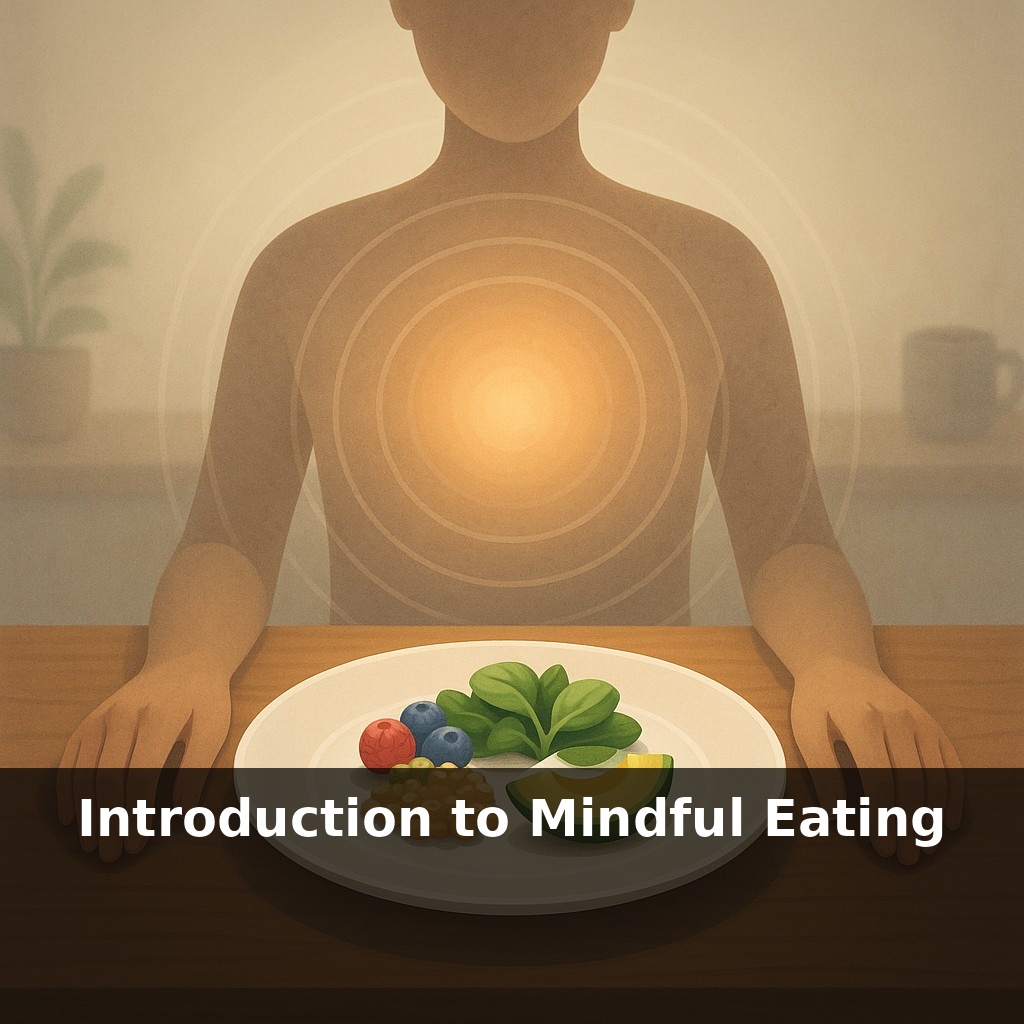
Introduction to Mindful Eating
📝 Transcript
Right now, as you’re listening, your body already knows how hungry it is—and how much food would feel just right. But most of us are so distracted we can’t hear those signals. So meals turn into blur. This episode is about turning that blur into vivid, moment-by-moment awareness.
Most of us learned how to eat from schedules, rules, and portion sizes, not from the quiet “data feed” coming from inside our own bodies. Clean your plate. It’s noon, so it’s lunch. Don’t eat after 8 p.m. Over time, those external rules can get louder than your internal signals, and meals start to feel like something you manage, not something you actually experience.
Mindful eating offers a different route: using curiosity instead of control. In this episode, we’ll explore how simple shifts—like noticing your first bite more carefully or pausing halfway through a meal—can begin to recalibrate your built‑in guidance system. Think of it as updating an old operating system: same hardware (your body), but a far more responsive, user‑friendly interface with food and fullness.
Today we’ll zoom in on something you probably don’t think about while you’re eating: your brain’s “settings” around food. Long before you pick up a fork, your nervous system is predicting how rewarding that meal will be, how much comfort it might bring, and how urgently you “need” it right now. Past experiences—late‑night snacks, rushed lunches, soothing desserts—train these settings, a bit like recommendation algorithms learning what you tend to click. Without noticing it, your choices can start following those predictions instead of what would actually feel good in this specific moment.
Most people assume that changing how they eat starts with willpower: stricter plans, tighter rules, better self‑control. Yet the research on binge eating and stress‑eating points somewhere else entirely. When people are guided to pay attention differently—not harder, just differently—binge episodes can drop by nearly three‑quarters. Their food environment doesn’t suddenly become perfect. Their days aren’t magically less stressful. What shifts first is the quality of attention they bring to a single bite, a single urge, a single moment of choice.
That attention does something powerful under the hood. It strengthens a capacity called interoceptive awareness: your brain’s ability to read the body’s internal “dashboard”—things like subtle fullness, tension in your chest, the tight buzz of anxiety, the grounded heaviness of satisfaction. In clinical trials, as people practice noticing that dashboard while they eat, two key brain systems start to recalibrate.
One is the reward circuit that lights up at the sight and smell of food, especially foods your history has tagged as comforting. Under stress, this circuit can dominate, pushing you toward “eat now, deal later” patterns. The other is the stress system itself, which floods you with cortisol when life feels overwhelming. High cortisol doesn’t only make you feel wired; it also nudges your metabolism toward storing more energy and primes you to reach for quick, high‑calorie relief.
Mindful attention during meals doesn’t shut those systems off; it changes the conversation you can have with them. Instead of a reflexive chain—stress spike, craving, autopilot eating—you gain a small but crucial gap where alternatives can arise: pausing, tasting more fully, stopping earlier, or choosing a different comfort altogether. Over time, those tiny interruptions add up. Brain scans from mindfulness‑based eating programs show less hyper‑reactivity to food cues and stronger engagement of regions involved in regulation and perspective‑taking.
Think of it like adjusting the sensitivity on a touch screen: the same finger taps are there, but accidental swipes stop registering as commands. You still experience stress, pleasure, and desire around food; they just don’t hijack the whole system every time.
Your challenge this week: once per day, pick one eating moment—any size, any food—and make it your “lab.” Before the first bite, silently note: “What pulled me to eat right now—body need, emotion, habit, or just because it’s there?” No judgment, no changing the plan. Just tag the main driver, eat as you normally would, and move on. At the end of the week, glance back and see which drivers dominated. You’re not fixing anything yet; you’re simply gathering high‑quality data on the patterns your brain has been running in the background.
Think about the last time a snack “called your name” from the cupboard. If you replay that scene in slow motion, there were probably micro‑moments you could notice: a flash of tension before you opened the door, a tiny surge of relief as you reached in, maybe the first whisper of “this isn’t really helping” halfway through the bag. Mindful eating practice lives in those micro‑moments, not in whether the snack was “good” or “bad.”
One practical entry point is sensory detail. Instead of zooming in on how much you’re eating, try zooming in on *how* it actually shows up: the sound when you bite, the way flavor shifts from the first second to the third, the exact instant it stops being satisfying and turns a bit flat or numbing. Athletes review game footage to see where their timing is off by a fraction of a second; you’re doing something similar with your own experience, only in real time, during a normal meal, with no need to perform perfectly or change anything on the spot.
Early pilots are testing “smart plates” that log bite speed and send gentle nudges to slow down, a bit like lane‑assist in newer cars. Paired with continuouWith that foundation, consider how you might apply these insights firsthand. Glucose monitors and similar tools could reveal which eating patterns quietly drain your energy hours later. Schools are also experimenting with short pre‑lunch pauses so kids notice how food affects focus in class, not just fullness. Over time, insurers may see these low‑tech pauses as cheaper than paying for complications of chronic overeating.
As you experiment this week, notice how one small tweak at meals can quietly influence your mood, sleep, and even how reactive you feel in tough conversations—like adjusting a single app setting and finding your whole phone runs smoother. You’re not chasing perfection here; you’re starting a longer‑term study of how you function best, using daily meals as your most accessible lab.
Building on what we’ve explored today, here are 3 next steps: (1) Print or download the free “Mindful Eating Meditation” from The Center for Mindful Eating (TCME) website and use it with your next snack, pausing to follow each cue about sight, smell, texture, and first bite. (2) Grab a copy of Jan Chozen Bays’ book *Mindful Eating: A Guide to Rediscovering a Healthy and Joyful Relationship with Food* and read just the chapter on the “seven kinds of hunger,” then test them out at your next meal by noticing which type is actually calling you to eat. (3) Install the Insight Timer app and search “mindful eating” to pick one 5–10 minute guided practice to use before dinner tonight, treating it like a mini experiment in slowing down and noticing satisfaction cues.
From this course

Mindful Eating for Lasting Change
5 episodesUnlock all episodes
Full access to 5 episodes and everything on OwlUp.
Subscribe — $1.99/monthLess than a coffee ☕ · Cancel anytime