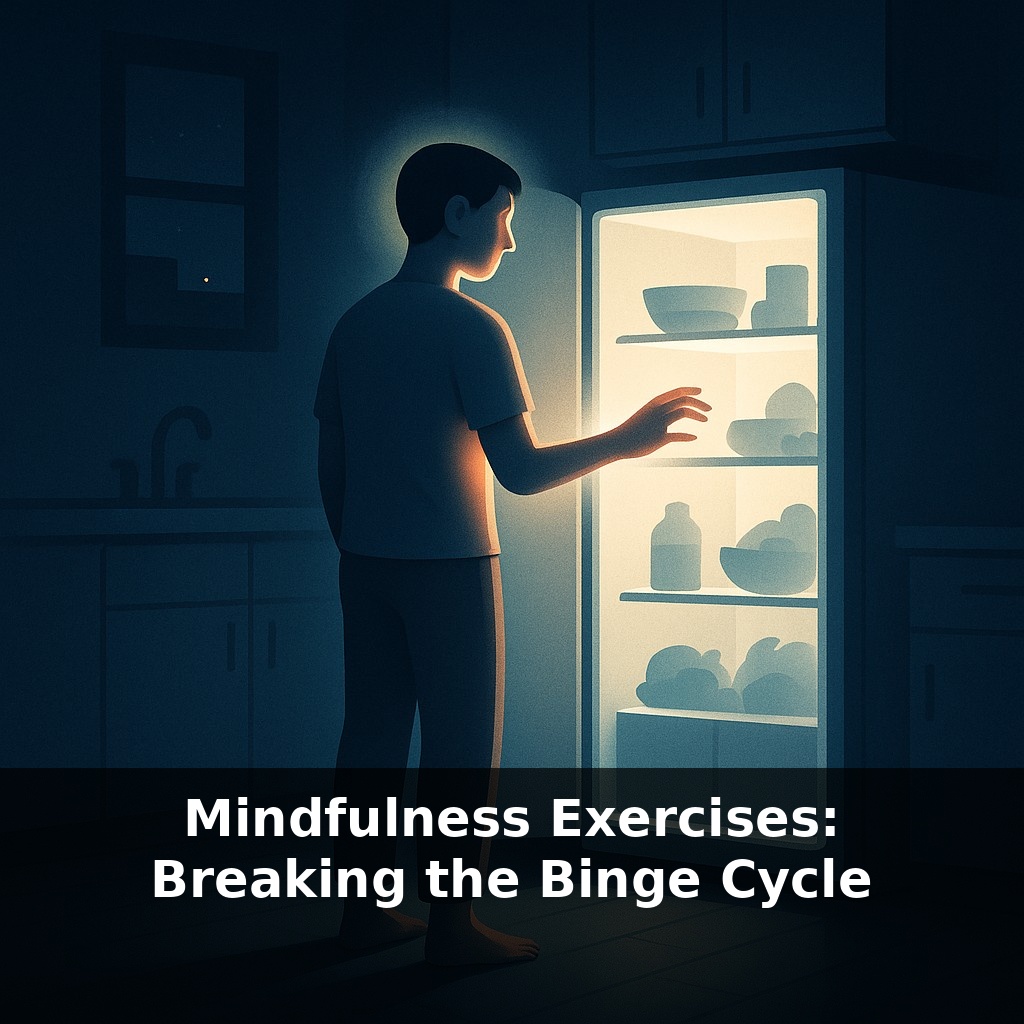
In the middle of the night, John from Chicago lingers in front of an open fridge, battling the urge to binge despite not being hungry. The unexpected shift—a pause shorter than a song intro—could change his night's narrative from regret to mindfulness.
That tiny pause we talked about doesn’t have to be heroic or dramatic. In real life it looks more like this: your hand hovers over the cupboard, you feel that familiar pull, and instead of arguing with yourself or “trying to be good,” you get curious for just a few breaths. Not fixing anything. Not deciding anything. Just noticing: tight chest, buzzing thoughts, maybe a heavy, tired feeling behind your eyes.
Mindfulness in binge moments is less like slamming on the brakes and more like gently downshifting. You’re still moving, the urge might still be loud, but the speed changes just enough for you to see where you are. Over time, these micro-moments of awareness start to link together. A late-night snack that used to vanish in a blur becomes a series of distinct steps you can actually witness. And when you can witness something, you can begin to influence it.
Those small shifts in awareness are exactly what researchers are seeing in the lab. Short, structured mindfulness drills—like a 3‑minute breathing space or a brief “check‑in” before eating—have been shown to cut binge episodes nearly in half within two months, not by boosting willpower, but by changing how the brain responds to urges. Think of it less as learning a new “diet rule” and more as updating your internal software: each time you pause and notice instead of rushing ahead, you install a tiny patch that makes the next urge slightly easier to ride out. Over weeks, those patches add up to a system that runs much more calmly.
Most people are surprised to learn how structured these “tiny practices” actually are. In studies of binge eating, researchers don’t just tell participants to “be more mindful around food” and hope for the best. They teach specific, bite-sized exercises that can be dropped right into the messiest moments: hands in the chip bag, scrolling on the couch with a family-size chocolate bar nearby, eating straight from the fridge after a draining day.
One of the simplest is called RAIN. It’s a short sequence you can silently run through when you feel pulled toward automatic eating: first you Recognise what’s happening (“something in me really wants to eat right now”), then you Allow it to be there for a moment instead of fighting it. Next you Investigate with gentle curiosity (“where do I feel this in my body?”), and finally you offer a bit of Nourishment or Non‑identification (“this is a wave moving through me, not all of who I am”). Each step gives your thinking brain a clear job to do, so you’re not just white‑knuckling.
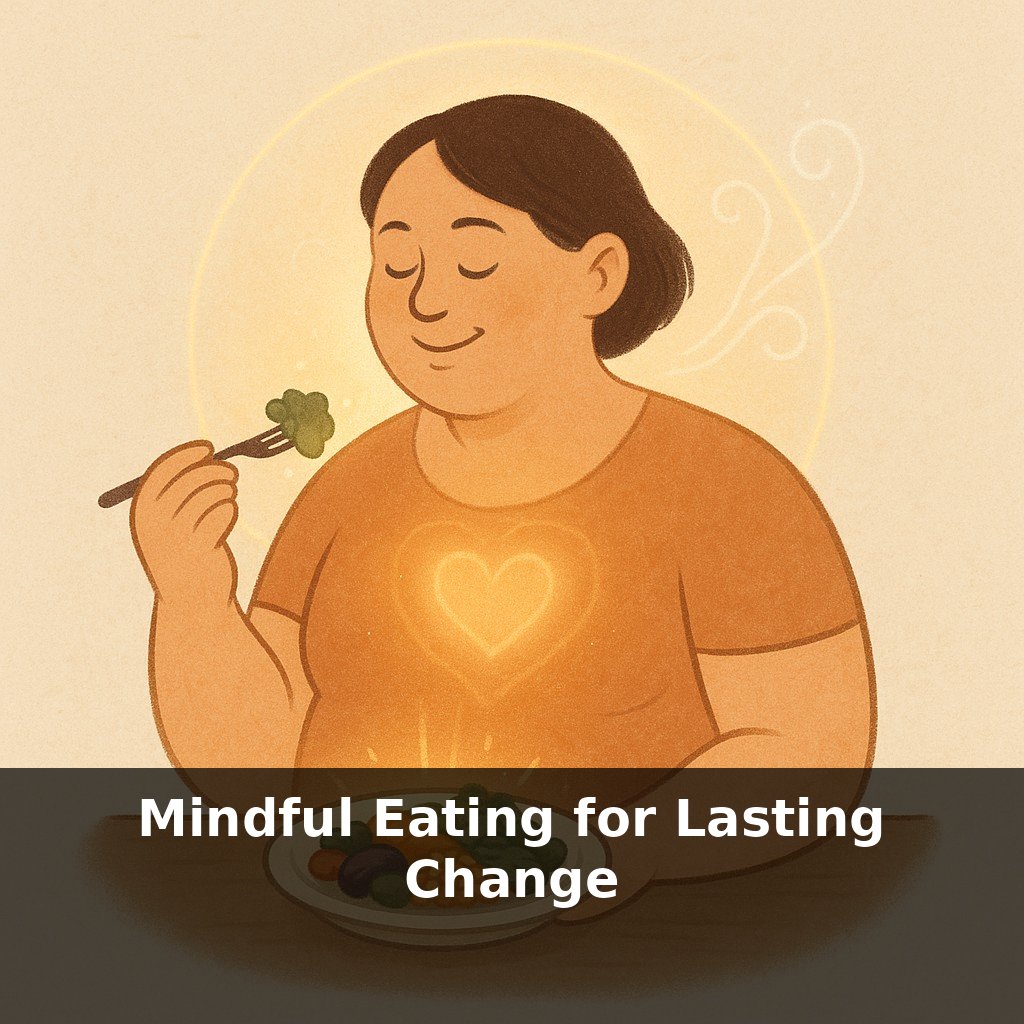
Another evidence‑backed move is sensory‑focused eating. Instead of starting by cutting quantities, you start by turning up the “resolution” on a single bite: noticing texture, temperature, flavours, the sound of chewing. In trials, people who practised this regularly didn’t just eat a little less at one meal; over weeks they naturally slowed their eating speed, which is linked with better fullness signals and fewer out‑of‑control episodes later in the day.
Then there’s urge surfing, borrowed from treatments for addiction. Rather than trying to crush a craving, you observe how it rises, peaks and falls, the way a surfer watches a wave. In real time that might mean silently rating the intensity of the pull to eat from 0 to 10, every 30 seconds, without acting on it immediately. Participants often discover that the “I must eat now” feeling, which seemed like a solid wall, is actually more like a moving curve that changes even when they don’t obey it.
Together, these practices act less like emergency firefighting and more like architectural reinforcement: you’re adding beams and supports to the parts of your mind that can stay steady when emotion and habit collide. Not perfectly, not all at once, but one small drill at a time.
Think about how you’d debug a glitchy app: you don’t rewrite the whole code during a crash; you insert tiny logs to see what happens right before it freezes. These practices work the same way when food starts calling the shots.
For example, some people set a “micro‑bookmark” whenever they move toward food: hand on the cupboard, opening a delivery app, reaching for a fork. At that exact bookmark, they run one RAIN step or a single deep breath. Nothing dramatic; just a consistent flag in the system. Over a week, those flags show you where your binges actually begin (hint: often long before the first bite).
Others pair sensory‑focused eating with very specific contexts: the first three bites of anything sweet; the messiest part of a takeaway meal; the last bite before they normally “go back for more.” That way, mindfulness isn’t a general intention, it’s tied to recurring “hot spots” in real life—Sunday nights, lonely lunches, or that dead time between work and dinner—where the old script usually takes over.
As these skills spread beyond therapy rooms, they start to change the “food environment” itself. Cafeterias could swap calorie posters for quiet zones and prompts like, “How hungry are you, 0–10?” Apps might sync with wearables to spot your personal danger windows—say, late‑afternoon crashes—and nudge you toward a 60‑second reset. Like good urban planning for a city, the goal isn’t perfect control; it’s adding enough calm, clear routes that binges stop feeling like the only road available.
Over time, these skills can spill into places you don’t expect—grocery aisles, family dinners, office birthdays. You might notice you’re choosing snack portions the way you’d adjust a chair: not “good” or “bad,” just better fitted to your body. Instead of chasing a perfect food day, you’re quietly running more experiments, letting curiosity sit beside every plate.
Try this experiment: The next time you feel a binge urge, set a 5-minute timer and sit with one food you usually binge on (like ice cream or chips), but don’t eat it yet—just notice its smell, color, and the thoughts and body sensations that show up. When the timer starts, slowly eat *one* serving, taking at least 10–15 breaths between bites, and silently name what you’re experiencing (“tight chest,” “salty taste,” “I want more,” etc.) without judging it as good or bad. When the food is gone, pause for 2 minutes, place a hand on your belly, and ask yourself out loud: “Do I feel satisfied, still physically hungry, or emotionally restless?” Then jot down just three words describing how you feel now versus how you usually feel after a full binge and notice what’s different.