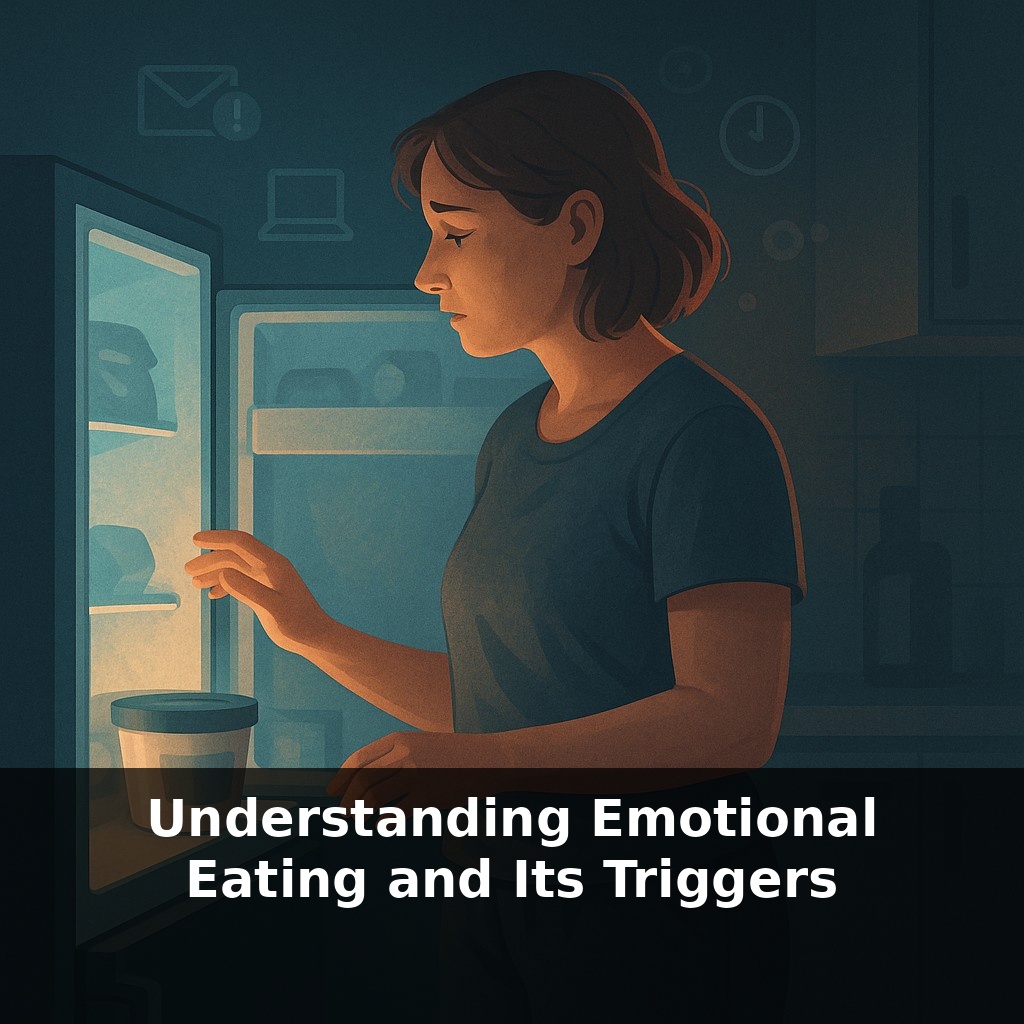
Meet Sarah, a 32-year-old from Denver, who finds herself standing in front of the freezer not out of hunger, but a need for comfort after a rough day. Her momentary relief is soon replaced by guilt. What drives this ritual beyond mere hunger?
Sometimes the “I need chocolate *right now*” moment hits in oddly specific ways: only at your desk after a tense email, only on the couch with Netflix, only when you’re alone late at night. That’s not random—it’s conditioning. Your brain quietly links certain places, times, and emotions with food, the way a favorite song gets tied to a particular summer. Over time, these pairings become so automatic that a stressful meeting can trigger a craving before you’ve even named the feeling. This is why willpower alone so often fails: you’re not just fighting a snack, you’re bumping up against an entire learned script. The opportunity isn’t to judge yourself for following it, but to start noticing the cues that press “play.” Once you see the script, you can begin to edit it—one moment, one trigger, one choice at a time.
Sometimes what we call “being bad with food” is really just being out of practice at reading ourselves. Stress, boredom, and loneliness don’t arrive with name tags; they show up as a tight jaw, a buzzing mind, or that hollow, restless feeling after a long day. Then a commercial, a coworker’s candy bowl, or the quiet of your living room offers an easy next step: eat. Over time, these tiny moments stack into patterns that feel like personality traits. This series is about getting curious there—treating each urge as data, not a verdict—so you can see what your body and brain are actually asking for beneath the craving.
You can usually tell when you’re physically hungry: your stomach grumbles, energy dips, almost any food sounds acceptable. Emotional urges feel different, but only if you zoom in close enough to notice the details.
They tend to show up suddenly, with a very specific target: *that* cookie from *that* café, the exact chips you buy after work. They’re oddly impatient—you “need it now,” even if you just ate. And they often come bundled with a mental story: “I deserve this,” “Today was awful,” or “This will make the night less lonely.” The story is important; it’s your brain trying to justify a solution it already picked.
Researchers break these precursors into three rough layers:
1. **Sensory cues.** Smells from an office kitchen, the crinkle of a wrapper, the blue glow of the TV at 11 p.m. Your nervous system is constantly scanning these tiny signals and matching them with past relief. That’s why you might crave popcorn the moment you sit in a movie theater, even if you ate dinner.
2. **Situational cues.** These are the predictable contexts: sitting in your car after a draining shift, walking past a bakery on your commute, scrolling your phone in bed. The more often food has followed these situations, the more your brain starts to “preload” wanting before any conscious thought.
3. **Emotional micro-states.** Not just big feelings like sadness or anger, but subtle ones: mild awkwardness at a party, Sunday-night dread, the flat, in-between mood after finishing a big project. Positive spikes count too—closing a deal, getting praised, landing good news. For many people, celebration has long been paired with extra food or drinks.
Here’s where sleep and hormones quietly tilt the playing field. When you’re short on rest, your appetite signals skew toward quick-energy, highly processed foods. At the same time, the part of your brain that usually says “pause, is this actually what I want?” is more sluggish. That combination makes emotional impulses feel more like commands than suggestions.
Think of your day as a sequence of “trigger zones”: specific times, places, and feelings where urges are most likely to flare. The goal isn’t to eliminate them; it’s to recognize their signatures so clearly that, in the crucial three-second window before you act, you can say, “Oh, this is *that* pattern,” and choose whether to follow it or not.
You might notice this most clearly in “out-of-character” moments. A nurse who eats balanced meals all week suddenly finds herself in the hospital vending area after a brutal double shift—same person, completely different pattern once she swipes her badge and smells antiseptic. Or a software engineer who rarely snacks at home, but can’t code without a bag of pretzels nearby; deadlines, fluorescent lights, and Slack pings quietly become part of the recipe.
Pay attention to how specific the pull can be. You’re not drawn to *food in general*—you want drive‑thru fries in the car after tough meetings, or bakery muffins only on client days. Those “oddly specific” combos are your most reliable clues.
In tech terms, it’s like realizing certain apps auto‑open whenever you start your laptop. You didn’t consciously program them; habits did. But once you see the auto‑start list, you can decide which ones still serve you and which ones keep hijacking your attention.
Up ahead, emotional eating might be less about “strength” and more about systems. Wearables already track steps; next‑gen versions could flag “red zones” in your day, then suggest a walk, call, or breathing drill before you even notice the pull to snack. Schools and workplaces could treat regulation like learning a new language: daily practice, small wins, shared “phrases” for naming feelings. Over time, food becomes one tool in the kit, not the only mute button on your internal remote.
As you start spotting your own “trigger zones,” notice what else quietly soothes you—texts with a friend, stepping outside, even stretching like a cat after a nap. None of these has to replace food overnight. Think of this as beta‑testing tiny alternatives, keeping what actually helps and discarding what doesn’t, until your menu of options expands.
Here's your challenge this week: Every day for the next 5 days, pause for 60 seconds before any unplanned snack or “craving” and ask yourself out loud: “Am I physically hungry, or am I stressed/bored/lonely/tired?” If it’s emotional (not physical), set a 5‑minute timer and do one non-food comfort option you heard in the episode—like a short walk, a hot shower, a 10‑breath reset, or texting a supportive friend—before you decide whether to eat. At the end of each day, quickly rate (0–10) how strong your emotional eating urges were and how helpful your alternative coping strategy felt, so by the end of the week you can see what actually works for you.