Ancient Roots: Fitness in Antiquity
📝 Transcript
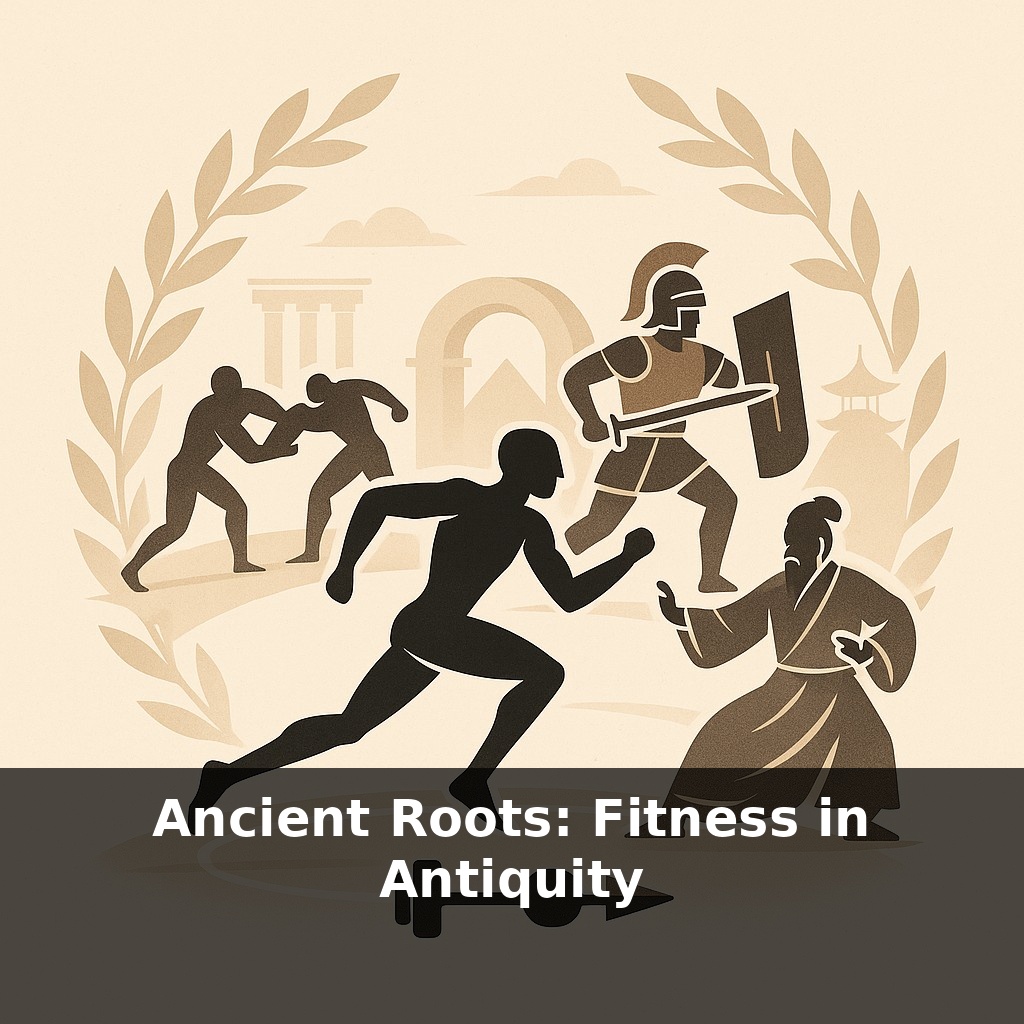
A crowd roars as athletes sprint—completely naked. Nearby, soldiers march under crushing armor, while in another land a priest calmly flows through slow, spiraling movements. All of them are training. Here’s the twist: their workout principles would feel strangely familiar today.
In ancient Greece, Rome, Egypt, and China, training wasn’t a hobby—it was infrastructure. Cities carved out spaces for movement the way we carve out lanes for traffic: gymnasia beside lecture halls, parade grounds beside barracks, temple courtyards beside shrines. Fitness was woven into education, warfare, ritual, and even law; in some poleis, skipping mandatory drills could cost you your citizenship. Egyptian artisans sculpted wrestlers and acrobats on tomb walls with the same care they gave to gods, while Chinese physicians prescribed movement practices alongside herbs and acupuncture. Exercise was less “beach body” and more “social duty,” a way to keep citizens battle-ready, workers durable, and elites poised for competition. These cultures didn’t just train individuals—they engineered whole environments that nudged people to move, sweat, recover, and return stronger.
Step into the details and the picture gets even richer. Greek gymnasia weren’t just big open yards; they had sand pits for jumps, tracks for sprints, rooms for oiling and scraping the skin, and nearby baths for recovery—like an ancient version of a bundled “sports complex plus spa.” Roman camps baked fitness into daily life through drill circuits and weapons practice, while urban baths doubled as social hubs where people lifted weighted tools and played ball games. In Egypt and China, scribes and scholars practiced set movement patterns, treating the body almost like a manuscript that needed daily, careful revision.
To see how advanced these systems were, follow one thread: how they designed actual workouts.
Greek trainers didn’t just shout “run faster.” They broke training into blocks: days heavy on sprints and jumps, days focused on wrestling and throws, lighter days before festivals. They logged who did what, then tweaked volumes and intensities, sometimes pairing athletes with slightly stronger or faster partners so the edge of discomfort stayed sharp but not injurious. Clay tablets and later medical texts hint at carefully adjusted loads for age, skill, and even personality.
Equipment was equally intentional. Those halteres at Olympia weren’t one-size-fits-all; jumpers experimented with different weights and swing patterns to squeeze out extra distance. Boxers layered leather straps, then harder materials, gradually increasing impact tolerance. Even runners played with terrain—sand, packed earth, inclines—to change how the body was stressed.
Roman legion training took this logic into a brutal, standardized system. Recruits drilled with wooden swords and shields roughly twice the weight of real gear to make campaign weapons feel light. Marches shifted from unloaded to partially loaded to full kit over weeks. Vegetius describes progressions where recruits earned the right to attempt that 36 km “military step” only after proving they could handle shorter, slower versions without breaking down.
In Egypt, tomb scenes show pairs of wrestlers cycling through catalogued holds and counters, almost like a choreographed sparring syllabus. Some maneuvers reappear across sites and centuries, implying codified curriculums taught by specialist coaches attached to courts or temples. The famous “push-up” image sits among other calisthenic-like positions, suggesting structured floor routines rather than random play.
Chinese Dao Yin and proto–Tai Chi texts reveal another dimension: sequencing. Movements were ordered to alternately compress and open joints, accelerate and slow the breath, wake and then calm the nervous system. Physicians linked certain patterns to digestion, sleep, or recovery from fatigue. While soldiers drilled harder forms, literati practiced softer ones, yet both followed an underlying logic of balance between exertion and restoration.
Across these worlds, you can trace a quiet obsession: adjust the stress just enough, in just the right order, to reshape bodies and minds on purpose—not by accident.
Think of each culture as a different “operating system” for the body, all running a shared core code. In Greece, a boy on the cusp of citizenship might split his days between debating rhetoric inside and drilling the pentathlon outside, learning that intellect and power were inseparable processes, not rival apps. A Roman recruit could be “updated” in a few brutal months from farmer to marching machine, his progress as measurable as distance covered and armor carried. Egyptian wrestlers formed tight training guilds, passing down favorite combinations like proprietary techniques, while in China, physician-scholars tested breathing patterns as carefully as we’d A/B test a new feature.
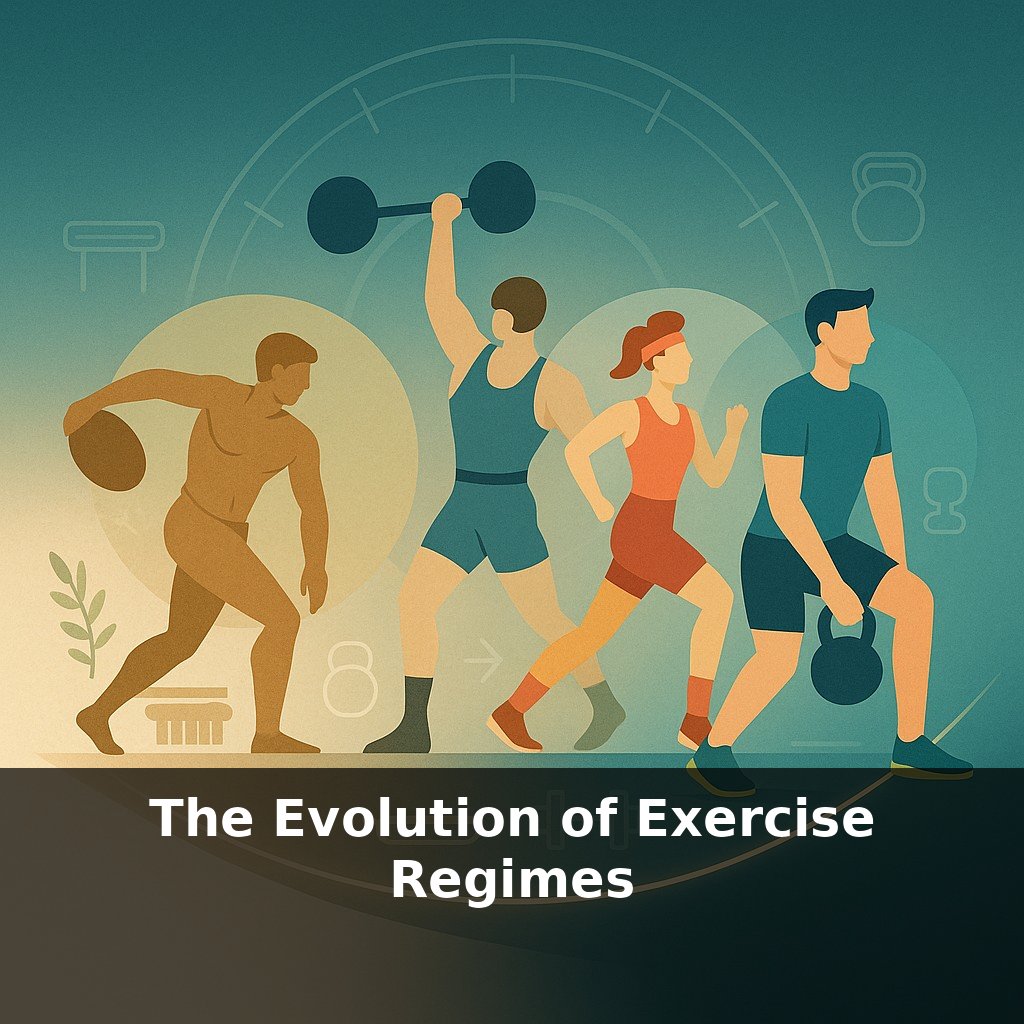
You can still see these lineages in modern life: sprint mechanics in track lanes echo stadion races; military rucks mirror legion marches; yoga flows carry the imprint of older meditative sets. Strip away the branding and tech, and today’s programs look less like inventions and more like refinements of experiments that started millennia ago.
Festival calendars once shaped peak performance; now, app notifications and streaming schedules may take that role. Heritage gyms built into ruins or temple complexes could function like “pop-up operating systems,” letting visitors boot into Greek, Roman, or Daoist styles for a day. As VR and wearables fuse with archaeology, you might “pinch to zoom” between centuries mid-workout, shifting from legion march to Dao Yin flow while your data quietly compares their effects.
Today, our “arenas” are sidewalks, office corridors, living rooms, and phone screens. Instead of priests or drillmasters, we get cues from step counters and video coaches. But the deeper question hasn’t changed: what kind of human are you training to become? Treat each day’s movement like a brushstroke—tiny, deliberate marks on the long mural of your life.
Start with this tiny habit: When you walk through a doorway at home, pause and do one “Greek soldier” posture check—stand tall, pull your shoulders back slightly, and take one deep belly breath like a warrior readying for battle. When you pass a chair, rest your hands on the back and do a single slow “Roman villa” calf raise, lifting your heels once as if you’re strolling the forum. And when you fill a cup with water, take three “marketplace steps” in place—small, slow steps while balancing the cup like you’re carrying it from an ancient well.
From this course
The Evolution of Exercise Regimes
5 episodesUnlock all episodes
Full access to 5 episodes and everything on OwlUp.
Subscribe — $1.99/monthLess than a coffee ☕ · Cancel anytime