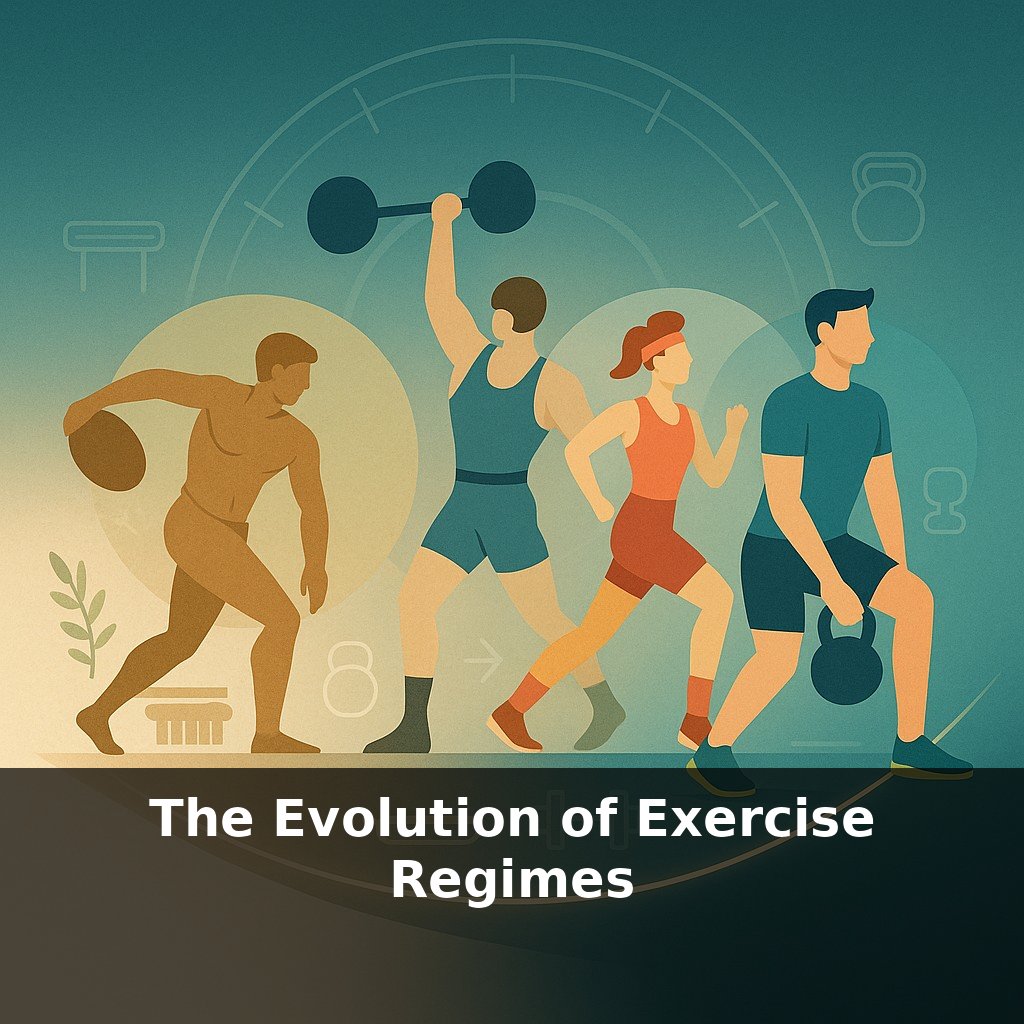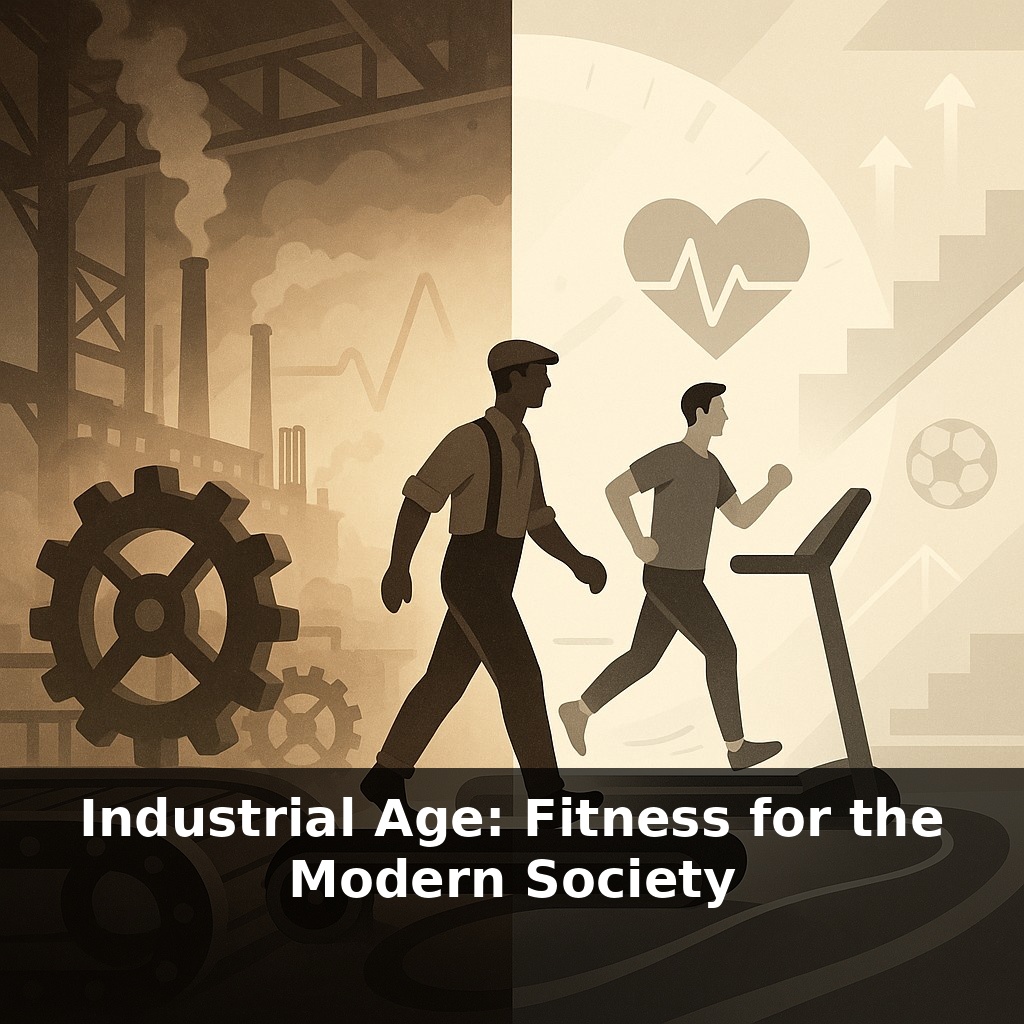
A city doctor in 1880 had a strange new problem: patients were getting weaker even as machines did more work for them. Factories roared, but bodies slowed. Here’s the paradox: the more power society gained, the more it had to invent exercise just to stay alive.
Office stairwells, weekend soccer leagues, and that treadmill facing a wall of TVs all share a hidden ancestor: the factory floor. As steam and steel reshaped daily life, bodies had to renegotiate their place in a world that suddenly ran without them. Policymakers fretted over “weakened” citizens, factory owners worried about accidents and absenteeism, and a new market sensed profit in selling strength back to people who no longer earned it through labor. Out of this tension grew public parks as prescribed green space, company sports clubs as tools of discipline and loyalty, and gym machines that turned effort into something you could standardize, measure, and sell—like bolts or coal. This episode traces how those industrial-age experiments hardened into the fitness culture we now treat as normal.
Governments didn’t just worry in theory; they started counting bodies like factories counted output. Military recruiters logged how many young men were rejected for being underweight. Insurance companies quietly compiled tables linking desk jobs to early death. Reformers toured cramped tenements and filed reports warning of “degeneration” in industrial districts. Out of these numbers came new experiments: school drill so kids moved in unison like clockwork, timed footraces in smoky streets, even manuals teaching clerks how to stretch between ledgers. Exercise was becoming policy, not pastime.
Factory owners noticed the shift before most doctors did. Production records showed that the most “modern” jobs—machine minding, clerking, telegraphy—left workers oddly drained yet physically underused. Reports from 1870s textile mills in Lancashire complained of “nervous fatigue unaccompanied by wholesome exertion.” In plain terms: brains fried, bodies idled.
So reformers tried to re-engineer daily life. Urban planners didn’t just add parks; they began threading in promenades and broad sidewalks so that walking itself became part of the city’s design. Berlin’s late-19th-century “Hygiene exhibitions” showcased model streets where shopworkers could, in theory, walk to and from work instead of being crammed into horse-drawn trams. In Paris, Baron Haussmann’s boulevards doubled as marching grounds for troops and strolling space for civilians—a built environment that subtly pushed legs back into use.
Inside factories, managers experimented with structured breaks long before “wellness programs” became a buzzword. Some German metalworks tested 10-minute mid-morning calisthenic pauses, reporting fewer accidents during the long afternoon shift. Railway companies sponsored workers’ athletic clubs not just for morale but to advertise their brand as strong, modern, and dependable. A fit-looking porter was a moving billboard.
Meanwhile, a different kind of professional appeared: the exercise expert. Figures like Gustav Zander translated medical concerns into mechanical solutions, but there were also more low-tech pioneers. Physical culture teachers in New York rented second-floor halls above shops, selling class packages the way we sell gym memberships today—complete with testimonials, “before and after” sketches, and promises of improved posture for stenographers hunched over typewriters.
Women’s participation complicated social norms. Middle-class advice manuals cautiously endorsed “light gymnastics” for wives and daughters, arguing that healthier mothers meant healthier citizens. Swedish and German “turnen” systems adapted their drills for female students, trimming the militaristic edge but keeping the discipline. The message was new: even if your work didn’t demand strength, your role in society did.
Underlying all this was a quiet recalibration of responsibility. Where pre-industrial bodies were shaped mostly by necessity, industrial bodies were increasingly expected to be self-managed projects. Exercise migrated from incidental byproduct of survival to a scheduled task, something you might need to learn, budget for, and even buy in specialized spaces.
A bell rings in a 1890s textile mill, and instead of signaling more work, it sends a handful of workers to a dusty courtyard for “breathing drills.” One group marches in circles; another practices arm swings taught by a visiting “physical culture” instructor paid by a local mutual-aid society, not the boss. Across town, a women’s college installs parallel bars and light dumbbells, framing them as tools for “mental vigor” and academic focus rather than biceps. Early office buildings quietly mirror this logic: some insurance firms carve out rooftop spaces where clerks can pace, stretch, or toss medicine balls under supervision, tracking not just premiums but pulse rates. Even churches get involved—YMCA basements host gymnastic nights where Bible study and barbell work share the same timetable. These scattered experiments show a culture groping for ways to stitch movement back into daily schedules, testing whether discipline, productivity, morality, and health could all be trained in the same hour.
Step counters, zoning codes, and wellness apps quietly continue the project those mill courtyards started: redesigning routine. As AI and robotics peel away even more manual tasks, movement may become less about “working out” and more about how we choreograph errands, commutes, and even meetings. Think of stair-filled transit hubs or game-like office stairwells nudging you upward—micro-obstacles that keep bodies negotiating space instead of just consuming it.
Your challenge this week: audit how much your environment decides your movement for you. For three typical days, note: - Every time stairs are an option but you’re funneled to an elevator or escalator - Every route that makes sitting the default (car, bus, long meetings) - One moment when a tiny design tweak (a nearer bike rack, a safer crossing, a shower at work) would have made the active choice easier
At week’s end, pick one setting—home, commute, or workplace—and design a single, concrete change that would make the active option the path of least resistance.
Today’s fitness choices sit on a moving conveyor belt of technology and habit. Each new tool—car, smartphone, delivery app—shaves off another slice of effort, like an escalator replacing a staircase. The open question isn’t whether we’ll move less by default, but how deliberately we’ll rebuild friction so motion stays stitched into ordinary life, not just gym hours.
Try this experiment: For the next 7 days, set a timer for every 45 minutes during your workday and, when it goes off, do a 3-minute “industrial reset” circuit: 10 deep squats, 10 pushups on a desk or wall, 30 seconds of loaded carry (grab a backpack or toolbox and walk), then 60 seconds of easy nasal-breathing walking. Track how your focus, mood, and neck/low-back tension feel at noon and at the end of the day on a 1–10 scale. At the end of the week, compare those numbers to a “normal” week and decide whether this micro-dose strength approach makes your modern, screen-heavy workday feel more like you’re built to handle it.