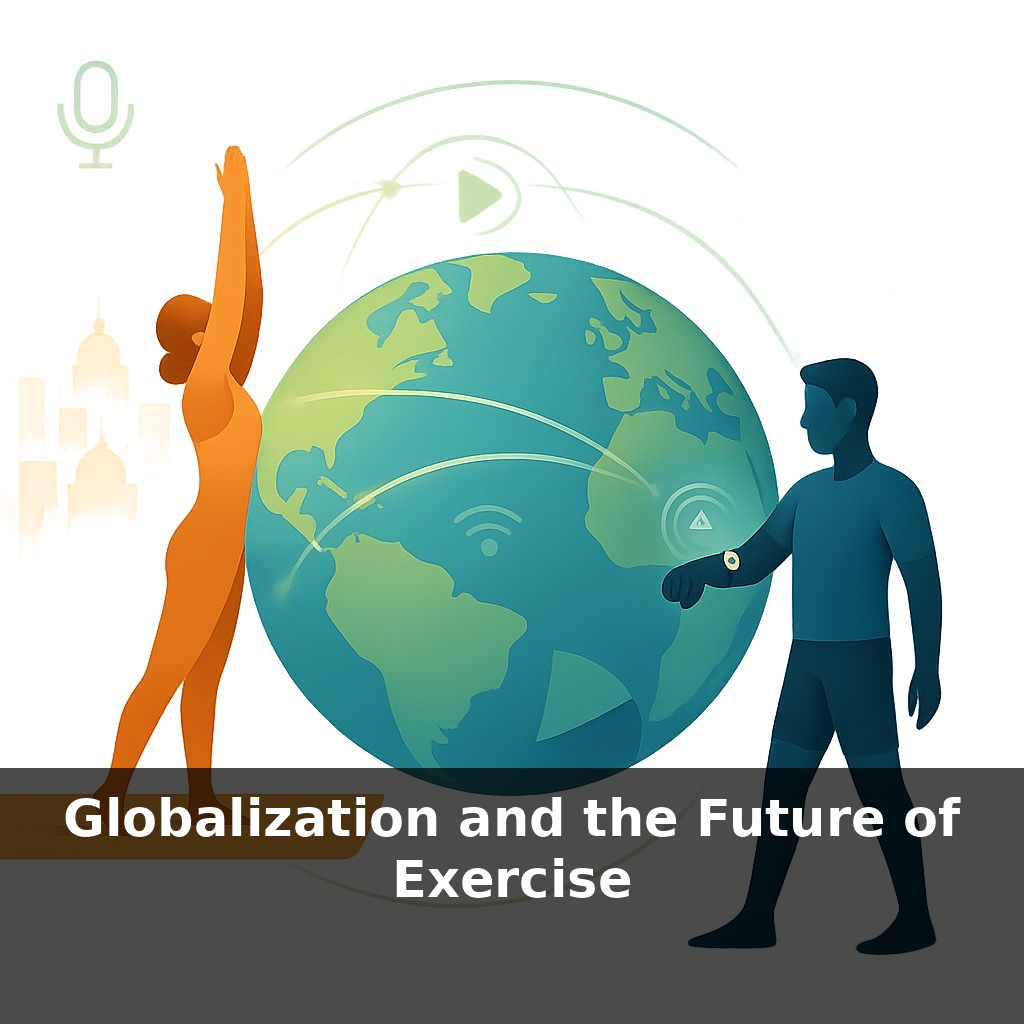
A yoga teacher in Mumbai cues sun salutations. At the same moment, someone in Berlin copies her every move—through a tiny screen on their wrist. Here’s the twist: we’re more connected to global workouts than ever, yet about a quarter of adults still barely move at all.
A quarter of adults worldwide still aren’t moving enough—despite living in an era where a workout can cross borders faster than a text message. Globalization isn’t just about trade and travel anymore; it’s quietly reshaping how, why, and with whom we exercise. Your smartwatch might nudge you with breathwork rooted in Eastern traditions, while your group ride is led by a coach broadcasting from another continent. Meanwhile, public-health campaigns and wellness brands are stitching exercise into bigger stories about mental clarity, social connection, even climate-conscious commuting. This new landscape blurs gym walls, time zones, and cultural boundaries. But it also forces tough questions: Who gets access? Who profits from your movement data? And when a sacred practice becomes a trend, where’s the line between appreciation and exploitation?
Now those forces are colliding with powerful technologies. Streaming platforms beam niche classes—Bollywood cardio, K‑pop dance, Afrobeat cycling—into homes that once only had a treadmill and a TV. Wearables quietly log not just steps, but heart rhythms, sleep, even micro‑pauses in your day. AI systems learn your habits the way a good coach reads body language: what time you’re likely to skip, how hard you’ll push when friends are watching. And hovering in the background are employers, insurers, and city planners, experimenting with how these tools might reshape workdays, premiums, and even streets.
When you zoom in on an ordinary workout in this emerging ecosystem, three big shifts stand out: what counts as “exercise,” who designs it, and where it happens.
First, the “what.” A brisk walk used to sit in a different mental category than therapy or community. Now, with over 9000 studies tying movement to mental health, the lines blur. A 20‑minute VR boxing session isn’t just cardio; it’s marketed as stress relief, social hangout, and even cognitive training, all at once. Public guidelines are quietly following: instead of prescribing only minutes and heart rates, they increasingly talk about mood, sleep, and social connection as legitimate outcomes of your workout.
Second, the “who.” Workout design was once controlled by local coaches and national sports bodies. Now, creative power is scattering. A Brazilian capoeira teacher can livestream to thousands abroad. A small studio in Seoul can license its K‑pop choreography to a global platform. At the same time, recommendation engines quietly edit what you actually see. Their suggestions can amplify certain cultures and bury others, not out of malice but because “people like you” clicked more on one style than another. That feedback loop can turn a few early viral hits into the default look and sound of “global fitness.”
Then there’s the “where.” The stickiest models aren’t purely digital or purely physical—they’re hybrids. A cold‑water plunge might happen in a local lake, but the protocol, tracking, and social accountability are organized online. Gyms evolve into filming studios, community hubs, or testing grounds for new tech. Home‑based exercisers still show up for live leaderboards, local run clubs, or workplace challenges, blending solitary and shared effort.
All this convergence creates a kind of architectural blueprint for your health life: physical spaces (parks, gyms, living rooms), digital layers (apps, VR, platforms), and cultural influences (from yoga to HIIT) interlock like rooms in a connected house. The benefit is choice and customization at an unprecedented scale. The risk is fragmentation—so many options, and so much invisible algorithmic steering, that your routine stops reflecting your values and starts reflecting whoever designed the system. That tension—between empowerment and subtle control—will shape how this global fitness ecosystem evolves.
Think of a teenager in Lagos mixing a jump‑rope routine from a Kenyan creator with choreography from a São Paulo dancer, all synced to a playlist tuned by an algorithm that barely “knows” their country exists. That mash‑up isn’t just entertainment; it’s a prototype for how future exercise spreads—skipping over borders even when local facilities are scarce. Or take VR boxing: a headset turns a cramped studio apartment into a ring where your sparring partners log in from three continents, your punch speed is scored in real time, and your session can burn calories at a rate rivaling moderate cycling. Meanwhile, small communities are quietly hacking the system. A running club in Warsaw might use a global app but overlay its own rituals: local routes, climate‑aware meetups, and shared recovery days. In practice, the most resilient fitness cultures will likely look like this—global tools and ideas, bent around hyperlocal needs, values, and constraints rather than the other way around.
Your running shoes might soon sit next to your passport and health card—exercise becoming a kind of global “currency” that unlocks discounts, travel perks, even priority access to preventative care. As climate disruptions reshape seasons, apps could nudge you toward low‑energy routines, like swapping treadmills for stairwells. The twist: your future “coach” may need legal guardians—ethicists and regulators—to keep your sweat, stories, and cultural rituals from being quietly monetized or misused.
As borders blur, your future “gym” might look more like a toolkit than a building: local trails, borrowed rituals, sensor‑free days, and digital classes you treat like a library, not a landlord. The real frontier isn’t the next gadget, but learning to curate this expanding menu so your routine serves your body, your community, and your conscience at the same time.
Before next week, ask yourself: “If my neighborhood suddenly had outdoor gyms, safe bike lanes, or group walking clubs like the ones mentioned in the episode, which one would I actually use this week—and what’s the closest existing version of that I can try today?” “In a world where fitness trends spread globally through apps and influencers, which workout I see online actually fits my culture, schedule, and body—and which ones am I copying just because they’re popular?” “If my daily routine were designed like a ‘walkable city’—with movement built into commuting, errands, and social time—what’s one trip I can intentionally do on foot or by bike in the next few days instead of by car or public transport?”