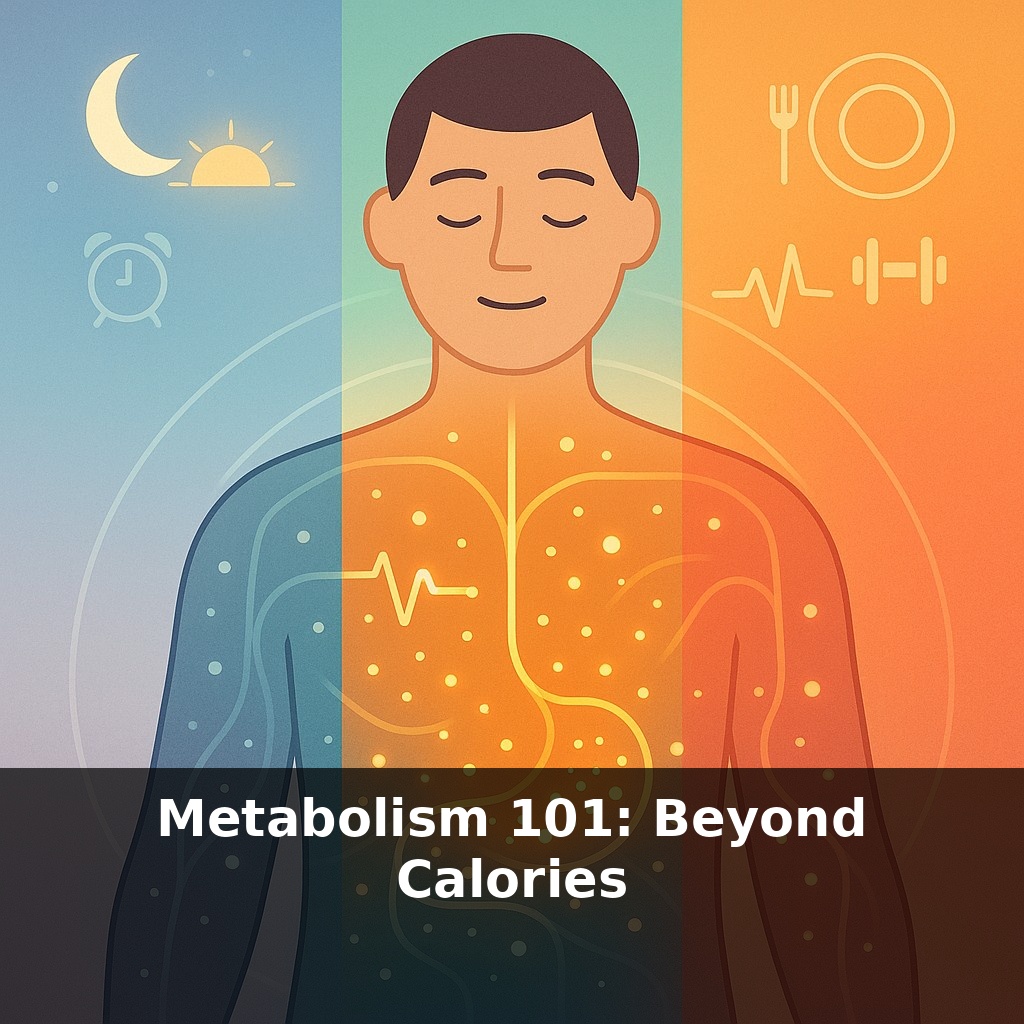
Metabolism 101: Beyond Calories
📝 Transcript
Your body quietly rebuilds about its own weight in energy molecules every single day—without you noticing. Now, walk into three moments: waking up groggy, racing through a workout, and collapsing after a huge meal. Same body, same day—three totally different metabolisms at work.
That shape-shift is metabolism adapting in real time. Your “settings” aren’t locked in by birth or a magical fat-burning food; they’re constantly being nudged by what you do, what you eat, how you sleep, and even how stressed you are. Two people can eat the same lunch and do the same workout, yet burn very different amounts of energy—not because one is “broken,” but because their bodies have learned opposite lessons from years of dieting, training, or sitting.
Think of three silent levers your body keeps adjusting: how much energy it spends just to keep you alive, how much extra it spends dealing with the food you eat, and how much it’s willing to waste on movement or heat. Crash diets, strength training, late-night snacks, and chilly rooms each tug on different levers. Across this episode, we’ll unpack those levers so “fast” or “slow” metabolism starts to sound too simple to be useful.
Some levers move slowly, over months or years; others twitch within minutes. Hormones act like notifications, updating your cells about stress, daylight, food, and temperature. Genetics set some default settings, but they don’t lock the controls—sleep, muscle mass, and even gut microbes keep sending “software updates” that change how resources are used. Rather than hunting for a single trick to “speed things up,” it’s more useful to ask which signals your body has been hearing most: scarcity or safety, stillness or demand, regular rhythm or constant jet lag. Each pattern leaves a metabolic fingerprint you can actually influence.
Start with what barely changes from day to day: the energy your body spends doing “nothing obvious.” Most of that is tied to how much living tissue you carry, especially muscle. A taller, more muscular person can easily “spend” hundreds more calories at rest than a smaller person who eats more and moves less. That’s why two friends can share the same dinner and see different long‑term outcomes even if they log identical calories in an app.
Zoom out and your daily total splits into three moving pieces. One is that quiet baseline. Another is how “expensive” your meals are to process. Protein-rich, minimally processed foods take more work to break down than ultra‑processed snacks, so two 500‑calorie meals can land very differently in terms of energy actually left over. The third piece is everything you do on purpose plus everything you don’t think about: pacing on a phone call, fidgeting, choosing the stairs, even how much you gesture when you talk.
What makes things tricky is adaptability. Cut intake hard and fast, and your body doesn’t just tap stored energy; it trims costs. You move a bit less, your brain dials down spontaneous activity, and many people unconsciously sit more. Over weeks, lab measurements show that the same workout can “cost” fewer calories in a lighter, more energy‑conserving body. That’s part of why rapid-weight‑loss contestants often see a long‑lasting drop in daily needs.
There’s a flip side: add steady demand, and the system often learns that it can afford to be more generous. Resistance training doesn’t just add tissue that’s more costly to maintain; it also seems to send a safety signal over time—especially when food and sleep are adequate—that it’s okay not to clamp down so hard during the rest of the day.
You can see this play out in real people. Office workers who start walking or biking for part of their commute often find it easier to maintain weight, even if the exercise session itself is short. Over months, their “default” movement pattern changes: more steps, more standing, more micro‑bursts of activity that don’t feel like workouts but still nudge daily expenditure up.
Consider two late evenings. In one, you’re on the couch with your laptop open, streaming a show for three hours. In the other, you’re at a recreational sports league: a little warm‑up, some play, some laughs, a walk home. On paper, both nights might involve similar “exercise minutes,” but the second night layers in more total movement, more standing, more subtle shifts in posture. Over months, those tiny choices accumulate into different energy needs and different signals to your body about how active your world really is.
Food timing adds another layer. Shift the bulk of your intake to late at night and your body has to juggle digestion with winding down, often nudging sleep quality and next‑day hunger in ways that alter how much you move without noticing. The same calories, eaten earlier and paired with daylight and a short walk, can land in a different context.
Your challenge this week: pick one “gray area” time—commute, TV time, or phone scrolling—and experiment with turning 10 minutes of it into light movement, then notice how the rest of your day subtly shifts.
Metabolic “maps” are about to get far more detailed. Instead of generic meal plans, you might wear a sensor that flags how a specific breakfast nudges your focus or afternoon slump, like a navigation app rerouting around traffic in real time. Early trials already match foods to individual blood‑sugar patterns; next could be sleep, mood, even injury risk. The frontier isn’t speeding metabolism up at all costs, but teaching it to flex smoothly with your day and lifespan.
As tools get better, you may be able to zoom in on your own “energy story” the way you zoom in on a digital map: spotting bottlenecks like chronic stress, shallow breathing, or cramped work setups that quietly tax you. Rather than chasing hacks, the next step is learning which small design tweaks make your whole day feel less like a grind and more like a well‑paced game.
Here’s your challenge this week: For the next 7 days, eat all your calories within a consistent 10-hour window (for example, 8am–6pm) to support circadian-driven metabolism, and keep that window the same every day. Within that window, anchor each main meal around at least 25–30g of protein (e.g., eggs and Greek yogurt at breakfast, chicken or tofu at lunch, fish or lentils at dinner) to stabilize blood sugar and reduce cravings. Finally, pick one carbohydrate-heavy food you usually eat at breakfast (like sugary cereal, pastries, or juice) and move it to right after your most active part of the day (like after a workout or long walk) to “match” carb intake to your highest insulin sensitivity.
From this course

The Fascinating Science of Metabolism
7 episodesUnlock all episodes
Full access to 7 episodes and everything on OwlUp.
Subscribe — $1.99/monthLess than a coffee ☕ · Cancel anytime