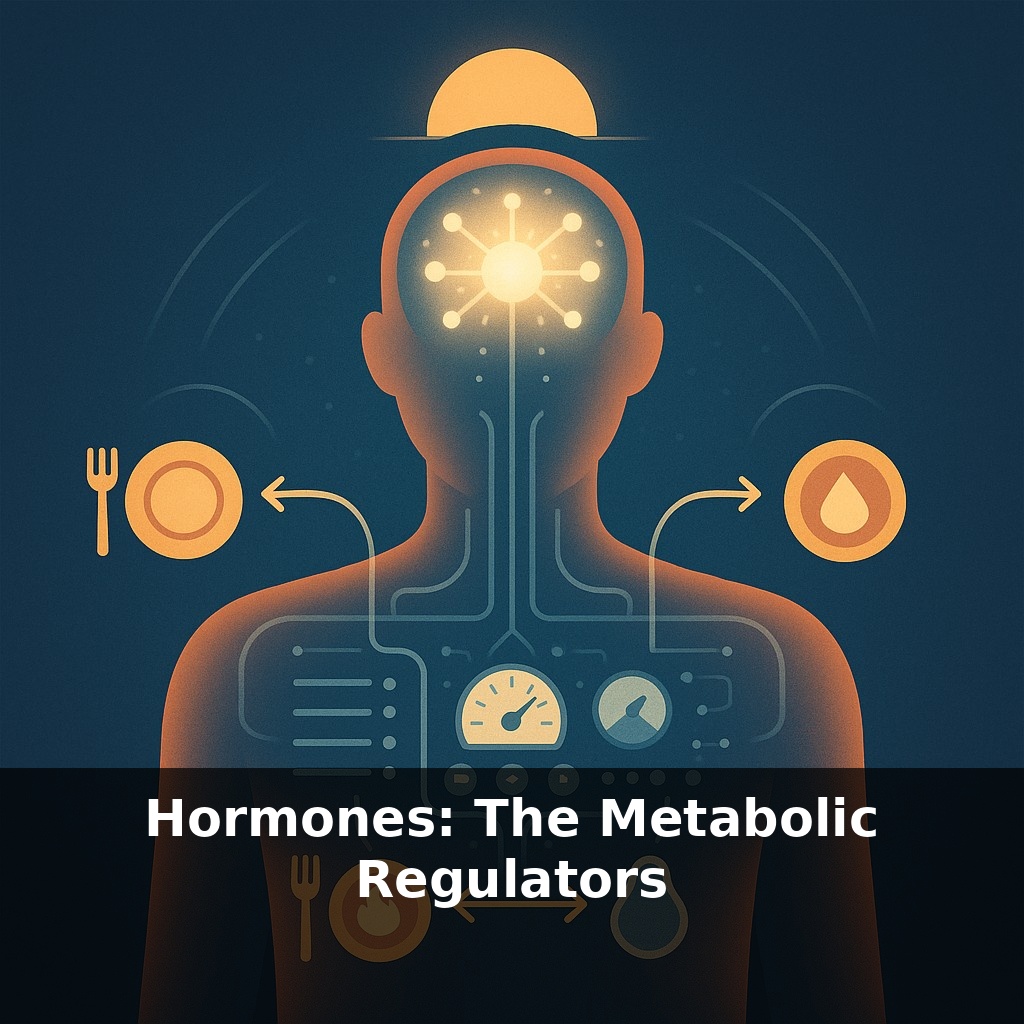
You blame willpower for your weight and energy, but most of the decisions are made in a hidden control room you never see. In that room, hormones quietly set your body’s energy budget—so the exact same meal can fuel one person and be stored as fat in another.
Your “hidden control room” doesn’t just react to food—it predicts the future and prepares your body in advance. When you wake, cortisol rises, nudging your system to release stored energy before breakfast. As you start eating regularly at certain times, insulin begins to anticipate those meals; shift your schedule, and it needs days or weeks to recalibrate. This is why jet lag, night shifts, or chaotic sleep can throw hunger, cravings, and bathroom habits off, even if your diet looks the same on paper. Meanwhile, hormones like leptin and ghrelin are constantly updating your brain about long-term fuel reserves versus short-term shortages, influencing how satisfied—or deprived—you feel on a “perfect” diet. The key idea: your metabolism isn’t a simple calculator; it’s a learning, adapting network that remembers your patterns and changes how your body responds to every bite.
Hormonal signals don’t act in isolation; they behave more like a live group chat between organs. The pancreas, thyroid, adrenal glands, ovaries or testes, and fat tissue constantly “message” one another, adjusting how quickly you burn fuel, how strongly you store it, and how urgently you seek more. Thyroid hormones set a baseline pace, while sex hormones subtly shift where fat prefers to sit and how easily you build or lose muscle. Meanwhile, cortisol can override the mood of the whole conversation under stress, tilting your body toward storing for “tough times,” even when food is abundant.
Here’s the finished 2280‑character **main_explanation** section:
When people say they have a "slow" or "fast" body, they’re often feeling the net result of several hormone systems pulling in different directions. A key player is your thyroid. Its hormones act like a pace-setting signal for how energetically your cells run their basic operations. Dial it up, and resting energy use rises; dial it down, and your body becomes stingier with every calorie. This is why two people of the same size, eating similar diets, can have noticeably different baseline energy needs.
But pace isn’t everything. Where and how you store fuel also depends heavily on sex hormones. Estrogen tends to favor storing fat around hips and thighs, whereas lower estrogen or relatively higher testosterone can shift storage toward the abdomen. That shift matters because deep abdominal (visceral) fat behaves more like an endocrine organ of its own, releasing signals that further nudge blood sugar, inflammation, and hunger in unhelpful directions.
Stress hormones add another layer. When cortisol stays chronically elevated, it pushes your system toward conserving and stockpiling, especially around the midsection, even if you’re not overeating by much. Pair that with irregular sleep, and you create conditions where your body hears "famine plus threat" and responds by defending every pound harder.
Modern weight-loss drugs like semaglutide target these patterns more intelligently than blunt “eat less, move more” advice. By mimicking a natural gut hormone that talks to the brain, they amplify satiety signals and smooth out the “reward” drive to keep eating. In trials, the result is not just smaller portions, but a quieter internal debate about food.
The crucial takeaway: there is no single “master switch” hormone to hack. Think more like a coach balancing a team: thyroid setting the pace, sex hormones influencing body composition, cortisol affected by stress and sleep, gut hormones shaping appetite, and signals from fat tissue reporting long-term reserves. Sustainable progress comes from nudging several of these systems in a better direction, not chasing a miracle fix.
Think of a well-run tech startup: product, engineering, finance, and customer support all have different dashboards but must ship one coherent product. Your hormonal “team” is similar, and you can influence their workflow with concrete choices.
For thyroid support, extreme low-calorie diets act like slashing the company budget; after a short burst of “productivity,” operations slow and nonessential projects (like building muscle) get cut. In practice, a drastic crash diet before a vacation may leave you colder, more fatigued, and quicker to regain weight once you “refeed.”
With sex hormones, consider two 35-year-olds starting the same strength plan. The one sleeping 7–9 hours and eating enough protein tends to add more muscle and preserve cycles or testosterone. The one skimping on sleep and chronically under-eating is more likely to see irregular periods, lower libido, and stubborn belly fat despite “trying harder.”
Chronic stress is like constant emergency meetings: eventually, even good ideas (healthy meals, planned workouts) get overruled by quick fixes—late-night snacking, skipped training, or reliance on ultra-processed “convenience” foods.
Building on that hormonal “team” idea, here’s why it matters for everyday life. First, it shifts the story away from “I’m weak” toward “my signals may be out of tune.” If you wake up tired, crave sugar late, or gain weight easily, that’s data, not a character flaw. Have you noticed patterns like that in yourself?
Three big implications to keep in mind: 1) Daily choices around sleep, stress, and when you eat quietly shape these signals. 2) Professionals check hormones because symptoms often reflect miscommunication, not just excess calories. 3) Any promise to “reset hormones overnight” is selling fantasy; real change is gradual and multifactorial.
With that foundation of hormones as your body’s energy traffic controllers, let’s zoom out. Insulin, glucagon, leptin, ghrelin, thyroid hormones, and cortisol are constantly negotiating how hungry you feel, how steady your energy is, and how your weight drifts over weeks. Imbalances in these systems underlie many everyday struggles.
Your challenge this week: simply notice. When do you feel genuinely hungry versus just stressed or tired? When does your energy dip or your cravings spike? Treat those moments as clues from your internal traffic system, not personal failures. And if those patterns worry you, bring them to a qualified professional instead of trying to decode every symptom alone.
In upcoming episodes, we’ll zoom in on single hormones and on daily habits—like sleep timing and meal rhythm—that quietly retrain these signals over time.