 2min preview
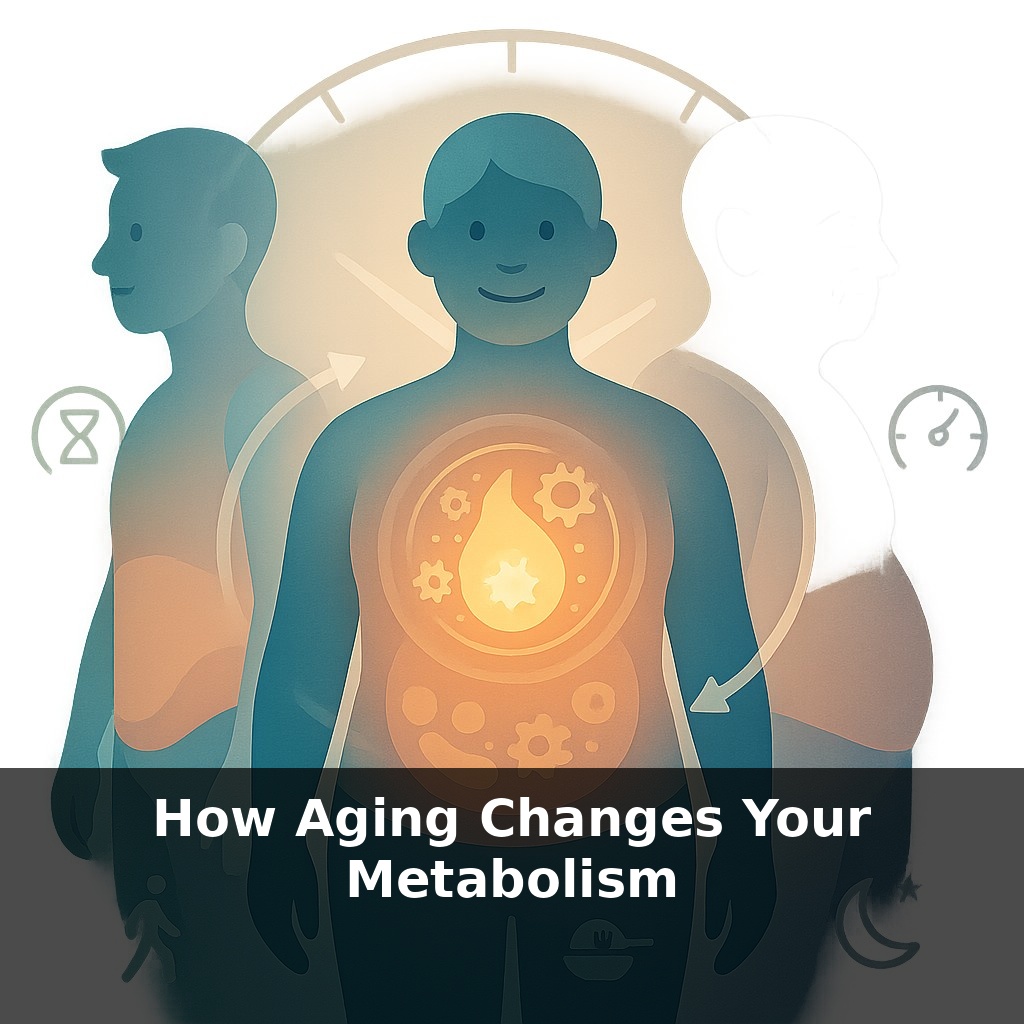
How Aging Changes Your Metabolism
📝 Transcript
Your metabolism isn’t “doomed” at 40 or 50—recent research shows it stays surprisingly stable through most of adulthood, then drops sharply later on. So why do your jeans feel tighter in mid‑life? In this episode, we trace what’s really changing under the surface as you age.
So if your metabolic “engine” isn’t crashing in mid‑life, what *is* slowly shifting as the years add up? The quiet culprit is often your body’s composition and behavior, not a sudden internal failure. Starting in your 30s, most adults begin to trade a little muscle for a little fat each decade—often without noticing. The scale might stay the same, but what that number is made of changes, and muscle is the hungrier tissue. Add in long workdays in chairs, more stress, and lighter, less frequent workouts, and your total daily burn can slide downward even while your official resting rate looks “normal.” Hormones gradually nudge this process along—subtle dips in growth hormone, sex hormones, and changes in insulin sensitivity that influence how easily you store or use energy. In this episode, we’ll connect those dots and show where you still have real leverage.
By your 50s and 60s, another layer kicks in: how efficiently your cells turn fuel into usable energy starts to slip. Tiny power stations inside your cells, mitochondria, don’t “break,” but they do get less precise at extracting energy from food, especially when you’re consistently stressed, underslept, or under‑recovered from workouts. In parallel, the nervous system that helps regulate heart rate, blood pressure, and heat production becomes a bit more conservative with age. The result: your body quietly trims “optional” energy spending, unless your daily habits keep sending the signal that higher output is still needed.
Subscribe to read the full transcript and listen to this episode
Subscribe to unlockSubscribe for $1.99/month to unlock the full episode.
From this course
The Fascinating Science of Metabolism
7 episodesUnlock all episodes
Full access to 7 episodes and everything on OwlUp.
Subscribe — $1.99/monthLess than a coffee ☕ · Cancel anytime