Right now, as you listen, your brain is quietly rehearsing threats, sorting memories, and inventing stories you’ll never recall. Tonight it will spend about a quarter of your sleep doing this. Here’s the twist: no one fully agrees on *why* this nightly theater is so essential.
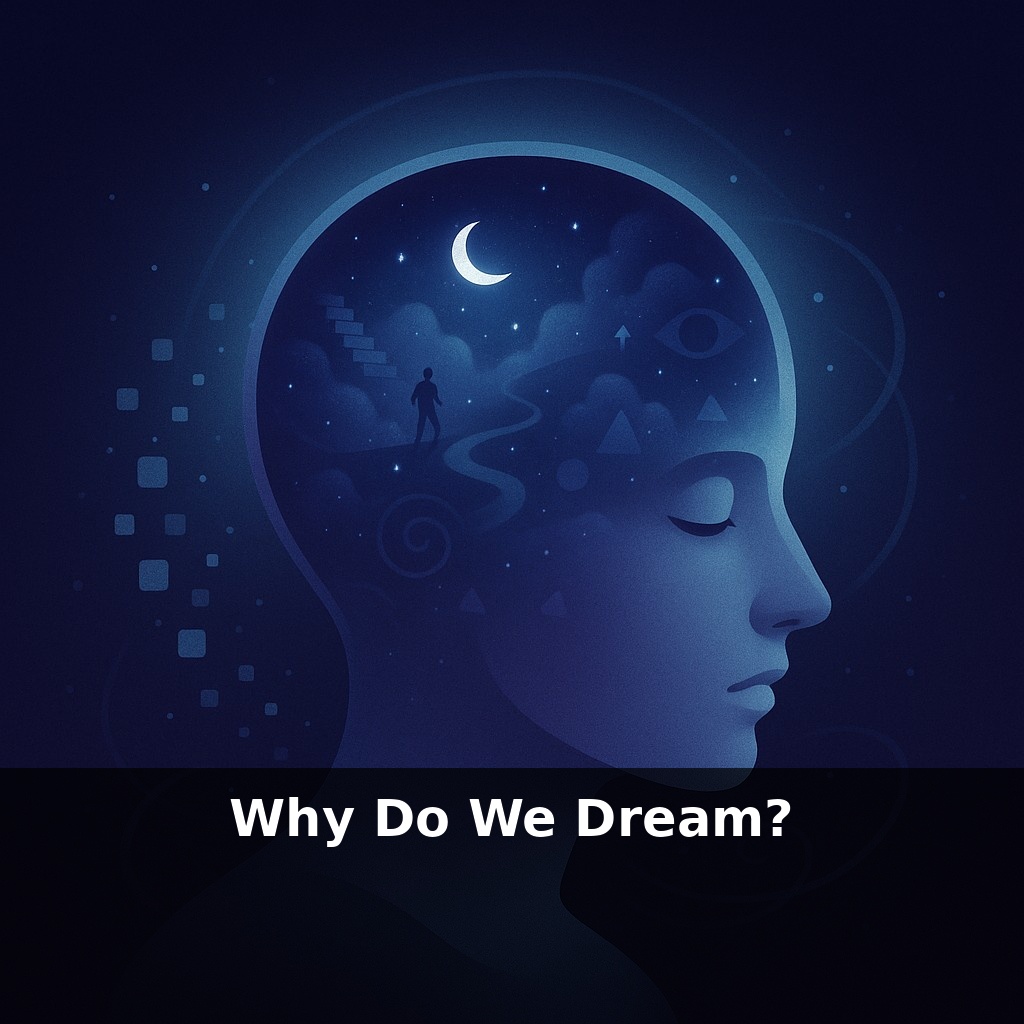
Freud called dreams the “royal road to the unconscious.” Today, brain scanners have replaced couches, but the road is still full of twists. We now know people dream in every culture, across all ages, even in total darkness and silence. Yet the stories your mind spins at night can break every rule your daytime logic insists on: time jumps, impossible places, people who are both familiar and strange. It’s as if your inner storyteller has been told, “No budget, no script—just explore.”
Modern research suggests these bizarre narratives aren’t random nonsense. Patterns show up: more social drama than action scenes, more emotional puzzles than tidy lessons. When life feels chaotic, dreams often become louder, not quieter. And when you wake up from a nightmare sweating, your heart doesn’t “know” it was just a story—it reacts as if the danger were real.
Instead of one grand purpose, researchers are finding that dreaming behaves more like a crowded workshop than a single-purpose tool. Different brain systems show up for different jobs: emotional circuits replay charged moments, memory networks quietly re-sort yesterday’s experiences, and visual areas remix fragments into vivid scenes. In REM-rich nights, people tend to remember new skills and emotional details better the next day. After stress, dream reports skew more intense and socially complex, as if overnight processing leans harder into the unfinished business of your waking life.
If you look closely at how dreams unfold across the night, a few themes emerge. First, they seem tightly tuned to *emotionally loaded* material. Upsetting conversations, unresolved decisions, even subtle social slights show up more often than neutral errands or routine chores. Lab studies find that when people view disturbing images, the ones that trigger the strongest emotional reactions are disproportionately likely to reappear in that night’s dreams—often in disguised or shifted form. It’s less like a replay button and more like a remix that keeps the emotional “tone” but changes the plot.
This emotional bias links to another pattern: dreams often “downshift” intensity over time. People who dream repeatedly about a trauma, for instance, may notice that, across weeks or months, the setting softens, the narrative gains distance, or the dream-self becomes more capable. Some researchers argue this reflects overnight attempts to strip away the raw physiological punch from difficult memories while leaving the information intact. When this process stalls—like in chronic PTSD—nightmares can loop with little variation, suggesting that something in that adaptive recalibration has gone off track.
Dreams also play with *possibility space*. Athletes who mentally rehearse movements during the day tend to have more performance-related dreams. Musicians sometimes report novel chord progressions or melodies appearing in sleep. In one famous case, chemist August Kekulé described dozing off and “seeing” a snake biting its tail, a vision he later linked to understanding the ring structure of benzene. These stories are anecdotal, but they map onto a reliable finding: after REM-rich sleep, people are more likely to find creative, non-obvious solutions to problems posed the day before.
Social life is another major arena. Across cultures, dreams are densely populated: friends, rivals, authority figures, strangers. Conflicts are exaggerated, alliances tested, reputations threatened or restored. One evolutionary view suggests that by simulating fraught interactions—arguments, betrayals, reconciliations—dreams let us practice reading intentions and experimenting with responses without burning real-world bridges. It’s offline training for a brain whose survival has always depended on navigating complex social worlds.
Your challenge this week: each morning, briefly note just two things from any remembered dream *without* trying to interpret symbols—1) the strongest emotion you recall, and 2) the most significant social role present (friend, boss, stranger, ex, etc.). After seven days, scan the list and ask: Do the emotions echo what’s been most demanding in my waking life? Are certain roles—like critics, caregivers, competitors—showing up again and again? You’re not decoding hidden messages; you’re checking whether your nightly simulations are clustering around particular pressures or goals that might deserve more conscious attention.
Sometimes the most revealing details in dreams aren’t the shocking plot twists, but the tiny “casting choices.” A recurring background coworker, a teacher from years ago, or a neighbor you barely speak to may say more about current stress than the obvious main character. Think of them less as literal people, more as stand-ins for traits—authority, judgment, safety, competition—that your mind keeps stress-testing in different combinations, the way a software engineer runs code through multiple devices to see where it breaks.
Real-world examples hint at this: entrepreneurs report pre-launch dreams packed with investors, clients, and legal details long before a single contract is signed; new parents describe elaborate, edge-case scenarios about childcare logistics they’d never consciously plan for. In both cases, the dream content quietly anticipates bottlenecks and role conflicts—part rehearsal, part stress test for identities that are still under construction.
If we can better “listen in” on dreams, health care might shift from treating symptoms to steering overnight updates. Researchers are already testing ways to nudge dream tone with sounds or scents, a bit like adjusting a playlist without waking the listener. Future clinics could time therapies or studying around when your mind is most likely to remix problem areas, turning your own nights into a customized lab for learning, mood repair, and even identity change.
So the next time you wake up mid-story, resist the urge to dismiss it as random static. Those fragments can act like sticky notes your mind leaves on the fridge—cryptic, but pointing toward unfinished business, new angles, or quiet wishes. We may never have a full manual for this nightly workshop, but learning its “accent” could change how we read our days.
Here’s your challenge this week: For the next 5 nights, set a consistent bedtime and, 10 minutes before sleep, do a quick “dream prep” by replaying your day once in your mind, then deliberately think about one unresolved question or problem you’d like your dreams to work on. As soon as you wake up, stay in bed with your eyes closed for 60 seconds and mentally replay any images, emotions, or fragments you remember from your dreams, then give each night’s dream a simple title (like “The Flooded Office” or “The Broken Phone”). At the end of the 5 days, look across your titles and recurring themes to see if your dreams are processing specific emotions, fears, or goals you heard discussed in the episode, and make one concrete decision or adjustment in your waking life based on that pattern.