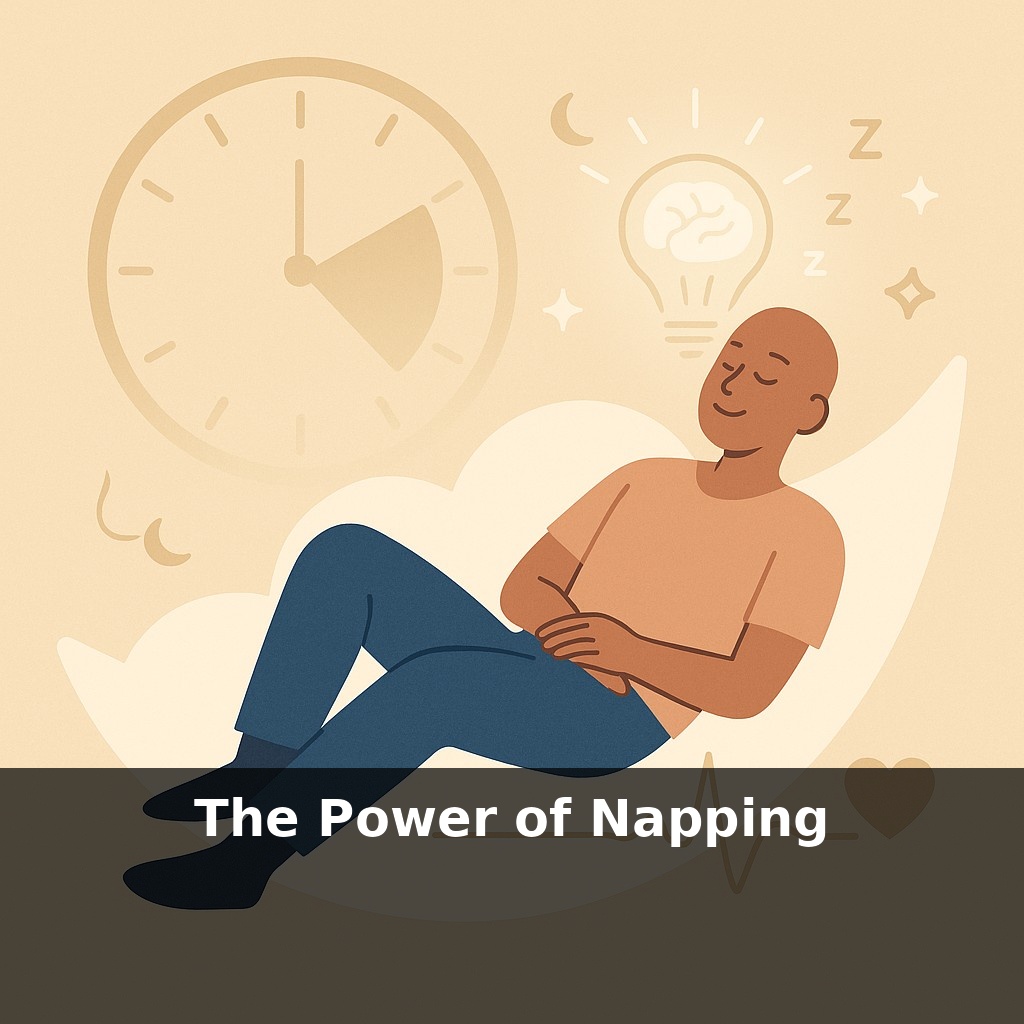
A NASA study found that a nap shorter than your favorite TV episode made pilots dramatically sharper. Now, think of a surgeon between operations, or a parent on hour ten of childcare—each closing their eyes briefly and waking up noticeably more focused.
Harvard researchers recently found that people who nap just once or twice a week have nearly half the risk of major cardiovascular events compared with non‑nappers. Not fitness fanatics, not biohackers—ordinary adults whose only “intervention” was brief daytime sleep. That hints at something bigger: naps might be acting like a quiet lever on the body’s long‑term health systems, not just a quick pick‑me‑up. In this episode, we’ll explore how short daytime sleep can steady mood, sharpen learning, and even tame your stress response—without derailing nighttime sleep. We’ll look at how timing transforms a nap from helpful to harmful, why a 6‑minute doze can still upgrade your memory, and how different professions—from surgeons to software engineers—are building strategic napping into demanding schedules.
Workplaces are slowly catching up to what the science has been hinting at: some tech firms now offer “nap pods,” hospitals carve out dark rooms for on‑call staff, and even elite athletes schedule brief midday sleep between training blocks. But most people still negotiate unofficial naps—dozing on a lunch break, nodding off on a commute, or “resting eyes” between back‑to‑back Zoom calls. The question isn’t whether short daytime sleep happens; it’s whether we shape it on purpose. In the next part, we’ll look at how different nap lengths quietly “tune” your brain for specific kinds of tasks.
Think of a nap less as “extra sleep” and more as a tool with settings. Change the setting, and you change what your brain is best at afterward.
At the shortest end, there’s the 6–10 minute “micro‑nap.” You barely feel like you drifted off, maybe during a quiet meeting or on a bus ride. Yet studies show that even this sliver of light sleep can tighten up recall and make mental arithmetic feel less effortful. It’s not dramatic, but for students cramming between classes or clinicians between patients, that tiny upgrade can mean fewer slips.
The more deliberate 10–20 minute nap acts like a fast neural tune‑up. You stay in lighter sleep, so you wake up quickly—good for tasks that need vigilance and quick reactions: monitoring screens, answering support tickets, driving the afternoon stretch. This is why some air‑traffic and transportation guidelines now explicitly build in short controlled rest periods; they’re betting on fewer errors, not just happier staff.
Push deeper, into the 30–45 minute range, and you start flirting with “sleep inertia” on waking: that heavy, molasses feeling that makes a spreadsheet look hostile. Yet there’s a trade‑off—this range begins to support more complex forms of consolidation. It’s tempting territory for people doing intensive study blocks, but it needs enough buffer time afterward to fully shake off grogginess.
Then there’s the 60–90 minute cycle, which often includes REM‑rich segments. This is where more original, associative thinking tends to benefit. Software engineers stuck on a bug, writers tangled in plot problems, or product teams wrestling with a tricky design choice may notice that ideas feel looser, more flexible, after this longer block. Many creative professionals unofficially protect this window on heavy “concept” days.
Context matters just as much as duration. High‑stakes operators—surgeons, firefighters, long‑haul drivers—often nap prophylactically, *before* fatigue peaks, to stretch stable performance into late hours. Knowledge workers may instead aim for a strategic reset between cognitively different tasks: numbers in the morning, brainstorming after a controlled doze.
The real lever is alignment: pairing the nap “setting” with what your next two to three hours actually demand, rather than treating every tired spell the same.
A product designer staring at a cluttered interface might use a 15‑minute pause not as escape, but as part of the design process itself: sketch, close the laptop, slip into light dozing, then reopen the work in a state that’s better at spotting what doesn’t belong. ER teams sometimes rotate members through short, protected rest slots on long shifts, treating those breaks as shared infrastructure rather than a personal luxury—like scheduled maintenance on critical equipment.
Students can get just as tactical. A language learner drilling verb forms could time a brief doze between two short practice blocks, using the “in between” period as a quiet bridge that separates old mistakes from a cleaner second pass. Parents on fragmented sleep may find that pairing a brief afternoon quiet‑room doze with a simple pre‑nap ritual—a glass of water, phone out of sight, a single intention for what comes after—turns something opportunistic into something almost programmable. One deliberate pause, then back into the day with a slightly upgraded version of yourself.
Workplaces may soon treat a “nap budget” like they treat software licenses—tracked, optimized, and defended in meetings. As biometric data normalizes, you might get a prompt on your watch the way you get a calendar alert: *prime window for a 12‑minute reset in 20 minutes.* Cities could fold quiet pods into libraries, malls, even transit hubs, turning idle time into repair time. The cultural shift will be awkward, but as outcomes data piles up, “no‑nap” norms may look as dated as smoking in offices.
The next frontier isn’t just *taking* naps, but personalizing them—like tuning a playlist to your day instead of hitting shuffle. Athletes already log short sleep as carefully as workouts; knowledge workers may be next, pairing specific tasks with specific nap “tracks.” Your job isn’t to sleep more, but to learn which tiny pause upgrades the life you already have.
Before next week, ask yourself: 1) “Looking at my usual afternoon slump, what exact 20–30 minute window could I experiment with a ‘non-negotiable’ nap, and what would I need to change (notifications, meetings, caffeine timing) to actually protect that time?” 2) “If I treated napping like a performance tool instead of a guilty pleasure, how would I design the ideal setup for myself—where would I lie down, what would I listen to, how dark and cool would the room be?” 3) “After my next nap, what do I honestly notice about my focus, mood, and patience in the 2 hours that follow—and how does that compare to days when I just push through with coffee?”