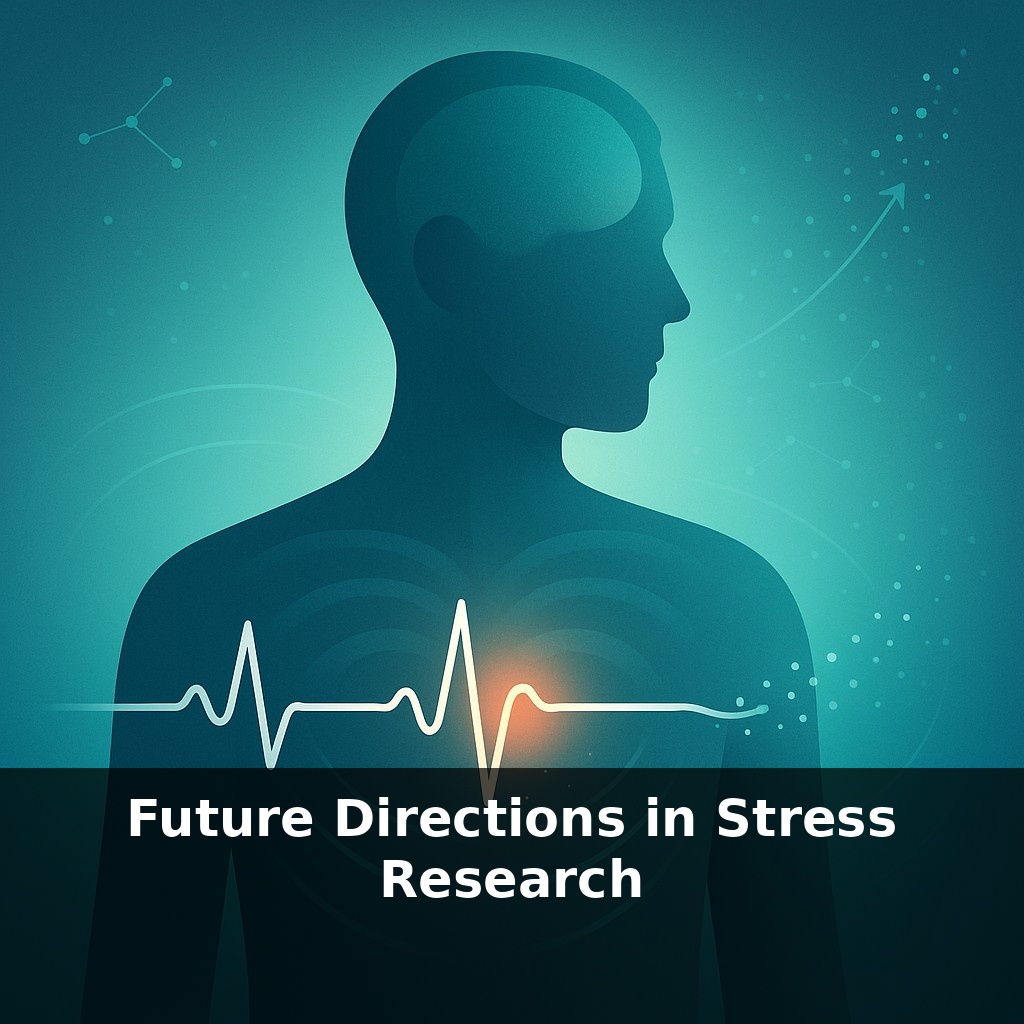
Stress scientists can now spot your body’s “uh-oh” moment before you consciously feel tense. A tiny wobble in your heart rhythm, a brief shift in your breathing—and suddenly a prediction: not just that you’re stressed, but how today’s strain might shape your health years from now.
Stress research is quietly undergoing its own “moonshot.” For decades, we treated stress like weather: a vague forecast (“chronic stress is bad”) with little precision about where, when, and for whom the real damage would hit. Now, multiple scientific tools are converging to give us street‑level maps instead of cloudy sky reports. Multi‑omics can reveal how your genes, proteins, and metabolites react to pressure in real time. Neuroimaging tracks how specific brain circuits handle demand. Digital phenotyping turns everyday phone and wearable data into objective stress clues. And AI can weave all of this into dynamic, personalised risk profiles. Layer on immune changes, microbiome shifts, and epigenetic “scars,” and a new picture emerges: stress is not one thing, but a shifting network you carry through life—shaped as much by your postcode and paycheque as by your biology.
Soon, stress research won’t just tell us *that* you’re under strain; it will tell us *which* system is taking the hit first and how close you are to a tipping point. Instead of a single “stress score,” scientists are sketching layered profiles: how your hormones fluctuate across the workweek, how sleep loss reshapes your decision‑making, how social isolation leaves its mark on inflammation, or how early adversity nudges your epigenetic age forward. It’s like moving from a single credit score to a full financial dashboard—patterns, weak spots, and early warnings all visible before a crash.
In this next wave of stress science, three shifts matter most for your everyday life: precision, timing, and prevention.
Precision means moving from “you seem stressed” to “this *kind* of stress, at this *dose*, is likely to hurt *this* system.” One person’s blood pressure might spike with conflict but stay calm under deadlines; another may be the opposite. Studies using wearable HRV now suggest that your “stress fingerprint” across a week can be as distinctive as your gait or voice. The goal isn’t to label you as fragile, but to map your personal stress–performance curve: where a challenge sharpens you, and where it quietly starts to erode sleep, mood, or immunity.
Timing is about catching harmful trajectories before they harden into diagnoses. Longitudinal cohorts are linking small, early signals—subtle shifts in HRV patterns, sleep fragmentation, social withdrawal on phones—to later depression, metabolic disease, or burnout. Think of it as stress early‑warning systems: not a single alarm, but a cluster of indicators that say, “If this pattern continues for six months, your risk curve bends upward.” DARPA‑level biosensors and epigenetic clocks will likely become part of these composite risk scores, alongside behavior and context.
Prevention is where this gets practical. Instead of generic advice (“reduce stress”), researchers are testing just‑in‑time, personalised interventions: a micro‑breathing drill when your HRV dips during a hostile meeting; a prompt to take a brisk walk when evening rumination spikes; a nudge to contact a trusted friend when your communication patterns resemble past lonely periods. Crucially, these tools will need to be designed with equity in mind, because social determinants—housing, discrimination, job insecurity—shape who can actually act on precision feedback.
The frontier isn’t a stress‑free life; that’s neither realistic nor desirable. It’s using detailed, lifelong stress data to keep you in the zone where challenge builds capacity rather than silently carving into health.
Think about how this might actually look in daily life. A future app might notice that on days when your calendar stacks three video calls after 4 p.m., your sleep that night is 20 minutes shorter and your next‑morning reaction times slow just enough to resemble mild jet lag. Instead of a vague “get more rest,” it could flag “no back‑to‑back calls after 3 p.m. if you need sharp thinking tomorrow.”
Or consider someone whose gut‑related markers and mood logs consistently wobble after long-haul flights plus tight deadlines. Over time, their profile could suggest a specific “travel recovery protocol”: light exposure at set times, certain foods to support microbial diversity, and a cap on late‑night emails.
At a population scale, patterns might show that residents in noisy, high‑traffic neighbourhoods hit higher “stress load” thresholds mid‑week. Cities could use that data like an architect uses structural sensors in a bridge—pinpointing exactly where supports, green space, or policy changes would prevent cracks before they spread.
Stress tools could soon feel less like alarms and more like navigation systems. Your phone might quietly learn which meetings, commutes, or social dynamics drain you most and suggest “reroutes” before you hit overload. At a community level, anonymised patterns could guide where to add green spaces or quieter transit. The open question: who controls these maps—only you, or also employers, insurers, schools—and what rules will protect your consent and dignity?
Your stress future isn’t a fixed fate; it’s more like software that can be updated as new “patches” from biology, behavior, and society arrive. As tools grow smarter, the real frontier is learning which signals you *want* to listen to—and when to deliberately ignore them—so that precision doesn’t become pressure, but a quieter kind of control.
Try this experiment: For the next 7 days, deliberately trigger a mild, predictable “good stressor” once a day—like a 2-minute cold shower, a short uphill sprint, or a timed mental math challenge—then track just three things 30 minutes later: your mood (0–10), focus (0–10), and physical tension (tight/medium/loose). On days 3 and 6, add one “social buffering” condition by doing the same stressor right after a positive interaction (e.g., a quick supportive call or message with a friend) and compare your numbers. At the end of the week, look at which type of stressor and which context (solo vs. socially buffered) left you feeling more focused and less tense, and use that pattern to design your own “productive stress” routine.