Why Diets Matter
📝 Transcript
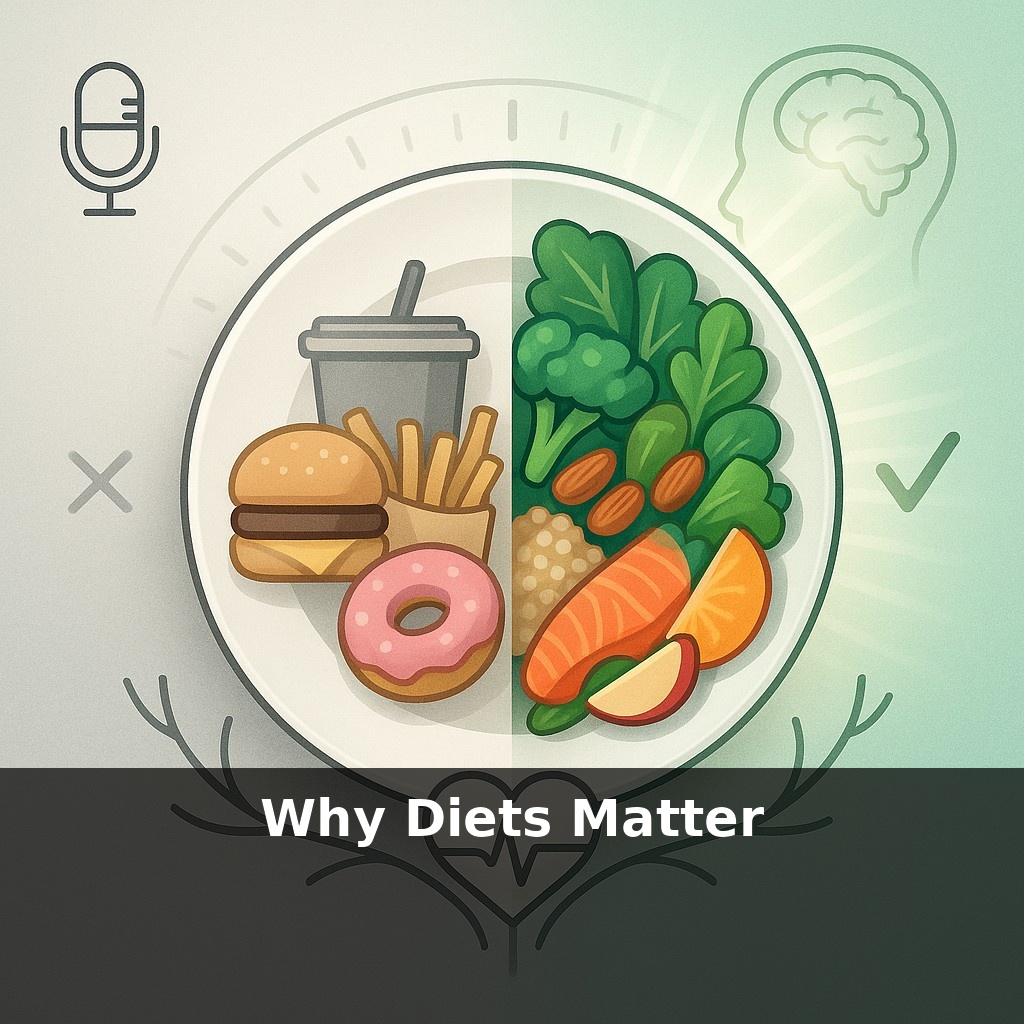
Right now, your next meal is quietly voting on how long—and how well—you live. Two people can eat the same calories, but one plate nudges the body toward sharp thinking and strong arteries, while the other slowly turns up the risk for heart attacks and early death.
That quiet “vote” from your plate isn’t just about today’s energy level; it’s shaping the long‑term blueprint of your body. Research now shows diet rivals, and in some cases surpasses, smoking as a driver of global deaths. One in five deaths worldwide is linked to what’s on the table, not just what’s in the gene pool. And the gap between eating “enough” and eating “well” is huge: you can hit your calorie needs and still be short on the nutrients that keep metabolism, memory, and immunity running smoothly. Think of a city where the lights work but the roads crumble and the water system leaks—that’s what a low‑quality diet can do inside you. The striking part? Populations that shifted toward patterns like the Mediterranean or plant‑forward regional cuisines didn’t just feel better; they slashed disease rates within decades. Your daily food pattern is a long game with surprisingly fast returns.
Step back from single “good” or “bad” foods, and zoom out to the pattern running through your days: what you grab between meetings, how you build your plate when you’re tired, what “normal” looks like in your household or culture. Those quiet defaults are where risk quietly accumulates—or dissolves. Large studies now trace clear lines between overall eating patterns and rates of diabetes, depression, and even some cancers. The twist: you don’t need a perfect menu. Shifting the *average* of your week, not every bite, is where most of the life‑extending payoff comes from.
Here’s the strange part: your “usual” way of eating is affecting systems you rarely connect to food at all. Not just weight, not just blood work at an annual checkup, but how steadily you focus at 3 p.m., how often you get sick in winter, even how motivated you feel to move your body.
When meals lean heavily on ultra‑processed options—think factory‑made snacks, fast‑food combos, sugary drinks—you’re feeding a kind of slow, background inflammation. Studies link these patterns to higher rates of depression, joint pain, and fatigue, even when total calories stay similar. By contrast, when most of your plate comes from minimally processed plants, quality proteins, and healthy fats, your body dials down that inflammatory “hum” and uses energy more efficiently.
A big part of this story lives in your gut. The trillions of microbes there respond almost immediately to what you eat. Fiber‑rich foods—beans, lentils, whole grains, vegetables, fruits, nuts, seeds—act like daily “training sessions” for a diverse, resilient microbiome. Within days of shifting toward more of these, researchers see changes in the types of bacteria that thrive, and in the beneficial compounds they release into your bloodstream. Those compounds talk to your immune cells, your brain, even your hormone systems.
Protein quality and timing matter too. Getting enough, especially from lean and plant sources spread across the day, helps preserve muscle as you age, stabilizes appetite, and supports recovery from stress or exercise. People often focus on cutting things out; the research quietly shows that *strategically adding* protein and fiber tends to crowd out less helpful foods, without rigid rules.
Fats tell their own story. Diets that regularly feature nuts, seeds, olive or canola oil, and fatty fish shift cholesterol particles in a direction that’s less likely to cause blockages, and they support brain structure over the long haul. This isn’t about never touching butter or dessert again; it’s about what shows up most often on an ordinary Tuesday.
Zoomed out, populations that nudge their weekly average toward more whole, minimally processed foods don’t just live longer; they often live more years free of disability, keeping their independence and daily joys intact.
Think about a standard workday. Breakfast is coffee and a pastry on the go, lunch is whatever’s closest to the office, dinner is something quick you can heat in minutes. Nothing dramatic happens that day—but repeat that pattern for years and lab numbers, blood pressure, and energy levels quietly drift. Now flip just a few of those defaults: oats with nuts instead of the pastry twice a week, a bean‑based salad in place of one takeout meal, water instead of one soda. In studies, shifts this small start changing markers of risk within weeks.
One person in a household swaps their usual snack chips for a small bowl of hummus and carrots during weekday TV time. They don’t call it a “diet,” but over months, they’re less stiff in the morning and sleep a bit better. Another person keeps their favorite cultural dishes but tweaks the cooking fat and doubles the vegetables. Same heritage flavors, different trajectory for blood sugar and blood vessels.
Your plate becomes less a set of rules and more like tending a small backyard garden: consistent, modest care reshapes the landscape over seasons; skipping it lets weeds and erosion take over.
Within a decade, your plate may come with instructions tailored to *you*: an app quietly translating gut data, sleep patterns, and glucose curves into Tuesday’s grocery list. Climate‑savvy menus will likely be cheaper and easier to access, as insurers test “food coverage” like they once tested gym reimbursements. Expect more feedback loops too—smart fridges nudging you toward what’s fresh, restaurant labels hinting at impact—less like a rulebook, more like a GPS that recalculates as your life changes.
Small shifts in what fills your cart can ripple far beyond personal health: they support local growers, cut medical costs, and lighten your environmental footprint. Treat each grocery trip like choosing which “future” to stock at home. Your challenge this week: swap just two routine items for less‑processed options and notice not just how you feel, but what changes around you.
From this course
Unpacking Diets: The Good, The Bad, and The Ugly
8 episodesUnlock all episodes
Full access to 8 episodes and everything on OwlUp.
Subscribe — $1.99/monthLess than a coffee ☕ · Cancel anytime