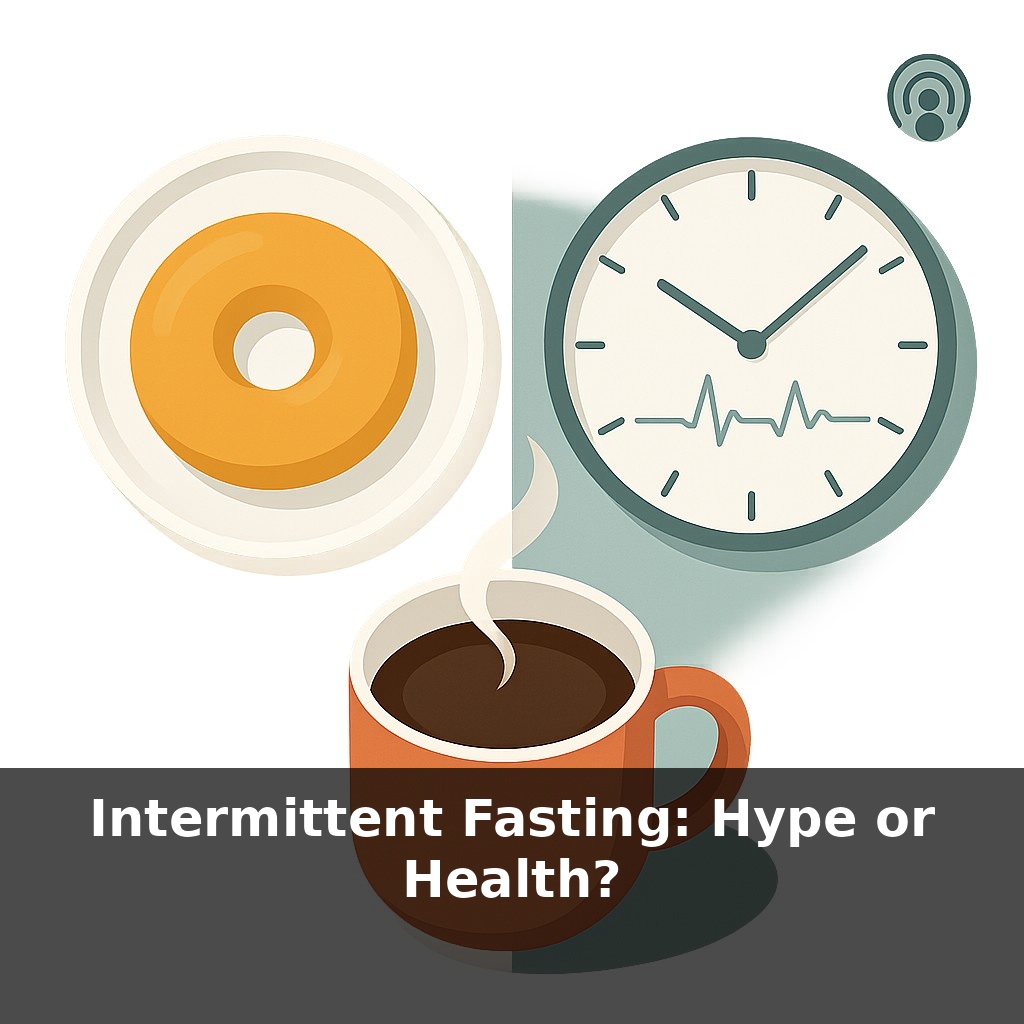
“Skipping breakfast may improve your blood sugar as much as cutting calories all day.” Now you’re rushing out the door, coffee in hand, debating: grab the bagel or ‘stay fasted’? Is this simple timing tweak a genuine health upgrade—or just diet culture rebranded?
That breakfast decision is really a doorway into a bigger question: does *when* you eat matter as much as *what* you eat? Intermittent fasting takes that tiny window between coffee and your first meal and stretches it into a structured rhythm—hours of eating, hours of not—without necessarily telling you to cut carbs, avoid fat, or count every almond.
For some, that structure feels oddly freeing: fewer meals to plan, fewer late‑night snacks, a clearer “on/off” switch around food. For others, it can feel like staring at the clock, waiting for permission to eat. Athletes wonder if it will wreck their training; parents think about family dinners; shift‑workers question whether any of it fits their reality.
We’ll unpack when IF actually helps, who tends to struggle with it, and how much of the hype survives careful scrutiny.
Part of IF’s appeal is how oddly *simple* it sounds: shrink your eating window, keep your usual foods, and let biology do the rest. But under that simplicity, there are very different “flavors” of fasting. Some people stop eating after an early dinner; others cycle full fasting days with normal days; some just avoid late‑night grazing. Each pattern nudges hormones, hunger, and habits in its own way. That’s where things get interesting: is the benefit mostly from eating less overall, or from syncing meals with your body’s internal clock—like catching daylight on a long hike instead of wandering after dark?
Here’s where the “patterns” of IF actually diverge.
Time‑restricted eating (like 16/8) keeps every day looking similar but compresses meals into a shorter daytime window. In trials, people often *spontaneously* eat fewer calories without tracking—lunch shrinks, snacks fall away—yet they don’t feel dramatically deprived once they adjust. A twist that keeps showing up in research: earlier windows (say, 8 a.m.–4 p.m.) tend to nudge insulin, blood pressure, and appetite hormones in a more favorable direction than late‑afternoon or midnight windows, even when calories match. That doesn’t mean early eating is mandatory, but it hints that your internal clock prefers most of its fuel while the sun’s still up.
Alternate‑day fasting takes a different route: one day you eat normally, the next you slash intake (or skip meals entirely). People who like clear rules sometimes thrive here: there’s no fuzzy “am I over my limit?”—it’s either a fasting day or not. But the swings can feel intense. Some report great energy on fast days; others hit a wall by mid‑afternoon and find the following “feast” day easily turns into overcompensation.
Then there’s the 5:2 style: two low‑calorie days per week, five usual days. This can mesh better with social lives—you can plan tough days around quieter schedules. But those lower‑intake days still demand foresight: protein‑dense, high‑fiber meals blunt the urge to raid the pantry at night.
Across all these formats, the recurring theme is *consistency beats perfection*. The body seems less bothered by an occasional late meal or missed fast than by constant, chaotic grazing. Think of choosing a trail in a big national park: the benefit comes less from arguing which path is “best” and more from picking one you can actually walk most days without dreading it.
One more nuance: success often hinges less on white‑knuckling through hunger and more on designing routines around your existing life—work shifts, commutes, kids’ bedtimes—so that the fasting window feels like background structure, not a daily battle with the clock.
Think of IF less as a single rule and more like choosing a “daily style” that fits your life. One person might treat a 10 a.m.–6 p.m. window like a curated gallery show: two or three deliberate “pieces” (meals) they actually want to linger over, instead of cramming the walls with whatever fits. Someone else might use 5:2 on quieter workdays the way a gardener schedules pruning: a couple of leaner days to keep the whole system from growing wild, without touching the rest of the week.
Concrete outcomes vary. A nurse on rotating shifts may lean on a looser 12‑hour eating window that simply avoids mindless overnight snacking. A strength‑focused lifter might place all protein‑rich meals squarely inside an 8‑hour span that sits around their workout. Parents might keep weekends “open window” for shared breakfasts and test a shorter window only on predictable weekdays. The pattern isn’t the point; the real question is whether your version makes it *easier* to eat enough protein, fiber, and plants—and to stop when you’re genuinely satisfied.
If tech and medicine keep converging, your “eating window” might soon be tuned like a custom playlist: apps adjusting timing around your sleep, mood, even your menstrual cycle. Employers could experiment too—aligning canteen hours with staff chronotypes instead of fixed lunch bells. The big unknown is equity. Will flexible fasting become another wellness perk for people with control over their schedules, while shift‑workers and caregivers are left without realistic options or support?
So maybe the real question isn’t “Should I fast?” but “What happens when I gently push my first and last bites closer together?” For some, that shift frees up mental space; for others, it exposes stress, poor sleep, or emotional eating. Your challenge this week: move one meal 60 minutes earlier or later, then note how hunger, focus, and mood actually respond.