Right now, as you’re listening, your next ten breaths are quietly rewriting your stress levels. One Stanford study found that just a few minutes of specific breathing each day noticeably lowered anxiety. So why does something this powerful feel almost too simple to matter?
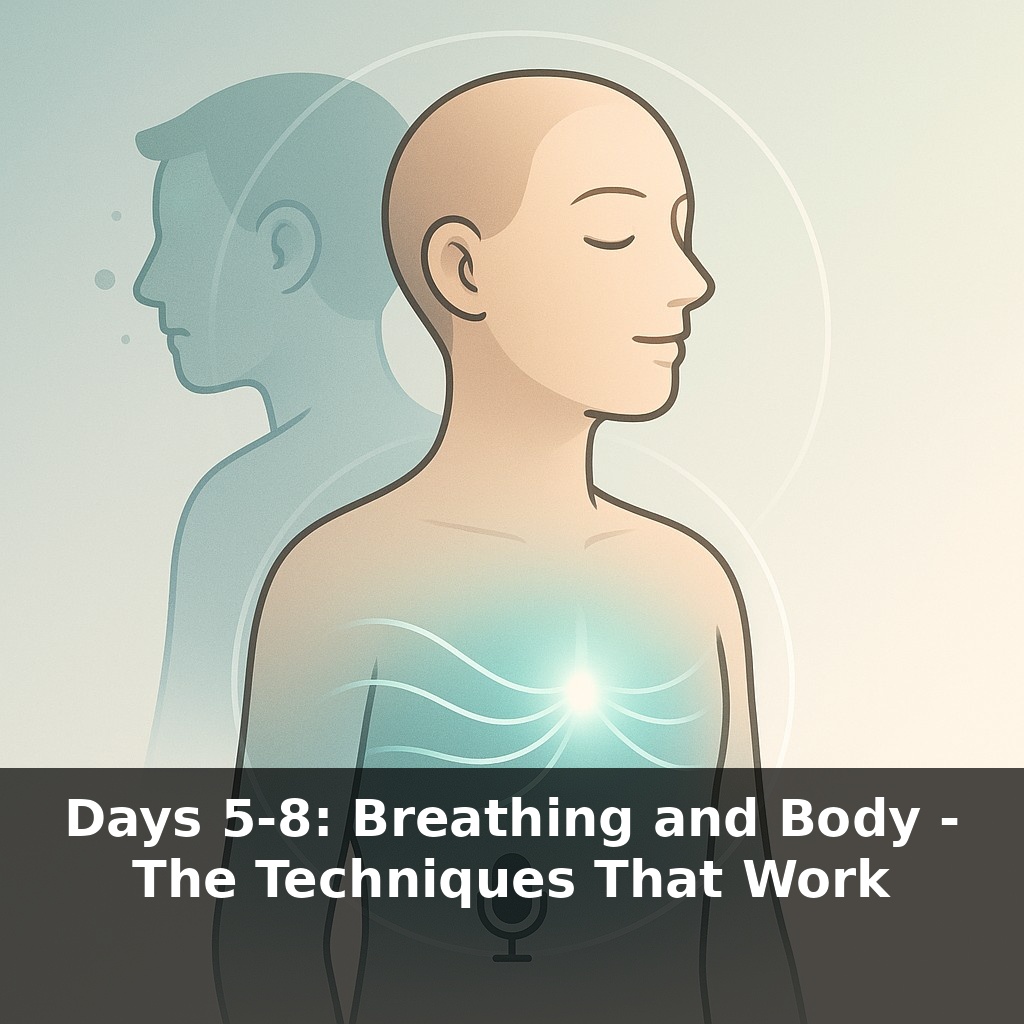
Here’s the twist: your body often knows you’re overwhelmed long before your thoughts catch up. Tight jaw. Raised shoulders. Shallow chest. It’s like walking around with dozens of tiny “notification badges” on your muscles, each one quietly signalling, “Something’s off,” while your mind is busy scrolling elsewhere. Most of us try to manage tough days from the neck up—thinking harder, planning more, arguing with our worries—while ignoring the simple levers built into our posture, breath rhythm, and muscle tone. Over the next few days, we’ll turn your body from a stress amplifier into a stress detector and regulator. You’ll learn how small, precise shifts—where you place your attention, how you sit or stand, what you do with a single exhale—can change your internal state faster than another hour of overthinking.
Think of this next phase as learning the “controls panel” of your nervous system. Instead of trying to argue yourself into calm, you’ll experiment with levers your brain can’t easily ignore: specific breathing ratios, subtle shifts of where your eyes rest, and small changes in how you distribute your weight through your feet or seat. These tweaks send fast, quiet updates to deeper brain circuits that decide, dozens of times a day, “Are we safe enough to settle?” We’ll explore how short, repeatable drills—often under five minutes—can become reliable reset buttons you can press during real‑world pressure, not just in perfect conditions.
Most people only change how they breathe when they’re already overwhelmed—gasping between tasks, sighing at emails, or holding their breath without realising it. The useful shift is moving from accidental patterns to deliberate ones that consistently nudge your system toward “safe enough.”
Research shows your body has a kind of built‑in “sweet spot” for calm called resonance breathing: about six breaths per minute for most adults. You don’t need to hit that exact number, but it tells us something important: slower, smoother, slightly fuller breaths send a very different signal than the rushed, choppy ones that creep in during busy days. When you extend your exhale just a little longer than your inhale, you’re using the same wiring that speeds your heart up when you sprint and slows it down when you rest—only now you’re choosing which side to lean on.
Just as crucial is how often you practice, not how perfectly. A single five‑minute breathing drill can dial things down in the moment, but repeating it daily trains your system to bounce back faster next time. That’s what shows up in better heart‑rate variability, lower baseline cortisol, and the “I still feel stressed, but I’m not drowning in it” effect people describe after a few weeks of consistent practice.
Body‑based awareness works on a similar schedule. Instead of scanning for every sensation, you start by tracking a few reliable “early warning lights”: maybe your jaw, hands, and belly. Not to fix them immediately, but to notice how their tension levels rise and fall across a day. Over time, this turns into a feedback loop: you catch the shift earlier, run a short breathing or posture reset, and prevent a full spike.
The mistakes are predictable and fixable. Many people try “deep breathing” and end up breathing fast and big through the mouth, blowing off too much CO₂ and feeling dizzy or more panicked. Others assume they’re failing if thoughts keep interrupting. In reality, the target isn’t empty mind; it’s a steady, nasal, quieter pattern that your body can recognise as “we’re not in immediate danger,” even while thoughts keep moving in the background.
You can approach this like testing settings on a medical monitor, but you’re the one watching the readouts from the inside. For three days, you might focus just on breath: set a 5‑minute timer, then silently count “in‑2‑3, out‑2‑3‑4” and note, afterwards, one concrete change—maybe your shoulders dropped, or your thoughts felt less crowded, or nothing shifted at all. That “nothing” is data, too. On other days, you could track one physical spot that tends to tighten during pressure—jaw, hands, or belly—and simply log when it ramps up: during emails, in traffic, right before bed. Over a week, the pattern often surprises people; it’s less random than it feels from the inside. Using the breath is like picking up a TV remote: by pressing the “volume down” button (lengthening the exhale), you can lower the intensity of what you’re feeling, even when you can’t change the “channel” of what’s happening around you yet.
In a few years, the same way maps reroute around traffic, your devices may quietly reroute around overload. A ring might notice subtle shifts before you do and ping you with a 30‑second “reset,” while your calendar auto‑protects recovery windows after intense meetings. VR could guide you through tailored body scans like a personal trainer for your nerves, and clinics may prescribe breath‑and‑body protocols alongside medication, tuned to your unique patterns instead of generic averages.
Over the next few days, treat these practices like seasoning a meal rather than following a strict recipe—small, frequent pinches reshape the whole flavour. You might notice new “tells”: a rush of heat before a meeting, a flutter before a message. Instead of judging them, stay curious. They’re not failures to fix, but signals you’re finally learning to read.
Start with this tiny habit: When you first sit down in a chair (at your desk, kitchen table, or couch), place one hand on your chest and one on your belly and take just **one** slow nasal breath, letting the belly puff out a little more than the chest. As you exhale, gently press your feet into the floor and relax your shoulders down. That’s it—just one deliberate breath-and-body check-in each time you sit, and then carry on with your day.