One study found that the quality of your closest relationships predicts happiness more reliably than your medical charts. So here’s the twist: the very conversations that spike your stress today could be the same ones that rewire your brain for calm—if you change just how you speak.
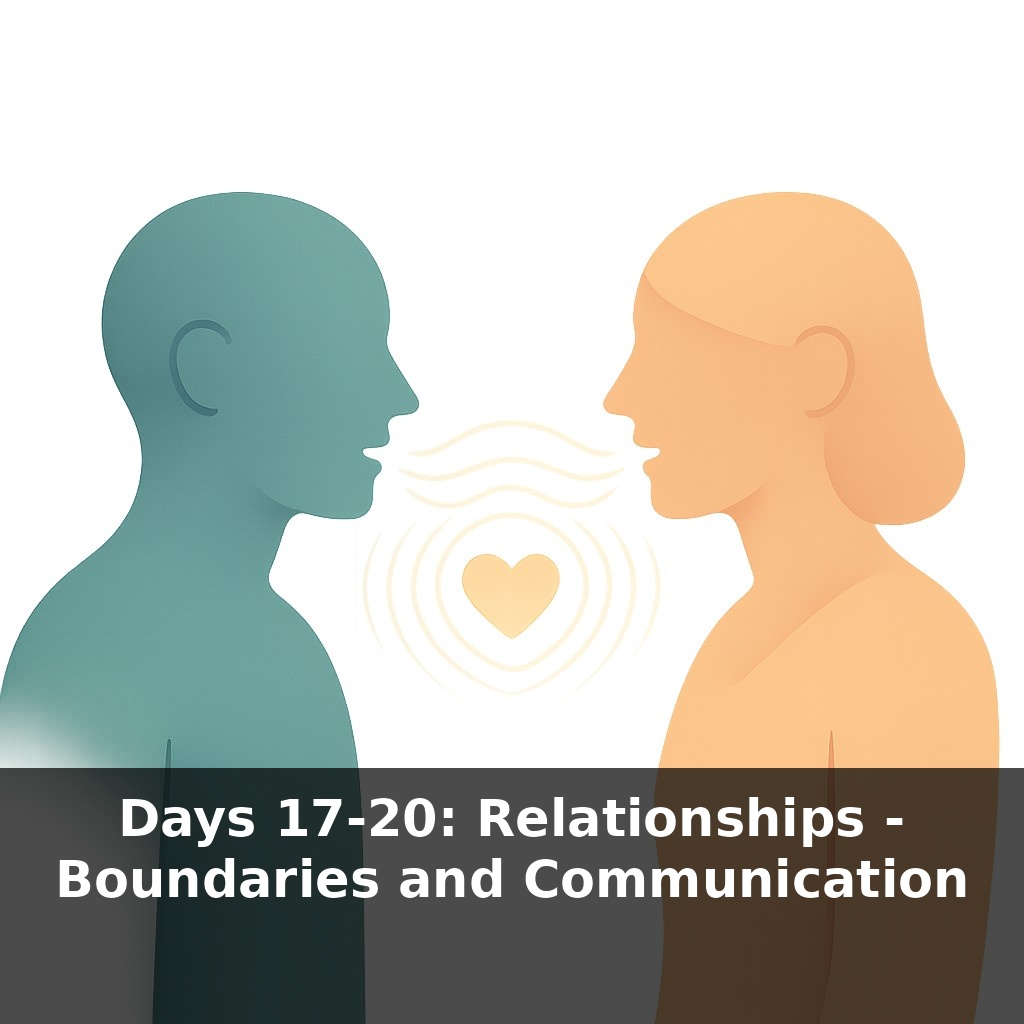
Think about the last time your chest tightened right before a hard talk—maybe a partner’s tone went sharp, a friend went silent, or your boss added “we need to discuss this” to an email. That jolt isn’t just in your head; your nervous system is scanning for threat and, without a plan, guesses wildly. Clear boundaries and simple communication tools act like turning on the light in a dark hallway: the shapes stop looking like monsters, and your body stops bracing for impact. Over the next few days, we’ll treat your relationships as a living lab. Instead of trying to “fix” people, we’ll experiment with tiny shifts in how you speak, listen, and say “no.” The goal isn’t perfect harmony; it’s teaching your brain that you can stay safe, honest, and kind at the same time—even when the conversation gets real.
When anxiety shows up in connection, it rarely announces itself with a clear label. It hides in the way you answer a text too fast, avoid a call, replay a comment for hours, or agree to plans you secretly dread. Over the next few days, we’ll zoom in on those tiny interpersonal frictions—not to judge them, but to treat them like lab samples. Which people, topics, or times of day reliably spike tension? Which patterns leave you feeling oddly drained, even when nothing “bad” happened? By mapping these micro-reactions, you’ll start to see where firmer boundaries and clearer words could quietly lower the volume on your body’s alarm system.
When researchers listen to couples for just fifteen minutes, the signal they watch most closely isn’t volume or vocabulary—it’s contempt. The eye-roll, the sneer, the cutting “whatever.” Gottman’s work shows this one pattern predicts divorce with unnerving accuracy because, to the brain, contempt feels like social exile. Your threat system surges, your body prepares for battle or shutdown, and calm thinking goes offline.
This is where boundaries and communication style quietly become biological tools, not just “relationship skills.” When you say, “Don’t talk to me like that,” and then walk away for a ten‑minute time‑out instead of shouting back, you’re not being dramatic—you’re stopping your amygdala from marinating in more threat. Predictable, respectful responses give your brain a template: “When conflict happens, here’s how we stay safe.” Over time, that expectation of safety lowers baseline tension in every hard conversation.
Assertiveness training studies back this up. People who practice naming what they feel and need—without attacking—show moderate drops in anxiety. Why? Because you’re trading helplessness (“I just have to take it”) for agency (“I can state my limits and survive the outcome”). Agency is anti‑anxiety medicine.
Tools like “I‑statements” and active listening sound basic, but they target the exact moments conversations usually tilt toward danger. “You never listen” invites defense; “I feel brushed off when I’m interrupted; can we slow down?” gives the other person a clear problem they can actually solve. When you reflect back, “So you’re worried I’m pulling away,” you tell their nervous system, “You’ve been heard.” That alone can drop emotional intensity enough for both of you to think again.
Boundary frameworks such as Brené Brown’s BRAVING go one layer deeper. They push you to ask: Is this person consistently generous with me? Do they hold my confidences? Do they own their mistakes? Your answers help you sort: Where is it safe to be fully open, where do I need firmer guardrails, and where might I step back entirely?
The paradox: boundaries can feel like walls, yet applied well, they make connection more honest, less lonely, and far less anxious—because everyone knows the real rules of engagement.
A useful way to spot where you need clearer boundaries is to watch for tiny “tells” in your day. Notice the moment your stomach drops when a certain name pops up on your phone, or how your jaw tightens when a colleague “just assumes” you’ll stay late. Those are boundary data points. You don’t have to confront anyone yet; you’re just mapping where your body quietly says, “Too much” or “Not enough.”
Think of communication tweaks as experiments rather than personality overhauls. With one person, you might test a simple script: “I can talk, but only for ten minutes,” and then actually end the call on time. With another, you might try, “I’m not able to help with that this week,” and resist adding three paragraphs of apology. Cooking a new dish is messy the first few times; similarly, early attempts at firmer limits may come out awkward or shaky. That’s not failure—that’s you collecting live feedback about what calms things down, what escalates, and where your next micro‑adjustment should be.
In a few years, you might get a gentle buzz on your wrist mid‑argument, showing your stress curve spiking—like a weather alert for incoming storms—nudging you to pause or soften your tone. Your calendar could auto‑protect focus hours from chat pings, and shared “house charters” might sit on the fridge the way recipes do now: agreed‑upon signals, cool‑down phrases, and check‑in times. The experiment ahead is learning how to use these tools without outsourcing your judgment—or your courage—to apps.
As you test limits and new phrases, expect some awkward silences and raised eyebrows—that’s simply data, like a weather radar showing where storms gather. Each small repair, each cleaner “no,” is another brushstroke on a map of who you are with others. Over time, that map gets clearer, and your body can finally stop bracing for every crossing.
Before next week, ask yourself: Where in my closest relationship do I most often say “yes” when I actually mean “no,” and what exact sentence could I use next time to communicate my real limit kindly but clearly? When a conflict comes up, how could I experiment with the “I feel… when… because…” structure from the episode instead of blaming or shutting down, and what real situation from this week can I rehearse that line for? If I imagine a “bare minimum standard” for how I want to be spoken to (tone, words, timing), where has that been crossed lately, and how will I calmly state that boundary the very next time it happens?