Right now, your next cup of coffee, your bedtime tonight, and whether you move your body for just half an hour could quietly raise or lower your anxiety tomorrow. The twist? Most people tweak their thoughts first and only later discover their habits were driving the worry.
Six hours. That’s all it takes—consistently—to raise your chance of developing an anxiety disorder by up to 45 %. Not a traumatic event, not a personality flaw. Just a slightly-too-late bedtime that becomes your “normal.” Add an extra coffee to push through the afternoon and skipping a workout “just this week,” and suddenly your body is living in a quiet, constant emergency mode.
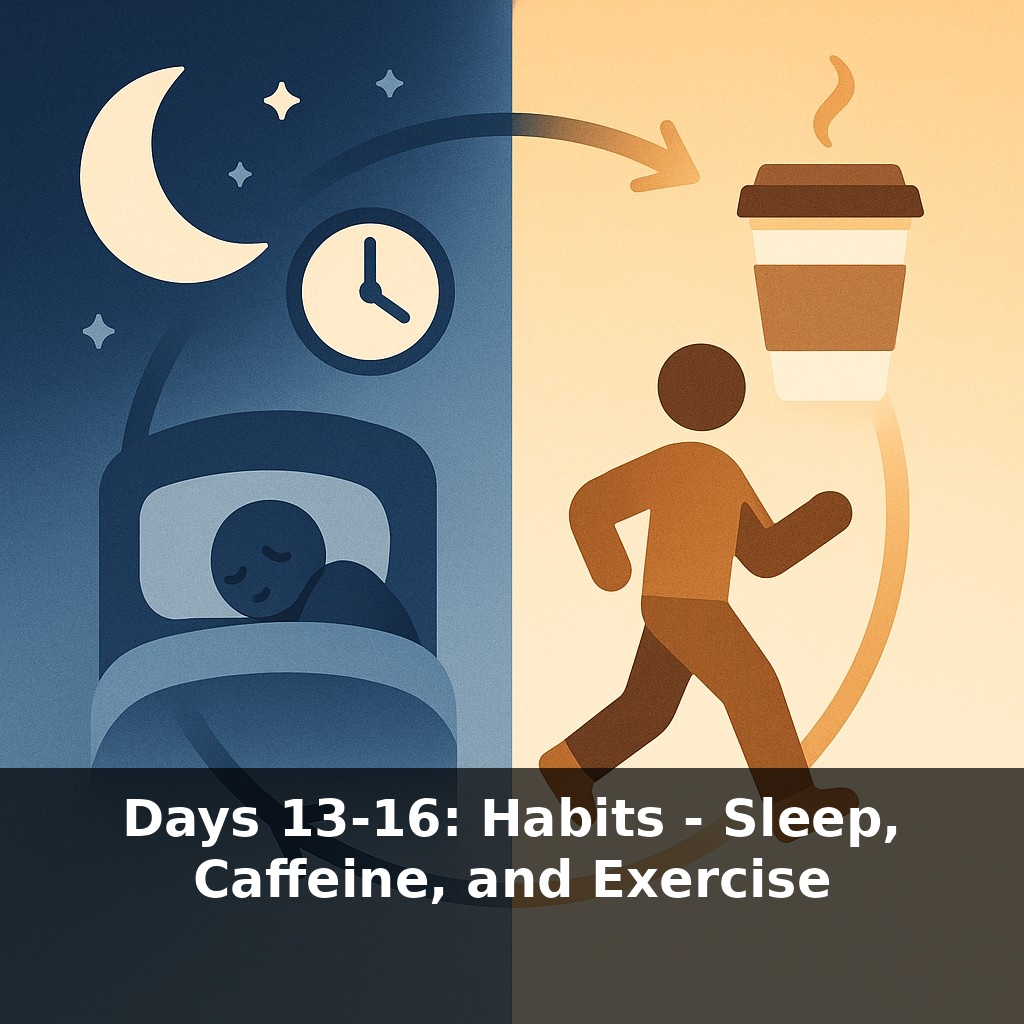
In this part of the program, we’re going to zoom in on three levers you pull every day, often without noticing: when and how you sleep, how and when you use caffeine, and how much you let your heart rate climb on purpose, through movement. Think of these as the background settings on your nervous system. We’ll explore how small adjustments—like shifting your last caffeine dose, or stacking a short walk to something you already do—can turn the volume down on worry without requiring willpower every minute.
Think of the next few days as running a set of small lab experiments on yourself. Rather than labeling yourself as “good” or “bad” at sleep, caffeine, or movement, you’ll gather data: when your energy actually dips, how your body feels after certain drinks, what kind of movement clears your head fastest. We’ll look at how your brain’s stress systems react not just to how long you sleep, but to light, timing, and consistency; not just to how much caffeine you have, but when; not just to exercise, but to intensity. The goal isn’t perfection—it’s finding your personal “low-anxiety settings.”
Here’s the strange thing about these “background” habits: they often affect your mood more than the obvious stressors you can name.
You might point to your inbox, your bills, or a difficult relationship as the reason you feel wound up. Yet when researchers track people’s days, the biggest swings in calm vs. edgy often line up with three very ordinary choices: how regular their sleep window is, when their caffeine crosses their lips, and whether their body ever gets a planned dose of exertion.
Let’s start with sleep regularity. Not just total hours, but how consistent your sleep and wake times are across the whole week. When those times swing wildly—midnight one night, 2 a.m. the next, 11 p.m. on “good days”—your internal clock gets blurry. Hormones like cortisol and melatonin stop following a clean curve. Even if you think you’re “fine on five hours,” brain scans show the emotional centers light up more and the rational, braking systems go a little offline. The result: the same email that feels neutral on a rested, regular week can feel like a threat after a scattered one.
Caffeine timing works the same way: it’s not just “how much,” but “how late” and “how stacked.” Many people sip small doses all day, never feeling truly wired—yet they never fully let the system reset. Because of caffeine’s long half‑life, an early, well‑defined window (for many, morning to late morning) lets you enjoy alertness without dragging stimulation into the hours when your brain is trying to wind down. For some, even “just” decaf in the evening is enough to keep the nervous system a notch higher than it needs to be.
Exercise adds a different kind of signal: a controlled, time‑limited stress. When you raise your heart rate on purpose and then stop, your body gets practice turning on and then turning off arousal. Over time, that “off switch” becomes easier to access during mental stress too. The encouraging part is how small the threshold can be. Ten minutes of brisk movement between meetings, a bike ride to the store, walking phone calls—these all count. The key is repetition, not heroics.
Think of this like adjusting medication dosages in a clinic: small, consistent tweaks to timing and amount can create steadier levels, while erratic use produces spikes and crashes. Over the next few days, you’ll experiment with making your sleep more predictable, corralling your caffeine earlier, and sprinkling brief, doable movement into your routine—not as moral tests, but as levers to see how much they shift your baseline calm.
A useful way to “test” these levers is to link them to situations you already face. Say you have a recurring 3 p.m. slump and a standing 4 p.m. meeting where you tend to feel on edge. One week, you might cap your caffeine by 1 p.m. and add a 10‑minute brisk walk right before that meeting. Another week, you might keep your usual caffeine but shift your sleep window 30 minutes earlier and keep it steady all seven days. You’re not aiming to overhaul everything at once; you’re checking which dial moves the needle most.
Think of it like a weather report for your body: instead of “today was stressful,” you start to notice, “on days with late coffee and a skipped workout, my inner forecast calls for storms by evening; on days with a consistent wake‑up and a short bout of movement, it’s mostly clear with scattered worries.” Over time, these patterns tell you where a tiny tweak could prevent a downpour.
Your phone may soon know which Tuesday you’re most likely to snap at a harmless email—before you do. As devices quietly learn your rhythms, they could flag, “Tonight, skip that extra episode; tomorrow’s you will thank you.” Caffeine limits might update like software, nudging you toward a different brew on tense weeks. Exercise plans could arrive like tailored recipes: “Add 15 brisk minutes here.” You’re not chasing perfection, just learning which tiny swaps unlock the most relief in your real life.
Your challenge this week: treat these levers like knobs on a soundboard. Nudge one at a time—slightly earlier lights‑out, one less late coffee, a few more “moving minutes” than yesterday—and notice which combo softens the day. You’re not chasing a perfect routine, just discovering the mix that lets your thoughts land more gently.