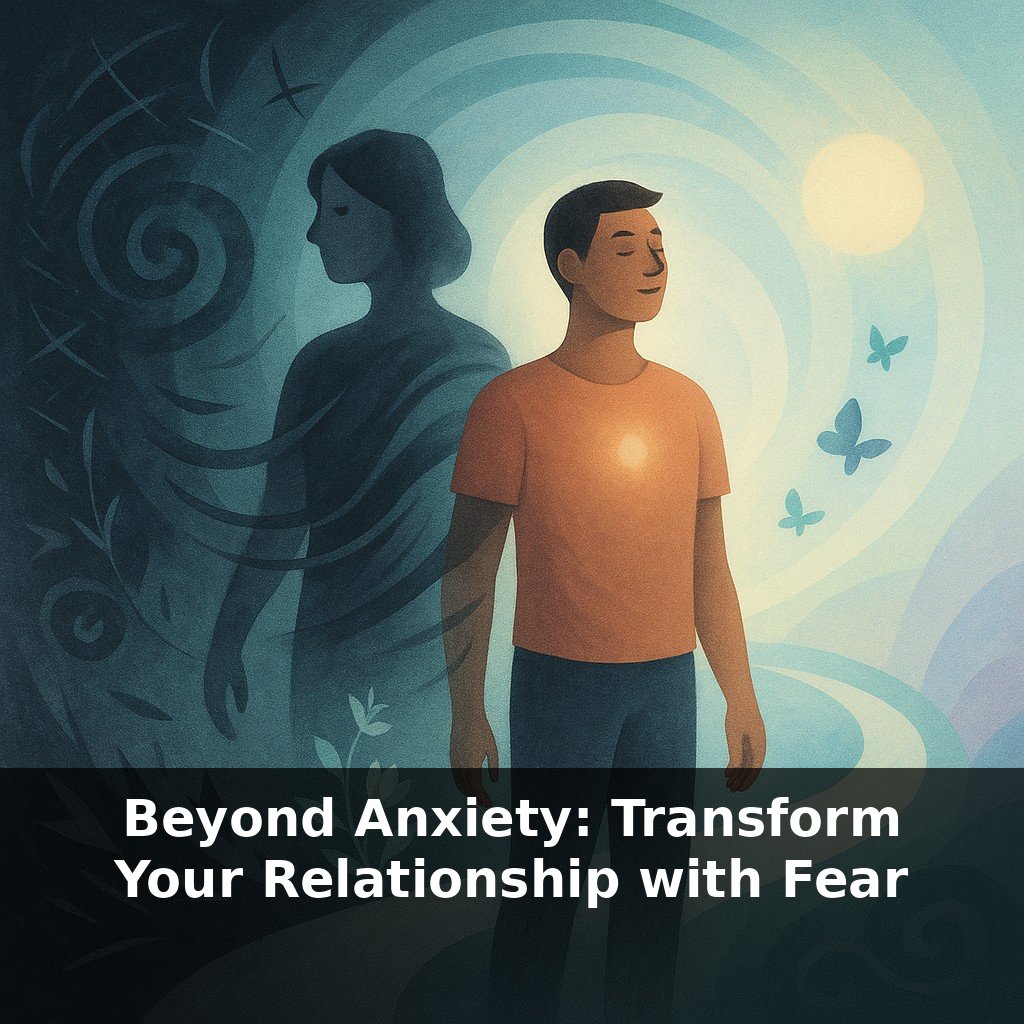
About a third of people will meet the criteria for an anxiety disorder at some point, yet here’s the twist: one of the most effective ways to feel less anxious is to stop trying so hard to get rid of anxiety. Stay with me, because that sounds wrong—for a very important reason.
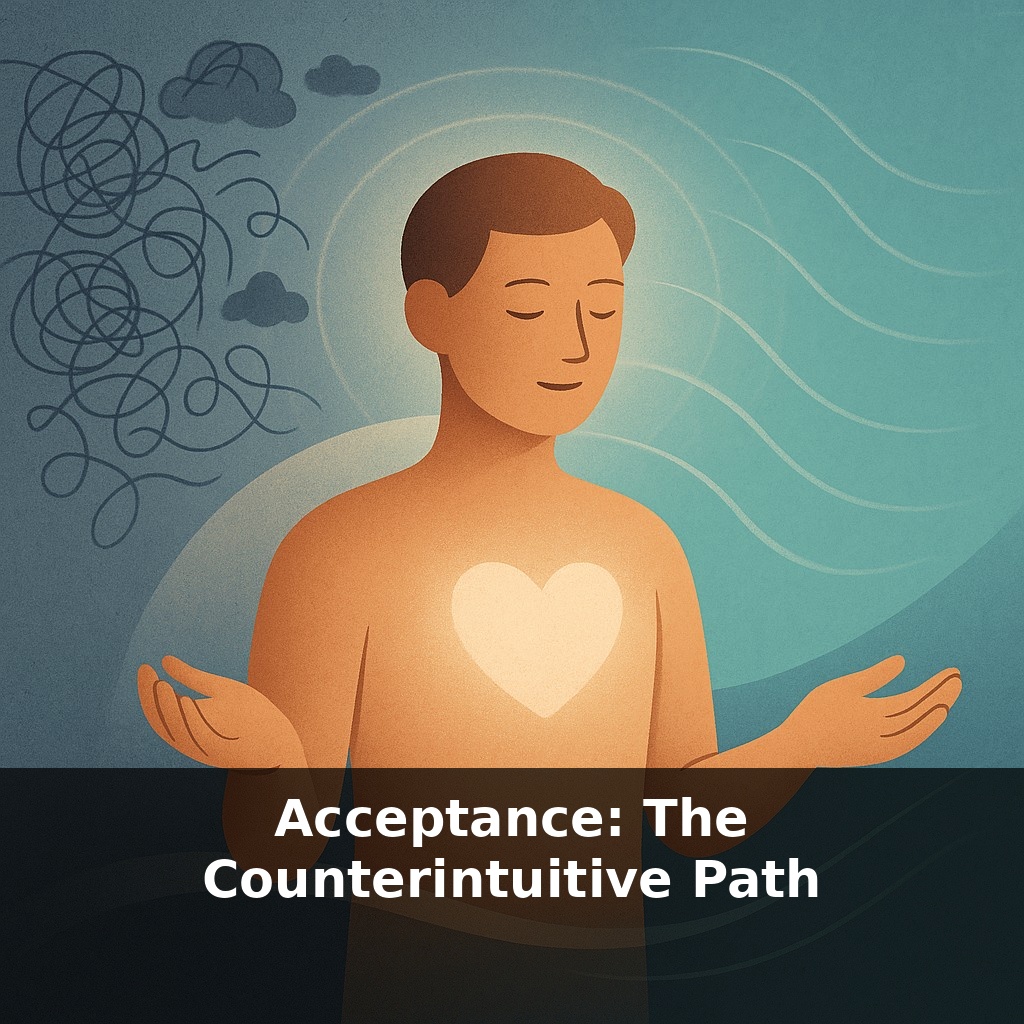
Acceptance sounds passive, like giving up or letting anxiety “win.” But in psychology, acceptance means something far more active: turning toward your inner experience on purpose, without trying to edit it in real time. Think of it as shifting from being a courtroom lawyer arguing with every thought, to being a curious journalist taking notes on what’s actually happening. Research backs this up. Across dozens of trials of Acceptance and Commitment Therapy, people who practiced this stance didn’t become emotionless—they became freer. Their lives got bigger even when anxiety showed up. This is the counterintuitive path: instead of burning energy on controlling every heartbeat, thought, or twinge of worry, you train your brain to allow them—and, over time, they lose their grip.
So what does this actually look like in daily life? It starts at the exact moments you’d normally tense up or rush to “fix” how you feel: before a difficult email, during a tense conversation, lying awake at 3 a.m. Instead of launching straight into control mode, you practice making a tiny bit of space: “This is here. I don’t have to like it to notice it.” That space matters. Over time, it teaches your nervous system that intense sensations and rapid-fire thoughts are survivable signals, not emergencies that demand an immediate shutdown or escape route.
Here’s where the paradox sharpens: the more your life starts revolving around *not* feeling anxious, the more anxiety quietly becomes the boss. Plans get rearranged, conversations avoided, opportunities postponed—all in service of staying “safe” from a feeling inside your own skin. Researchers call this experiential avoidance: not just avoiding situations, but trying to outrun thoughts, memories, images, and bodily signals themselves.
You’ve probably noticed how many strategies fall into this category once you zoom out. Over-researching symptoms. Replaying conversations to “fix” them in your head. Keeping your schedule packed so you never have to be alone with your mind. They can look productive, but the hidden rule is: “I’m only okay if I can keep this feeling away.” That rule is exhausting—and fragile.
Acceptance flips that rule. Instead of “I must control my internal world before I act,” the stance becomes “I can act *with* this internal world as it is.” You’re not failing if your heart races in a meeting; you’re training a different skill set: staying oriented to what matters while internal weather changes in the background.
That’s where the brain changes come in. When people practice this shift repeatedly—through mindfulness-acceptance exercises, values-based actions, and willingness in uncomfortable moments—studies show actual structural and functional adjustments in regions involved in monitoring conflict and shifting attention. Over time, the alarm still goes off, but the “control room” responds with fewer emergency protocols and more nuanced options.
Notice what this *isn’t*. It isn’t forcing yourself to “like” panic. It isn’t collapsing into helplessness. It’s closer to how a good physician approaches chronic pain: acknowledging the signal, respecting its impact, but focusing treatment on function, flexibility, and quality of life rather than chasing a magic off-switch.
Practically, this opens questions that weren’t available when the only goal was “make this stop”: If I didn’t have to solve this feeling right now, what small step would move me toward the kind of person I want to be in this moment—with this heartbeat, with this thought, with this uncertainty? Each time you answer with behaviour instead of a battle with your mind, you’re quietly teaching your brain a new association: discomfort can be present, and life can still move.
You can see this most clearly in small, ordinary moments. Someone with health anxiety notices a flutter in their chest while walking upstairs. The old pattern is instant googling, checking their pulse, replaying worst-case scenarios. With an acceptance stance, the experiment shifts: pause on the landing, feel the flutter, name it (“there’s that jolt”), and still keep walking to meet a friend. The heart may not calm immediately, but life keeps moving anyway—and *that* is the new data their brain records.
Or think of conflict at work. Your throat tightens before giving feedback to a colleague. Instead of canceling the meeting or over-preparing every sentence, you acknowledge the tightness, let it be there, and open the conversation with one truthful line you care about. The goal isn’t to sound fearless; it’s to show up aligned with your values, even if your voice shakes.
Over dozens of these micro-moments, your behaviour quietly teaches your brain a different rule: “Discomfort can ride along; it doesn’t drive.”
Accepting inner storms doesn’t just change how you feel; it can quietly reshape systems around you. Teams that normalize “nerves in the room” often collaborate more honestly, like kitchens where a bit of heat is expected, not hidden. Families that treat worry as shareable data, not a defect, tend to solve problems earlier. Scaled up, this shift could nudge schools, workplaces, even healthcare policies toward supporting skill-building, not perfection.
When you stop spending all your energy wrestling with your inner world, you free it up for experiments in living. You can test new routines, deeper rest, braver conversations. Like learning to cook with the ingredients you already have, you discover that a “good enough” nervous system can still support a rich, flavorful life—even when the heat stays on in the background.
Before next week, ask yourself: 1) “Where in my life right now am I wasting the most energy fighting reality—replaying ‘this shouldn’t be happening’—and what would change in my body and my schedule today if I paused and simply said, ‘This is what *is*’ for 60 seconds?” 2) “The next time I notice a painful emotion (anxiety, shame, frustration), instead of fixing or distracting, can I get curious and ask: ‘What exactly am I feeling in my chest, throat, or stomach right now—and what is this feeling trying to protect or signal for me?’” 3) “When something annoying or disappointing happens this week, how can I run a quick experiment in radical acceptance by asking: ‘If I didn’t need this to be different to be okay, what would a kind next step look like right now—for me or for the other person?’”