About half the time we make a big life choice, we later say, “I knew this wasn’t really me.” You’re sitting in a meeting, about to say yes to something that makes your stomach drop—yet your mouth moves anyway. Why does fear win when your values already know the answer?
A lab study found that when people spent just ten minutes writing about what truly matters to them, their bodies reacted very differently to stress: cortisol, the “alarm” hormone, spiked only about half as much as usual. Same stressful task. Same uncertainty. Totally different inner response.
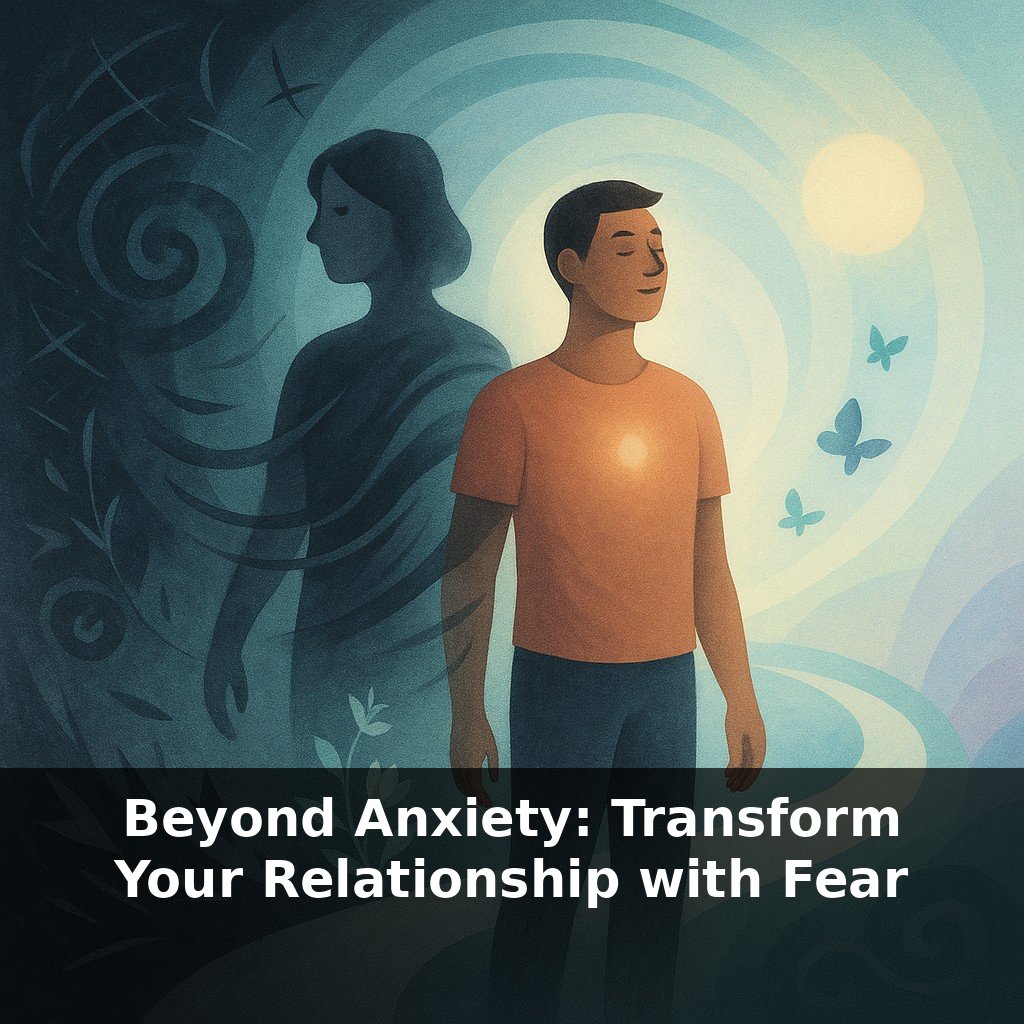
That’s the quiet power we’re exploring now: not getting rid of difficult feelings, but giving something else more authority than your fear. Research in Acceptance and Commitment Therapy shows that when people keep taking small steps in directions they care about, anxiety doesn’t have to shrink for life to grow.
Think about moments you’ve overridden your own sense of “this isn’t right for me” because it felt safer in the short term. Today, we’ll start shifting that pattern—so your actions line up more with what you stand for than with what you’re scared of.
Most of us were never taught how to let “what matters” have more weight than “what might go wrong.” So our days quietly fill with safe yeses, polite silences, and routines that numb more than they nourish. Research on value-based living shows something different: when people consistently act from what they care about, their lives often get fuller before their fear gets smaller. Think less of a single breakthrough decision, more of a series of tiny, honest course corrections—like choosing to speak a bit more truth in one conversation, or protect ten minutes for something that actually feels like you.
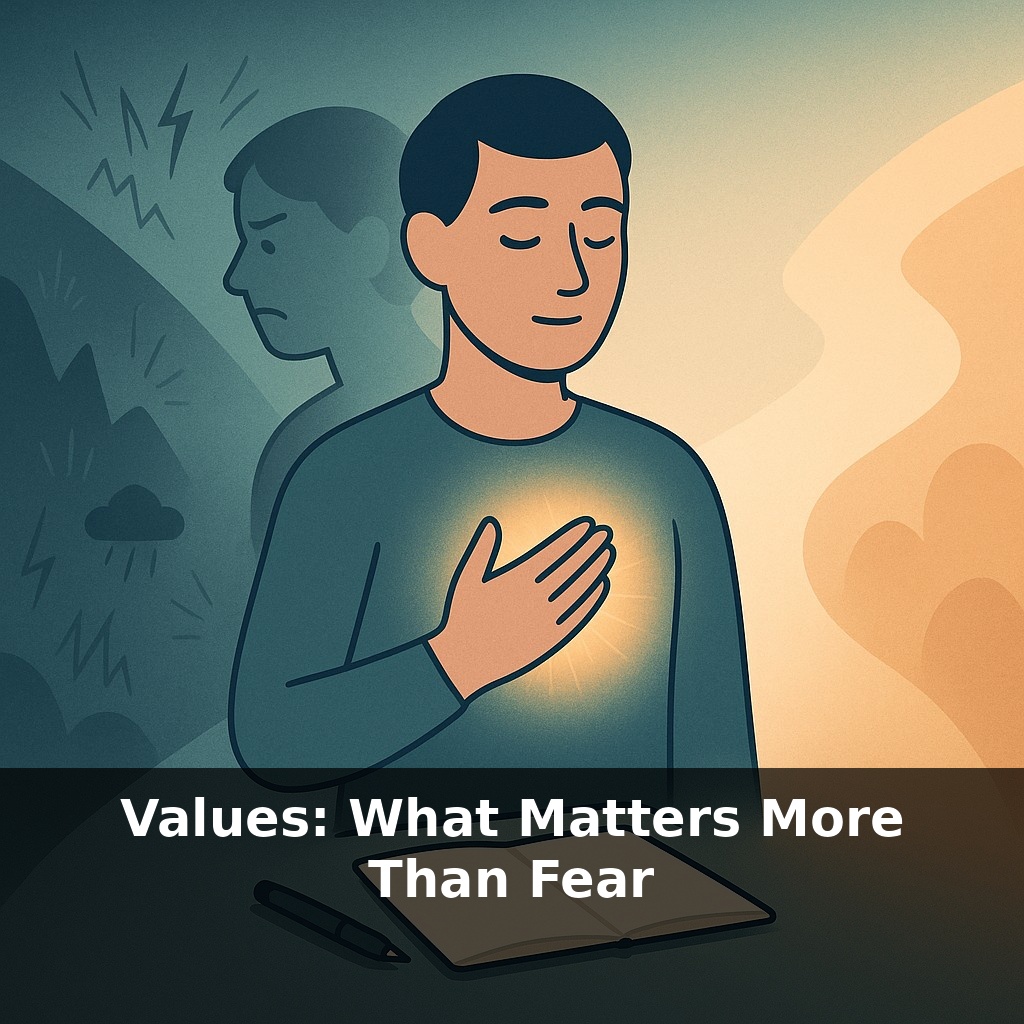
Here’s one of the strangest things research shows: you can feel just as nervous, just as unsure, and still behave in a way that leaves you proud instead of drained—if your actions are anchored to what matters most to you. The feelings don’t have to change first. The driver of the decision does.
To make that real, we need to separate three often-confused pieces:
- **Emotions**: quick, shifting signals (like “danger,” “loss,” “opportunity”). - **Goals**: specific finish lines (get the job, save $5,000, run the 5K). - **Values**: ongoing qualities of action (be honest, be kind, be adventurous).
Goals can be checked off; values can’t be completed, only expressed again and again. Running one 5K is a goal; “caring for my body” is a value. You can fail a goal and still live the value today. That’s part of why values are steadier than fear: they give you infinitely many chances to show up again.
Research also finds your values are not locked in at age 16. Major transitions—illness, becoming a parent, burnout, a move, a breakup—often reorganize what rises to the top. A high-powered executive who once prized achievement above all might, after a health scare, place connection and sustainability higher. Nothing “wrong” happened; the compass simply reoriented to a wider view of what a good life means now.
Notice another misconception: living by values does **not** erase fear. Think of activists speaking out under threat, or a nurse working in an understaffed ER. They are often scared, exhausted, unsure. What keeps them going isn’t a lack of anxiety; it’s a commitment to something they refuse to abandon—dignity, care, justice, excellence.
In everyday life, the same pattern shows up in quieter ways:
- Saying “I don’t know, but I’ll find out” when you value honesty more than looking impressive. - Leaving work on time when you value being a present parent more than pleasing your manager. - Admitting “this career path isn’t for me” when you value authenticity more than avoiding disappointment.
Fear tends to ask, “What keeps me safest right now?” Values ask, “What kind of person do I want to be in this moment?” When those two answers conflict, that’s the tension you feel in your chest before you speak, click, agree, or walk away. This series is about learning to notice that crossroads—and gently give the microphone to the part of you that remembers who you’re trying to become.
A software engineer gets invited to lead a high‑visibility project. Their chest tightens; a familiar “you’ll mess this up” story starts playing. One path is to shrink back and stay safely in the background. Another is to quietly ask, “If I were already the kind of teammate I respect, how would I act today?” That question doesn’t erase the nerves, but it can tilt the decision toward mentoring juniors, asking for support, and taking the role anyway.
In a hospital, a burned‑out physician might notice the same inner split during rounds: rush through the checklist, or pause for thirty extra seconds to look a patient in the eye and ask one real question. Micro‑choices like that rarely change metrics overnight, yet they often change how you feel about your own day.
Using personal values is like navigating with a compass in rough weather: you may still get soaked, but you’re less likely to wander in circles just because the sky looks threatening.
Organizations and technologies are quietly rearranging themselves around this idea. AI tools that once only tracked clicks now ask, “Does this reflect what you stand for?” Workplaces are shifting hiring from “Can you do this?” toward “Why do you want to do this here?” Like tending soil instead of just watering leaves, schools and teams that surface shared principles may grow people who bend but don’t break when the next global shock arrives. Your own habits are part of that experiment.
Your challenge this week: when tension shows up, pause for one slow breath and quietly ask, “If my future self could see me right now, what would they be glad I chose?” Then act 1% closer to that answer—send the message, set the boundary, stay curious. You’re not chasing perfection, just practicing alignment, like tuning an instrument between songs.