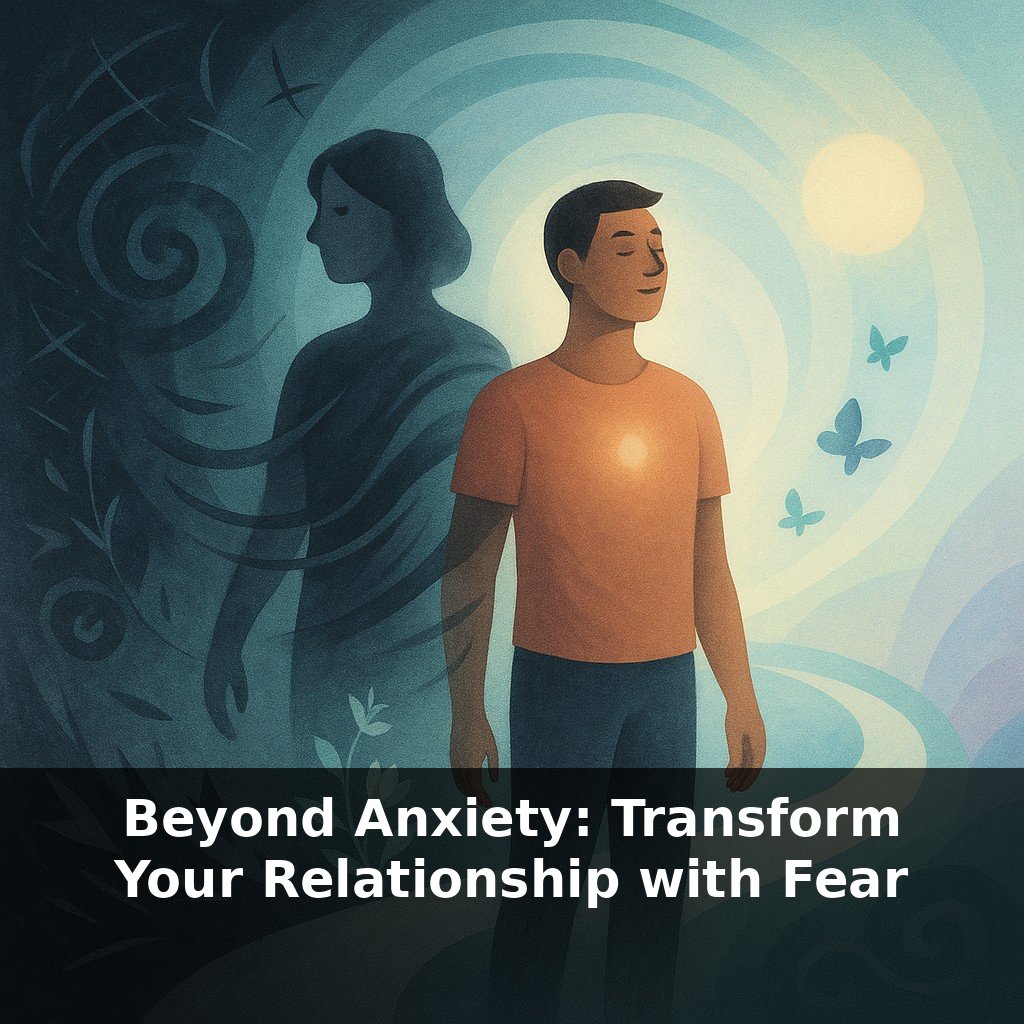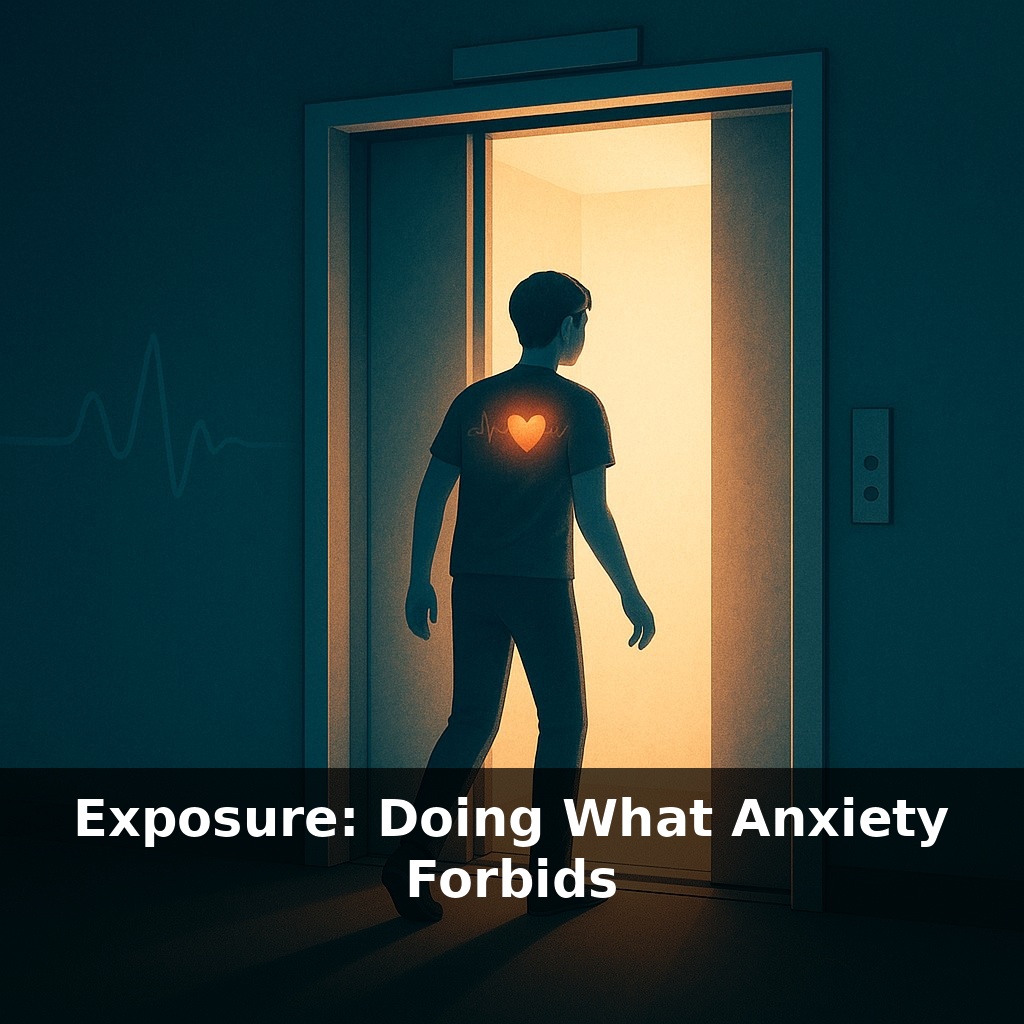
A single, intensely focused therapy session can erase a lifelong phobia for many people. Picture Ellie, who spent years avoiding elevators after a childhood incident. In her first exposure session, she stands at the threshold, heart racing, but curious. Her journey shows that change often begins at the very edge of discomfort.
Sixty to ninety percent. That’s how many people walk away from just a few focused exposure sessions no longer ruled by a specific fear. Not calmer in theory—freer in the moments that used to feel impossible. But exposure isn’t only for the “big” fears. It shows up in smaller, everyday choices: answering a message instead of ghosting, making eye contact instead of looking at the floor, staying in a meeting instead of finding a “reason” to leave.
These are the tiny crossroads where anxiety quietly writes your script. Exposure is the decision to pick a different line—not by arguing with your thoughts, but by gently but deliberately doing the thing anxiety forbids, in real time, long enough for your nervous system to update.
You won’t start with your worst fear. You’ll start at the edge of what’s bearable, then keep returning there, on purpose, until your brain starts to realize: “This might be hard, but it isn’t actually dangerous.”
Think of the things you’ve quietly organized your life around avoiding: sitting in the middle seat on a bus, letting your phone ring instead of silencing it, walking past a certain street after dark, speaking up when your opinion is different. These patterns often look sensible from the outside—“I just prefer the aisle,” “I’m better over text”—but they gradually shrink the space you feel able to live in. Exposure is about gently testing those “rules” in controlled, bite-sized ways, like tasting a new spice in a recipe instead of changing the whole dish overnight.
A heart can pound at 120 beats per minute, your chest can feel tight, and your breathing can be shallow—yet your body can still be completely safe. That gap between “this feels wrong” and “this is actually dangerous” is exactly where exposure does its most important work.
When you repeatedly do what your alarm system says you “must not” do, two things happen in the brain. The old threat pathway still exists, but each time you stay in the situation long enough, a second pathway—“I can handle this”—gets a little stronger. Over many repetitions, that newer path starts to win more often and more quickly.
This isn’t about proving that life is harmless. It’s about teaching your brain to tell the difference between discomfort and true danger. Discomfort is a racing heart during a presentation; danger is chest pain while you’re resting that doesn’t let up. Exposure helps you stop treating the first as if it were the second.
To make this practical, exposure usually follows a few key principles:
First, you choose a specific target. Not “I want to be braver,” but “I want to be able to ride three stops on the subway” or “I want to attend a party and stay at least 30 minutes.”
Next, you build a ladder of situations linked to that target, from easier to harder. Calling a café to ask their hours might be lower on the ladder than giving a work update on Zoom; sitting in a parked car might be lower than entering a busy highway.
Then, you decide what “staying” means. It might be remaining in a supermarket until your anxiety drops by half, or keeping your camera on for the first 10 minutes of a meeting. Time, repetition, and reducing safety behaviors (like constantly checking exits or rehearsing every sentence) are what allow new learning to take hold.
It also matters how you pay attention. If you spend the whole time mentally escaping—scrolling, dissociating, rehearsing your exit—you’re physically present but not giving your brain a clean experiment. Gently noticing sensations, thoughts, and urges without immediately acting on them turns the exposure into data instead of torture.
Think of it like adjusting to a hot bath: at first you want to pull your foot back, but if you leave it in, the intensity steadily drops. With exposure, you’re training that same adjustment, not once, but over and over, in the direction of the life you actually want.
Maybe your version of “doing what anxiety forbids” isn’t dramatic at all. It might look like answering the phone when you’d usually let it ring out, or keeping your browser open on a half-finished application instead of closing it the moment your chest tightens. A student might start by raising a hand once per class, not to sound smart, but simply to prove to themselves they can survive being seen. Someone with panic might deliberately drink a strong coffee before a short walk, practicing moving through the extra jolt instead of reorganizing their whole day around staying “calm.”
In social situations, a tiny step could be asking one follow-up question instead of planning your escape route. For health worries, it could mean reading your lab results once and then deliberately not googling every phrase you don’t understand. Over time, these experiments shift from “I can’t handle this” to “I can do hard things in small, repeatable doses,” the psychological equivalent of slowly increasing the seasoning in a dish until the flavor matches the life you want.
Exposure may soon feel less like guesswork and more like science. Imagine VR headsets that dial scenarios up or down like a thermostat, while a wristband quietly tracks your pulse and adjusts the “temperature” in real time. Algorithms could learn your specific sticking points and serve you the next just-manageable step, the way a navigation app reroutes around traffic. As schools and workplaces borrow these tools, practicing courage could become as routine as logging steps on a fitness tracker.
You don’t have to overhaul your life to start; think in inches, not miles. A single step—sending one message, staying one minute longer, walking past one doorway—nudges your future in a new direction. Like adding a pinch of spice to a familiar recipe, tiny, repeated risks can quietly shift the whole flavor of your days toward something richer and more open.
Start with this tiny habit: When you notice yourself starting to avoid something because it “feels like too much” (like sending an email, making a call, or walking into a store), quietly say out loud or in your head, “Okay anxiety, you can come with me, but I’m doing it anyway,” and move just one step closer to the thing (like opening the email draft, dialing the number, or standing at the doorway). This counts as exposure—no need to finish the whole task. Each time you do it, pause for 10 seconds and notice, “I did the thing anxiety forbids, even a tiny bit.”