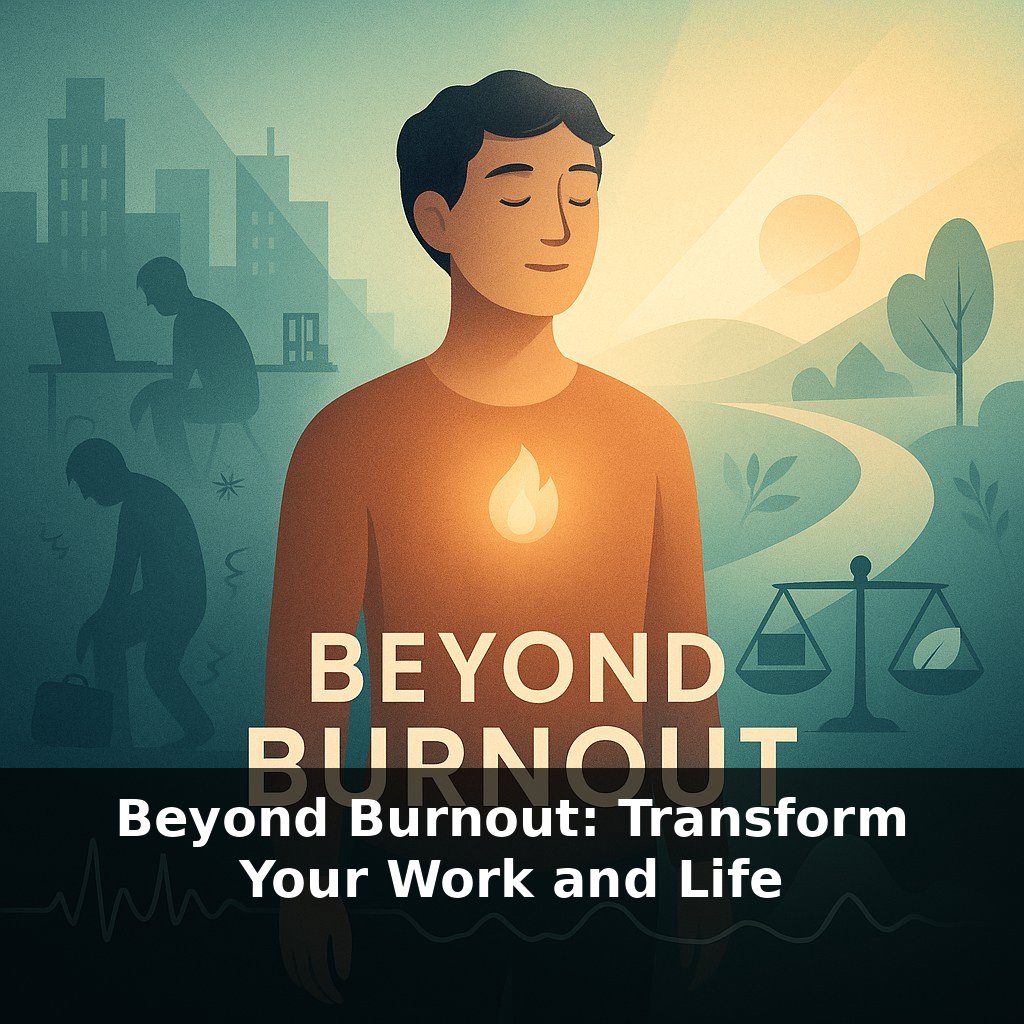
Right now, as you listen, there’s a good chance someone you work with is quietly thinking, “I can’t keep doing this,” and still answering emails. Burnout often looks like high performance from the outside. The paradox is: the moment you feel most trapped is when tiny actions matter most.
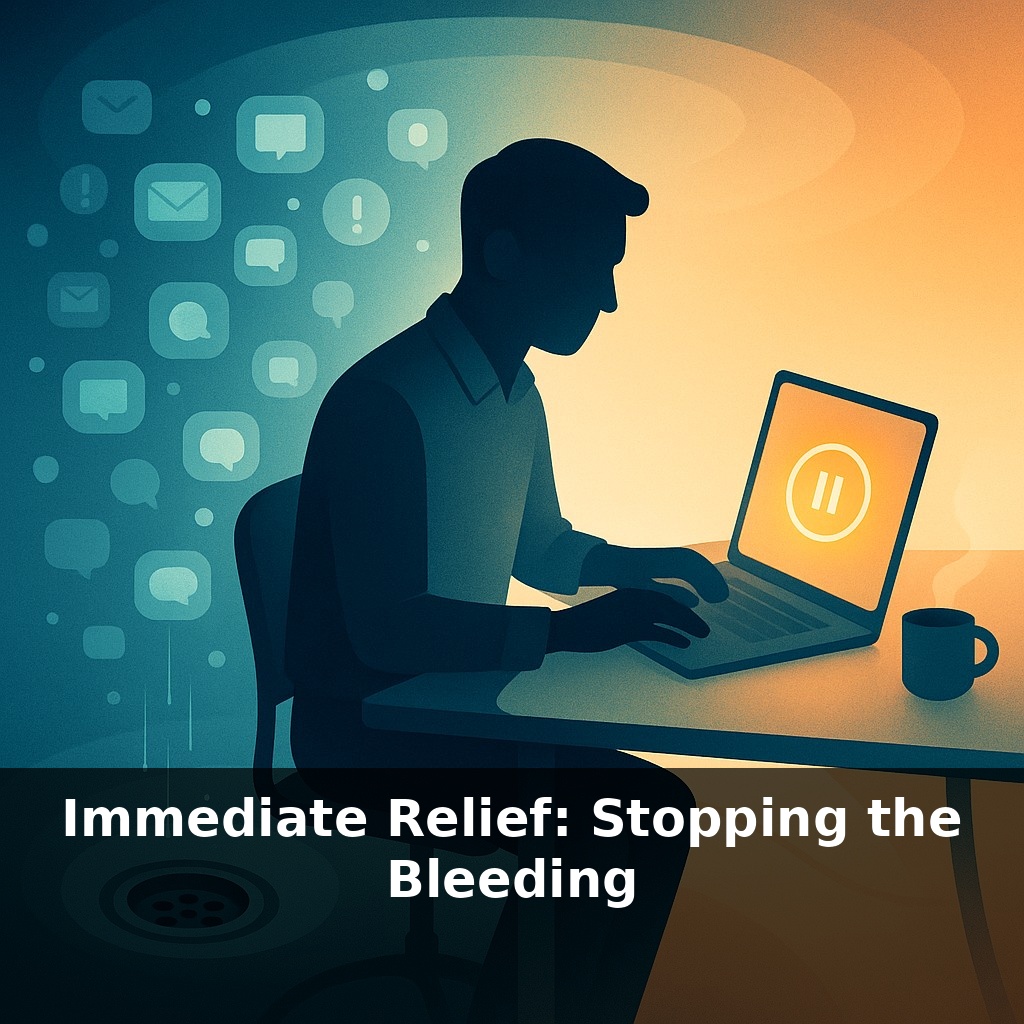
Stress doesn’t usually explode in one dramatic moment; it seeps in, like a sink where the tap is barely open but the drain is half-clogged. At first, you just move a little faster. Then your sleep slips, your patience thins, and suddenly the smallest request feels like one more brick on an already unstable stack. This is the point where many people assume the only solution is a sabbatical, a new job, or a total life overhaul. But there’s a missing step: immediate relief. Not “fixing everything,” just stopping the current leak in your system so you can think straight again. Research is clear that very short, very specific interventions can calm your physiology within hours to days. In this episode, we’ll focus on that narrow window: what you can do in the next 24–72 hours to slow the damage and reclaim a sliver of control.
Research on people in crisis shows something counterintuitive: when we’re most overloaded, we underestimate how much small adjustments can help. Not in a “do some self-care and you’ll be fine” way, but in measurable shifts—like lower heart rate, clearer thinking, and fewer impulsive decisions we regret later. Controlled breathing, micro-breaks, and short hits of real support function less like luxuries and more like emergency tools. Think of them as flipping individual switches in a dark room; one switch doesn’t light everything, but a few in the right places let you finally see where you’re standing.
Here’s the tricky part: when you’re at your limit, the things that would help most are usually the first to go. Sleep gets raided for “just one more task.” Boundaries blur because it feels easier to say yes than to argue. Social contact shrinks to transactional updates. None of that is a personal failing; it’s what a depleted nervous system does to survive the day in front of it.
So instead of asking, “How do I feel better?” a more useful question in this phase is: “What’s currently pouring gasoline on the fire, and how do I turn that tap down just a little?” In the research, three levers stand out for rapid relief: boundaries, sleep, and brief nature contact. They don’t fix the job, but they quickly change the “background noise” your brain is fighting.
Fast boundary setting at this stage isn’t about announcing a grand new philosophy of work. It’s much more tactical: delaying instead of refusing, narrowing instead of negotiating everything. “I can’t do that today, but I can get you a draft by Thursday,” is a pressure valve. Each small delay reclaims a fragment of your attention from constant urgency.
Sleep restoration is similar. You don’t need a perfect routine; you need one or two moves that give your system a chance to downshift. That might look like a strict “no work after” time for 48 hours, or a non-negotiable wind-down ritual that tells your body, “We’re done for today,” even if your mind disagrees. The goal is not eight ideal hours; it’s one notch better than last night, repeated.
Then there’s environment. A few minutes of green space or even a distant view—trees outside a window, sky above a parking lot—quietly competes with the constant cognitive load of work. Studies suggest this kind of exposure nudges attention and mood in the right direction far faster than most people expect.
Put together, these levers form a kind of short-term triage: reduce new input, protect a minimum of rest, and give your brain a different signal than “threat” for at least a few minutes a day. Once that baseline is restored, even slightly, you’re no longer reacting from the edge—you’re choosing your next move from a firmer, if still fragile, ground.
In medical training, residents learn that in an emergency you stabilize first, diagnose later. You don’t lecture a patient on long-term nutrition while their blood pressure is crashing; you secure an airway, stop major bleeding, and only then start planning. Acute burnout calls for the same sequencing: not life redesign, but immediate stabilization.
For example, a product manager heading into a brutal launch week might quietly block two 15‑minute “no-meeting” slots each day and treat them as untouchable. Those micro‑pockets become islands where they can breathe, step outside, or simply not decide anything for a moment. Another leader, noticing they snap at small requests after 8 p.m., might run a 3‑night trial of a hard stop at 7:30, no exceptions, and protect it as if it were a client call.
None of these moves fix workload, culture, or role clarity. They function more like a first round of antibiotics: enough to reduce the immediate infection so deeper repair becomes thinkable again.
As sensors and apps start flagging overload before you notice it, workplaces will face a choice: treat rapid relief like fire drills—built-in, practiced, non-negotiable—or keep pretending “push through” is a strategy. We may see quiet rooms become as normal as conference rooms, or contract clauses that protect off-hours the way we protect vacation. The open question: will these tools serve people, or quietly push them to tolerate even higher pressure?
Treat this phase like learning to swim in shallow water: you’re not crossing the ocean, you’re just proving you won’t sink today. As you notice which tiny moves steady you fastest, you’re quietly building a personal “rapid relief kit.” Over time, that kit becomes leverage—not to endure more, but to negotiate differently, or walk away sooner.
Here’s your challenge this week: For the next 7 days, pick ONE specific place where you’re “bleeding” time, money, or energy (like impulse Amazon buys, doom-scrolling at night, or constantly checking email) and put a hard stop on it with a clear rule you actually enforce. For example, you might delete shopping apps and put a 24-hour waiting rule on every non-essential purchase, or set a 15‑minute email window at 11am and 4pm only. Track how many times per day you would have done the old behavior, and instead redirect that exact time or money to a “stabilize” move mentioned in the episode—like paying down a nagging bill, finishing one overdue task, or getting to bed 30 minutes earlier. At the end of the week, total up how much you preserved (minutes, dollars, or stress) and decide whether to keep, tighten, or replace that “stop the bleeding” rule for next week.