Nearly everyone today is exhausted, yet most people still treat sleep and rest as optional “nice-to-haves.” You drag yourself through meetings, answer late‑night messages, and call it productivity—while your brain quietly slips into the same state as mild intoxication.
Seventy‑six percent of employees report at least some burnout, yet most of us still treat recovery like a luxury upgrade instead of standard equipment. You push through late emails, extra shifts, and “just one more thing,” then blame yourself for not being tougher. The problem isn’t a lack of grit; it’s that your recovery systems are underfunded and overdrawn.
Think of your days as a series of “micro‑withdrawals” on your energy: every decision, message, conflict, and obligation costs something. Without enough deposits—through genuine off‑duty time and clear edges around when you’re available—your internal accounts slip into overdraft. That’s when frustration spikes, small tasks feel huge, and even good news can feel like pressure.
This episode is about rebuilding those edges: using sleep, deliberate off‑time, and boundaries as non‑negotiable infrastructure for your life.
Most people try to “fix” overload by shuffling tasks, downloading new apps, or squeezing more into the same 24 hours. But once your body’s stress systems are overheated, better scheduling isn’t enough—you need conditions that actually cool the system down. That’s where this triad comes in: nighttime is when your biology files the backlog; pauses in your day let pressure valves release; limits on access stop new demands from constantly piling on. Together, they shift you from firefighting to fire prevention—so your effort finally starts producing progress instead of just more smoke.
Here’s the uncomfortable truth: your biology doesn’t care about your inbox, your ambition, or your perfectly color‑coded calendar. It runs on rhythms—night and day, strain and release, on and off. When those rhythms get flattened into one long “on,” your body flips into emergency mode and quietly reorganizes your priorities for you.
First, sleep. Not in theory—in hours, tonight. Below about seven, your stress system starts acting as if you’re under threat, even when you’re just opening your laptop. That’s why ordinary requests suddenly feel loaded, and small glitches spark outsized reactions. Your nervous system has lost its buffer. Over a few nights, that shift is subtle; over a few months, it’s the difference between “busy but okay” and “everything feels like too much.”
Next, rest during the day. You can’t wait for vacations to do all the repair work. Short, deliberate pauses change what your body thinks is happening. When you step away from screens, move your eyes and your neck, breathe a little deeper, your physiology gets a signal: “The danger isn’t constant.” Cortisol eases; your ability to choose your response comes back online. This is why a 10‑minute walk can make a decision clearer than another 30 minutes staring at the slide deck.
Then, boundaries—the part most people skip until something breaks. If sleep and rest are inputs, boundaries are the gate. Without them, any progress leaks out. Late‑night pings, “quick” weekend favors, unspoken expectations: each one teaches your body that you’re never truly off. Over time, that’s not just tiring; it rewires what “normal” feels like. Constant urgency starts to feel responsible, and saying no feels like a mistake, even when your health says otherwise.
Here’s the twist: you rarely feel the moment these systems start to fail. You still show up, you still deliver, you still say yes. The signs are indirect—snapping at people you care about, needing more stimulation to feel engaged, resenting the very work you once wanted. By the time your performance drops, your reserves have been shrinking for a long while.
So in this framework, recovery isn’t the reward for having everything handled. It’s the precondition for handling anything sustainably at all.
A hospital shift board offers a useful way to see this. When staffing is tight, nurses start skipping breaks, charting during meals, answering call bells past shift‑end. For a week, the unit still runs. By month three, errors climb, sick days spike, and the most reliable people talk about transferring—or quitting altogether. Nothing “dramatic” happened in one day; the damage came from erasing small, routine pauses and limits.
Now translate that to your own life. Start noticing where you routinely work “past shift”: answering Slack from bed, saying yes to projects that quietly extend your day, replaying tough conversations late at night. Those are hidden extensions of your workday, even if no one put them on your calendar. Over time, they crowd out the ordinary, boring forms of repair: lingering over breakfast, walking the dog without a podcast, closing your laptop when you said you would. What looks like being dedicated can actually be tiny acts of self‑cancellation, spread across the week.
Less than six hours of sleep a night can triple your odds of burning out—yet many high performers still treat it as optional, while answering email from bed and calling it “commitment.” The real shift ahead won’t just be in how hard we work, but in how deliberately we *stop*.
Your biology has been running this experiment for millennia; the future of work is finally starting to catch up.
Implications
Four‑day work experiments, AI‑guided schedules, and right‑to‑disconnect laws all push in the same direction: treating your off‑switch as strategic infrastructure, not a personal weakness. Think of it less as “work–life balance” and more as training cycles. Athletes don’t apologize for tapering before a race; their calendars reflect their goals. As careers stretch over decades, people who can periodize effort—intense seasons, genuine plateaus, planned recovery—will be able to change directions without needing to crash first. Teams, too, will need ways to rotate pressure so no one becomes the permanent shock absorber. Your challenge this week: pick one recurring demand that keeps leaking into your supposed downtime—maybe post‑dinner email, weekend “quick checks,” or late‑night scrolling justified as “unwinding.” For the next seven days, run a live experiment: set a firm off‑limit window for that one behavior (for example, no work apps after 8 p.m., or phone in another room from 10 p.m. to 7 a.m.). Don’t announce it, just observe. Notice what happens to your mood on waking, how you react to minor annoyances, and whether decisions feel slightly easier or harder. At the end of the week, decide: is this constraint worth protecting, loosening, or expanding? Treat it as data, not a verdict on your willpower.
When you treat nights and off‑hours as optional, life starts to feel like cooking on constant high heat—things burn, flavors flatten. Letting some parts of your week simmer gives depth: ideas reduce, priorities separate like fat from stock, and what actually matters rises to the surface. You’re not stepping back from ambition; you’re sharpening its edge.
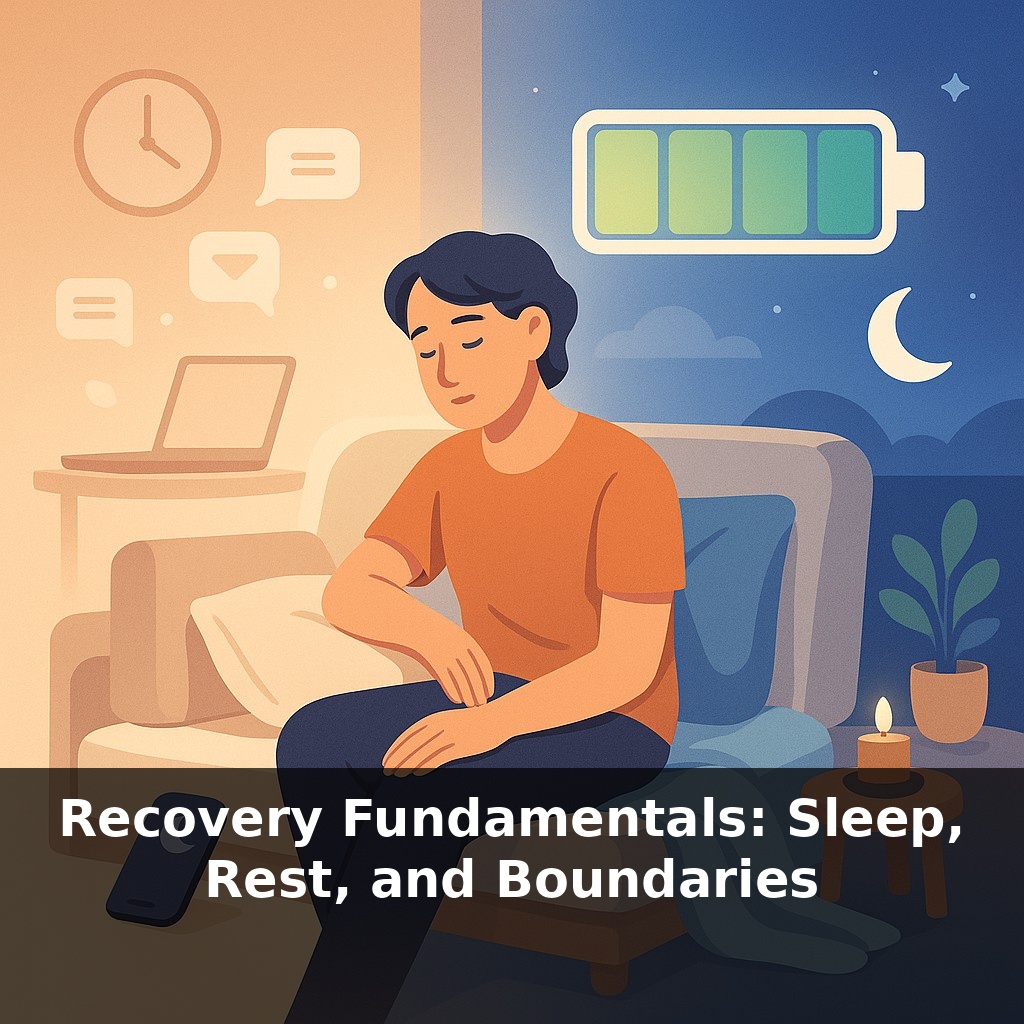
Here’s your challenge this week: Choose a consistent 8-hour sleep window (like 10:30 pm–6:30 am) and protect it like a non‑negotiable recovery appointment every night for the next 7 days. At least 60 minutes before that window starts, shut down all work/scrolling, plug your phone in **outside** the bedroom, and do just two things: a calming wind-down (shower, stretching, or reading) and one “check-in” moment where you ask yourself, “What do I need to rest from today?” Then, once a day, practice one clear boundary by saying “no” (or “not tonight”) to any request or plan that would push you past your sleep window, and notice how it feels in your body the next morning.