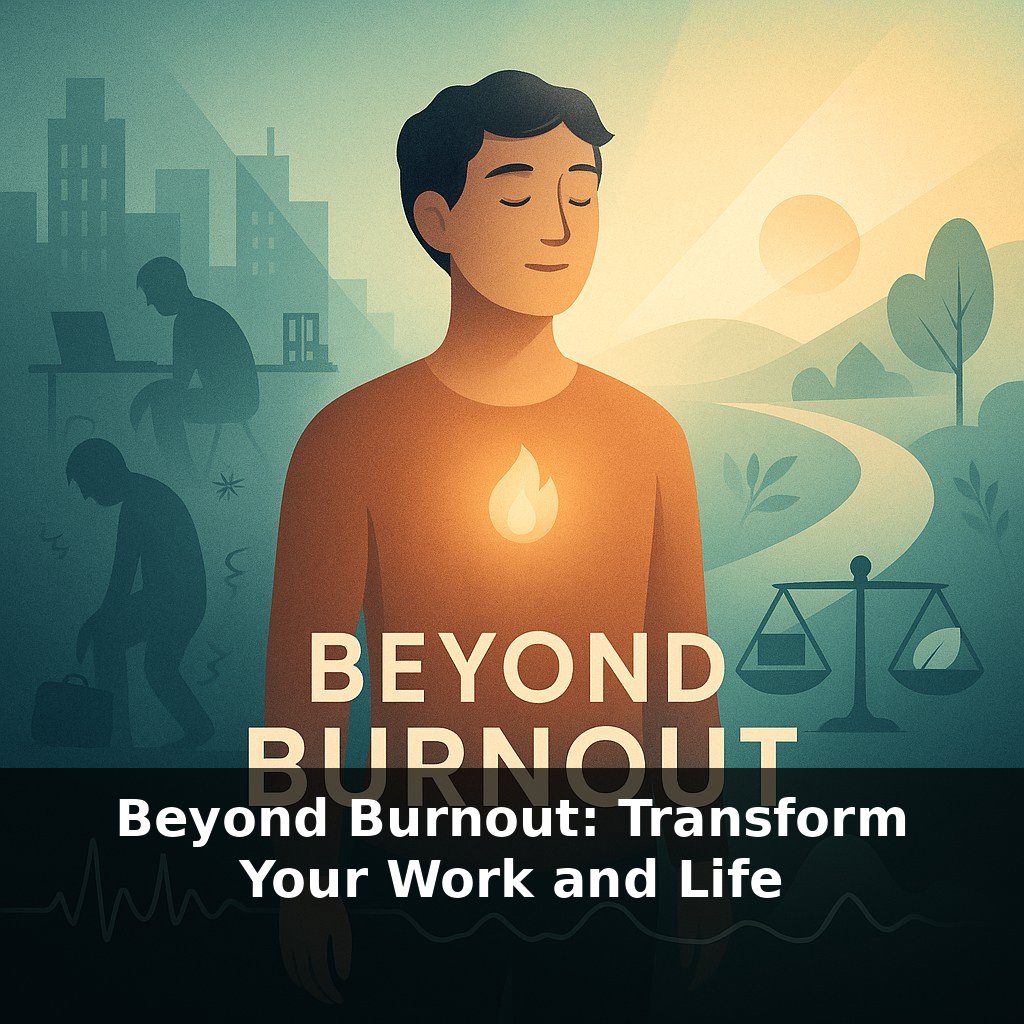
About 7 in 10 professionals lead with their job title online—yet most say their work doesn’t show who they really are. You’re praised for promotions, but unseen when you paint, volunteer, or parent. Is it success, or a quiet erosion of self, when achievement becomes your entire name?
Seventy percent of your online “about me” is often about what you do, not who you are—yet your nervous system doesn’t actually care about your promotion; it cares about whether your life feels livable. Research calls this “identity work”: the ongoing, sometimes messy process of asking, “What else is true about me?” beyond performance.
Psychologists find that people who see themselves through multiple lenses—friend, learner, neighbor, maker, caregiver—weather stress better and rebound faster when work wobbles. Think of the colleague who lights up during band practice, or the manager whose week is anchored by Sunday dinners, not sales targets. Their emotional footing is different.
In this episode, we’ll explore how to slowly loosen the grip of productivity as your main mirror, and begin building a self-concept that could survive even if your current role disappeared overnight.
Research suggests there’s a quiet cost when who you are rests on one pillar: when that pillar shakes—layoffs, illness, a bad quarter—your whole sense of “me” trembles. People who report holding several meaningful roles outside work—like aunt, climber, choir member—tend to feel steadier, even when one area dips. This isn’t about doing more; it’s about noticing what already matters and letting it “count.” We’ll look at how values, relationships, and small daily joys can become sturdy reference points, so your story of yourself doesn’t collapse every time your performance graph blips.
When psychologists study people who feel grounded even through layoffs, illness, or big career shifts, a pattern appears: their answer to “Who are you?” doesn’t freeze at “I do X for a living.” It stretches into qualities, relationships, and ongoing stories. They’re not less ambitious; their ambition just isn’t the only way they recognize themselves.
One way to see this is through *traits* instead of titles. “Curious,” “patient,” “bold,” “playful,” “fair” — these can show up at work, but they also appear when you’re troubleshooting a broken sink, teaching a niece to ride a bike, or trying a new recipe. When you anchor to traits, a bad project doesn’t mean “I’m a failure”; it means “my persistence is being tested.”
Another layer is *process identities*: “I’m someone who is learning guitar,” “I’m building deeper friendships,” “I’m becoming more health-literate.” These aren’t achievements you can check off; they’re directions you’re walking in. Research on “growth mindsets” shows that when people see themselves as learners, setbacks register as information, not verdicts on their worth.
There’s also the social mirror. We often treat performance reviews and metrics as the clearest reflections of who we are. Yet longitudinal studies find that people who regularly interact in non-evaluative spaces—book clubs, pickup sports, faith communities, language groups—report higher resilience. In those settings, you’re not being ranked; you’re being *witnessed*.
A common worry is, “If I loosen my grip on work as my core story, won’t I lose my edge?” Data points the other way. Broader identities can reduce rumination and perfectionism, freeing up cognitive bandwidth. Creativity research shows that people engaging in unrelated pursuits—gardening, dancing, tinkering with electronics—generate more novel solutions back on the job. Stepping outside your usual role gives your brain new raw material.
The goal isn’t to abandon career goals or pretend they don’t matter. It’s to make sure that when work surges or crashes, there’s more of you still intact: the parts that laugh, wonder, connect, and care, even when no one is keeping score.
A software lead who lived on release cycles started noticing her weekends felt hollow. Instead of “fixing” it with another course, she joined a community kitchen once a month. There, no one cared about sprint velocity; what mattered was whether the soup tasted good and who got a warm meal. She began to see herself as “someone who helps people eat,” not just “someone who ships code,” and her stress at work softened—not because it got easier, but because it stopped being the entire stage.
A new manager in a high-pressure firm tried a different route: he set a quiet rule that three evenings a week belonged to “non-productive” activities. One night was pickup basketball, one was calling his brother, one floated. Over time, his answer to “How was your week?” shifted from deadlines to stories about a new jump shot or an unexpected conversation.
Think of it less as “fixing burnout” and more as experimenting with different rooms in the same house—rooms where you’re not being scored, just allowed to exist.
More frequent career shifts may turn “What do you do?” into “What are you exploring now?” Rather than clinging to a single narrative, people could keep a living “role map” that tracks evolving projects, communities, and personal quests—like a chef rotating seasonal menus instead of perfecting one dish forever. As organizations normalize sabbaticals, side projects, and internal moves, those who’ve practiced flexible stories about themselves may adapt with less fear and more curiosity.
You don’t have to overhaul your life to begin; identity often shifts through tiny, repeated choices. Follow the tug toward what feels alive: the class you keep rereading, the trail you miss, the person you want to call. Like adjusting a recipe a pinch at a time, those small edits in how you spend attention slowly rewrite the story of who you are.
Before next week, ask yourself: “If no one could ever see my resume, social media, or accomplishments again, what would I still choose to do with my time tomorrow—and why does that version of me matter?” Then ask: “In moments when I’m not achieving—like waiting in line, commuting, or doing chores—what stories do I quietly tell myself about my worth, and where did those stories come from?” Finally, sometime this week, pause in the middle of a task you usually do for achievement (work email, workout, studying) and ask: “If this didn’t ‘count’ toward success at all, how would I do it differently to honor who I am rather than what I can prove?”