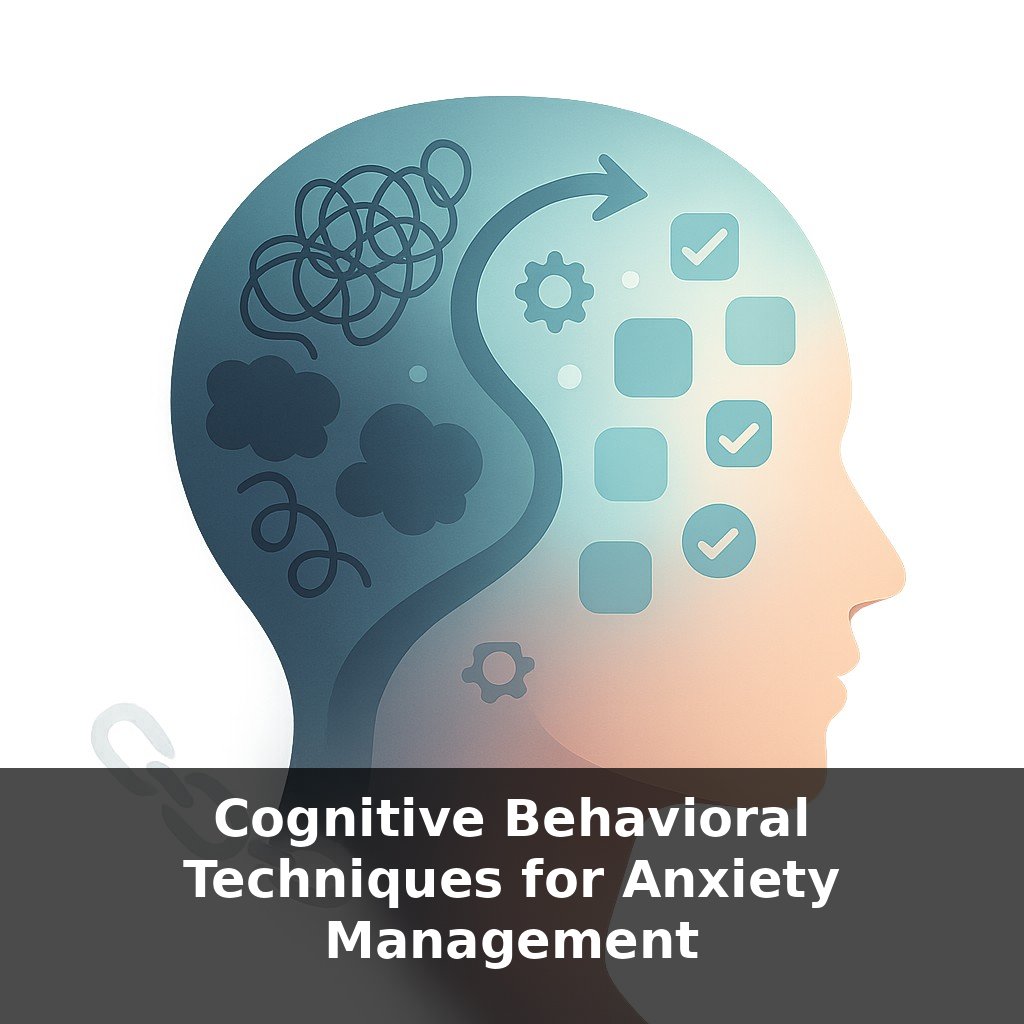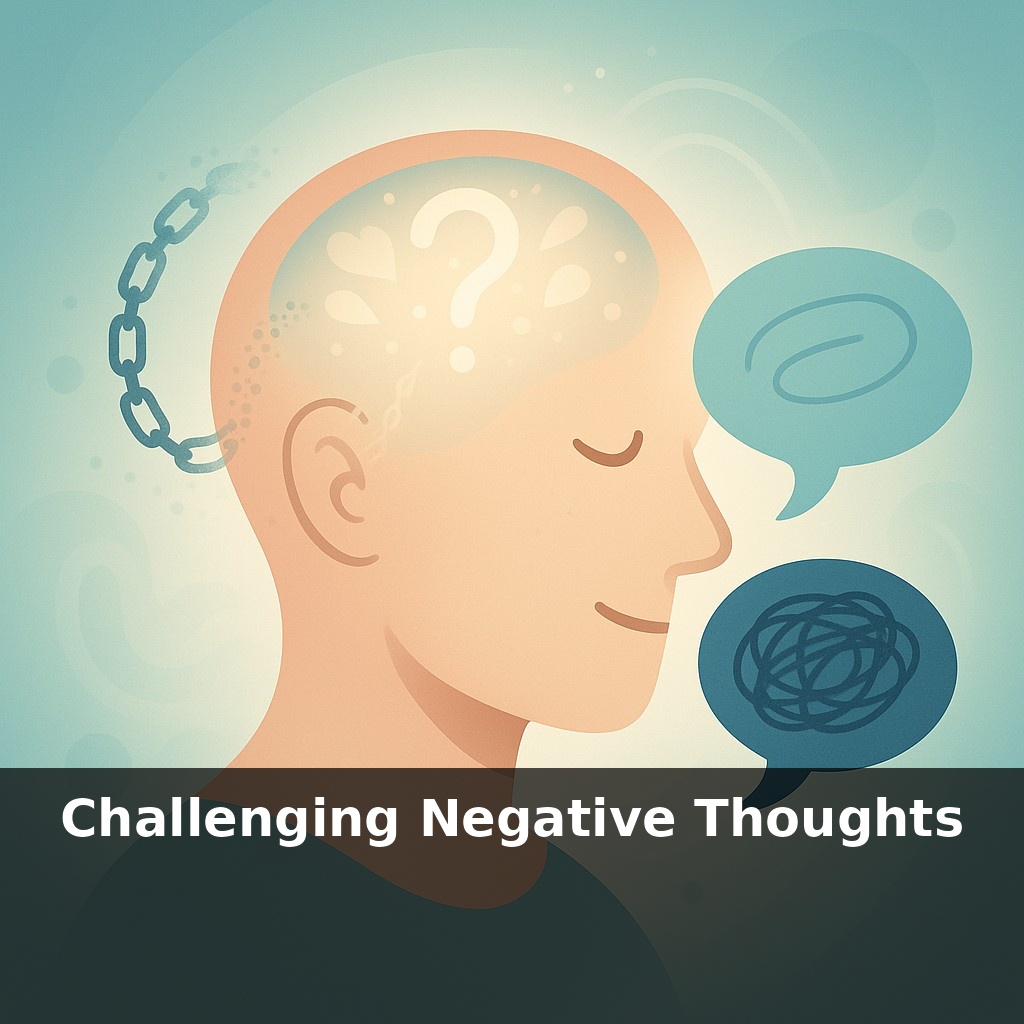
Your brain lies to you every day—and it sounds exactly like your own voice. You’re walking into a meeting, or checking a text, and in a split second your mind whispers, “This will go badly.” Now here’s the twist: a few simple questions can make that voice dramatically less convincing.
Sometimes that whisper is dramatic: “Everyone thinks I’m incompetent.” Other times it’s subtle: “I probably just got lucky.” Both feel like neutral observations—just “how things are”—but CBT treats them as hypotheses, not facts. That distinction changes everything. Instead of arguing with your feelings, you start investigating the thoughts wrapped around them. Are they accurate? Are they helpful? Are they the only way to read the situation?
Here’s the key shift: we’re not trying to “be positive” or force optimism. We’re aiming for *accurate* and *balanced*. Think of it as adjusting the lens on a camera that’s slightly tilted toward threat; you’re not painting sunshine over the picture, you’re straightening the frame so you can see the whole scene—good, bad, and genuinely uncertain—before you decide how to act.
So where do these skewed thoughts come from? Often from well‑worn mental shortcuts—habits your brain built to keep you safe, not necessarily to keep you accurate. Over time, they can turn into patterns: assuming the worst, discounting your strengths, or turning a single setback into a sweeping conclusion about your whole life. The tricky part is that these patterns feel *normal* from the inside, the way a slightly crooked picture frame looks straight once you’ve stared at it long enough. The work now is learning to spot those patterns in real time, without shaming yourself for having them.
Here’s where CBT gets very concrete: instead of wrestling with a vague cloud of “I feel anxious,” you zoom in on *one* specific thought at a time and treat it like a testable hypothesis.
Step one is *catching* the thought in the wild. Not in retrospect that night, not as a general theme like “I’m too anxious,” but in the exact moment your stomach drops. For example: you see “Can we talk?” in an email subject line and your mind jumps to, “I’m in trouble.” That sentence—word for word—is your raw data.
Next, you slow it down. What was happening right before the thought? Who was there? What did you notice in your body? Many people find it useful to jot this in a quick thought record: situation, emotion, thought, intensity (0–100). You’re building a trail you can later track, rather than relying on blurry memory.
Then comes the heart of the work: *questioning* the thought without automatically believing or rejecting it. You’re temporarily suspending judgment long enough to ask things like: - “What’s the evidence *for* and *against* this?” - “If a friend had this thought, what would I say to them?” - “Are there other explanations that also fit the facts?” These are classic Socratic questions—not to talk yourself into feeling better, but to widen the frame so more than one storyline is possible.
Some thoughts crumble quickly under this kind of scrutiny. Others feel stubborn, especially “sticky” beliefs about yourself or the world. That’s where behavioural experiments enter: you design a small, safe test that would look different depending on whether the thought is true. For example, if you think, “If I speak up, I’ll sound stupid,” your experiment might be to ask *one* question in the next meeting and see how people actually respond.
Over time, you’re collecting real‑world data against your anxious predictions. Each test may only nudge your confidence a little, but the accumulation matters. You start to notice that your mind often *predicts* disaster that never fully arrives, or that when things do go wrong, you cope better than expected.
Think about a Monday morning: you open your calendar and see three back‑to‑back meetings. A fast, quiet line appears—“Today is going to be a disaster”—and your chest tightens. Anxious days often start with tiny, unnoticed sentences like that. The skill here is not to scold yourself for thinking it, but to treat it as something you can gently hold up to the light.
Take another example: you text a friend, they don’t reply for hours, and the thought flashes, “They’re mad at me.” Instead of fusing with that story, you might mark it as “one possible explanation” and list two others: “They’re busy,” “Their phone died.” You’re not forcing yourself to believe the kinder options; you’re simply keeping the door open.
As a light analogy: it’s like walking a forest path and noticing you always veer toward the same muddy shortcut. The first win isn’t finding a perfect route—it’s realizing you *have* options and trying a slightly different turn next time.
Soon, challenging a thought may feel less like a solo exercise and more like having a quiet control room behind the scenes. A watch on your wrist could notice your pulse climbing in a meeting and nudge your phone to surface the exact questions that, over time, you’ve found most helpful. In schools, kids might practice spotting distortions the way they now learn times tables, making emotional “debugging” as ordinary as checking a map when you’re not sure which street to take.
Each time you pause with a thought and stay curious, you’re quietly training a different reflex. At first it’s clumsy, like learning a new route through your neighborhood; soon your feet know where to turn. You won’t stop anxious thoughts from appearing, but you can change what happens next—and that’s where anxiety starts to loosen its grip.
Before next week, ask yourself: 1) “The next time my brain jumps to a ‘worst-case scenario’, what is the most realistic outcome based on what’s actually happened in similar situations before?” 2) “When I catch myself thinking ‘I’m not good enough’ at work, in relationships, or with my health, what specific evidence would a kind but honest friend point to that challenges that thought?” 3) “In those moments when my self-talk is harsh, what exact alternative sentence can I say out loud (or in my head) that is still truthful but even 10% more compassionate?”