About half of people who finish CBT hit a setback soon after: more anxiety, skipped practices, old habits creeping in. You might be nailing your skills one week, then suddenly feel like you’re back at the start. Are you actually losing progress—or is something else happening?
Up close, a rough week can feel like proof that all your hard work “didn’t stick.” Yet research paints a different picture: the issue usually isn’t that the skills stopped working, but that we stopped using them consistently—or never planned for high‑risk moments in the first place. After formal CBT ends, life doesn’t politely stay stable. Sleep gets disrupted, work ramps up, relationships shift, hormones fluctuate. Each of these bumps subtly changes your internal “environment,” much like a sudden cold snap can affect a previously thriving landscape. Without a plan, these shifts catch you off guard. With a plan, they become stress tests you’re ready for. In this episode, we’ll map out how to expect turbulence, build a relapse‑prevention plan, and use data—not mood—to steer you back on course faster.
So instead of asking, “How do I stop setbacks forever?” a more useful question is, “How quickly can I spot the early signals and respond?” Research shows that people who recover fastest aren’t the ones who never wobble; they’re the ones who treat wobbles like useful feedback. They watch for subtle shifts—tension in the shoulders, scrolling late at night, canceling plans—and respond with small, deliberate adjustments rather than all‑or‑nothing reactions. In practice, that means creating simple systems: brief check‑ins, pre‑picked coping tools, and a plan for when motivation drops, not just when you feel strong.
Here’s the twist most people miss: the goal isn’t to “hold the line” forever—it’s to keep making tiny, smart adjustments when things inevitably drift. Research backs this up: people who plan for rough patches and track what actually happens between sessions keep their gains longer and recover faster when things dip.
Three tools reliably help: structured planning, simple tracking, and how you talk to yourself when things go sideways.
First, structured planning. Instead of a vague “I’ll try to keep using my skills,” you get specific: • Which situations tend to knock you off course (travel, deadlines, family visits, hormonal shifts)? • Which unhelpful patterns show up first (doom‑scrolling, checking, avoiding emails, extra caffeine)? • Which 2–3 tools work best for you in each situation (a brief exposure step, a specific thought record, a 10‑minute walk, texting a friend)?
You’re not guessing in the moment; you’ve already decided what “Plan B” looks like when things get choppy.
Second, systematic self‑monitoring. Not obsessively logging every mood swing, but collecting just enough data to spot trends. That might mean a 1–2 minute check‑in each evening: “How intense were my symptoms from 0–10? What was happening before they rose or fell? Which skill did I actually use?” Apps and prompts can make this easier, but a sticky note can work too. The key is consistency, not perfection. Over a few weeks, patterns emerge—and patterns are changeable.
Third, cognitive restructuring aimed at the *meaning* you attach to rough days. Two people can have the same spike in symptoms; one thinks, “Of course this is happening, I’m hopeless,” the other thinks, “There’s that pattern again—annoying, but familiar. What’s my next move?” That difference in interpretation dramatically changes what they do next. Here’s where self‑compassion is not fluff but strategy: speaking to yourself the way you’d speak to a close friend in the same situation lowers shame and keeps you engaged with your tools instead of abandoning them.
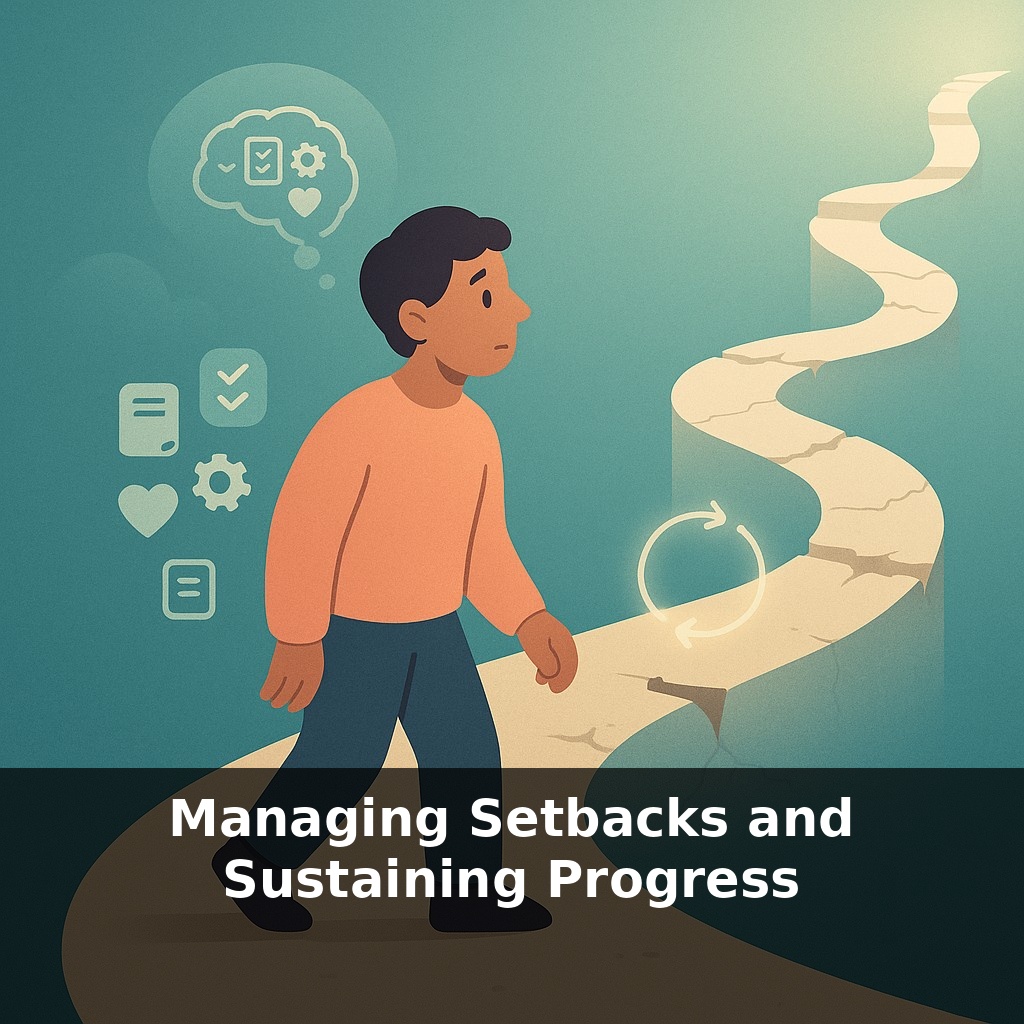
Think of this like maintaining a trail you’ve already carved through a forest: if you walk it regularly, clear small branches, and note where it gets muddy, it stays usable. Leave it alone for months, and nature starts to reclaim it—not because you failed, but because that’s what ecosystems do.
Think of high‑risk moments as “weather systems” you can learn to forecast. For example, one person’s pattern map might show a spike in late‑night tension every Sunday before work, plus a dip in energy the week before their period, plus irritability whenever a big project is due. Individually, these days felt random; on paper, they form a recognizable season. Another might notice that symptoms creep up after three nights of short sleep and two skipped meals—less about emotions, more about basic physiology.
Relapse‑prevention then becomes less “be strong” and more “respect your climate.” On heavy weeks, you might pre‑shrink your to‑do list, block 10 minutes for a grounding exercise after lunch, and tell a trusted person, “I’m in a yellow‑flag period; if I cancel, please nudge me to use my plan first.” You’re not waiting to “feel like it”; you’re running a small, pre‑decided experiment in staying just one step ahead of the usual storm front.
Future tools may feel less like treatment and more like a personalized “control tower.” Subtle shifts in sleep, posture, or typing speed could quietly flag rising strain before you notice it. Your watch might buzz with a 30‑second grounding script, while an app auto‑adjusts your weekly goals, the way a GPS reroutes around traffic. Over time, success may be measured less by symptom charts and more by how quickly and kindly you course‑correct when life lurches sideways.
Think of this phase less like “staying cured” and more like learning a craft: you’ll occasionally smear the paint, but each correction sharpens your eye. Over time, you’re not chasing perfect days; you’re refining how quickly you notice shifts, adjust your tools, and resume what matters. The real win is a life big enough that rough patches no longer call the shots.
Before next week, ask yourself: 1) “When I hit a setback this week, what exact story did I start telling myself (e.g., ‘I always mess this up,’ ‘This proves I’m not disciplined’), and what’s a truer, more useful version of that story I can practice instead?” 2) “Looking at my current habit or goal, what’s the ‘minimum viable version’ I can commit to on my worst day (e.g., 5-minute walk instead of a full workout, two sentences instead of a full journal entry), so progress doesn’t stop when life gets messy?” 3) “If I treated today’s setback like a data point instead of a verdict, what would it be teaching me about my energy, timing, or environment—and what’s one tiny tweak I can test tomorrow to make sticking with this goal feel 10% easier?”